Understanding Energy: Kinetic, Potential, and Thermal Forms Explained
110 likes | 237 Vues
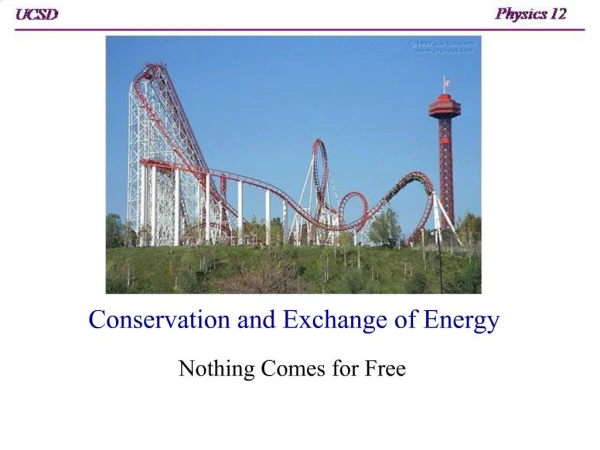
Energy is fundamentally the ability to do work, classified mainly into kinetic and potential forms. Kinetic energy relates to the motion of an object, while potential energy is stored energy, such as when someone is at rest or holding an object. Key forms of energy include nuclear energy, as seen in power plants and bombs, thermal energy from particles in objects, and chemical energy stored in bonds. The process of energy conversion, such as igniting a match, illustrates how energy changes forms. Importantly, the law of conservation of energy states that energy cannot be created or destroyed.


Understanding Energy: Kinetic, Potential, and Thermal Forms Explained
E N D
Presentation Transcript
ENERGY & POWER By: Nathan McCrary
What is Energy? • Energy is the ability to do work.
Kinetic Energy • Energy that an that an object has due to its motion. • Ex #1: Energy that an object has due to its motion.
Potential Energy Energy that is stored and held in rediness. Ex # 1 Someone sitting still Ex #2 Someone holding a basketball
Form of Energy Nuclear Energy is the potential energy energy stored in the nucleus of an atom. Ex # 1 A Nuclear power plant Ex # 2 A Nuclear bomb
Form of Energy Thermal Energy isw the total energy of the particles an object. Ex# 1 Your body Ex # 2 Your heater
Thermal Energy Thermal Energy is the total energy of the particles in an object
Chemical Energy Chemical Energy the potential energy stored in chemical chemical bonds.
Energy Conversion The process of changing one for of Energy into another. Ex A match being lit from chemical to thermal .
Law of Conservation of Energy Laws of conversation of energy of energy saties that energy can neither be created nor destroyed turning of lightsnand electranics
Resources Internet explore Science explore book www.brainpop.com/science/energy