
SlideServe
Menu
Préférences
© SlideServe · v2026

Organic Chem : Biochemistry

hector-bruce avatar
50 diapositives · 678 Views · Dec 02, 2014

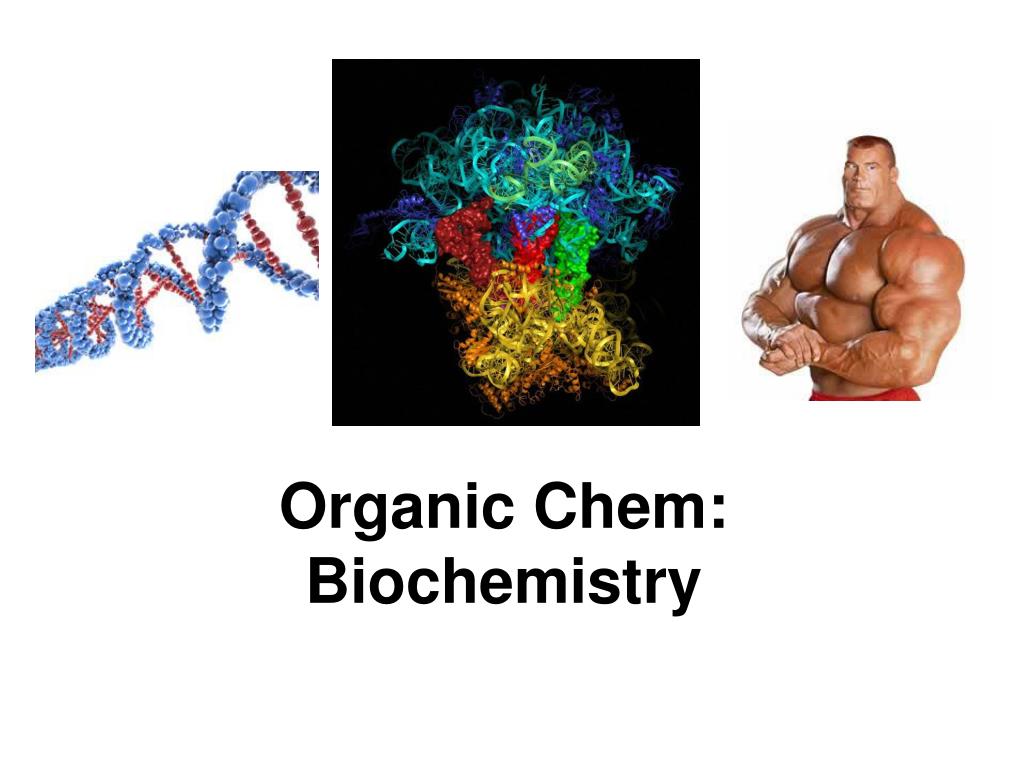
Organic Chem : Biochemistry. Biochemistry. S tudy of chem of living organisms Most: large, complex molecules complex molecules: biopolymers  smaller, simpler units: monomers 4 main classes : lipids Proteins Carbohydrates nucleic acids. Lipids.
Organic Chem : Biochemistry - slide 1
01 / 50Organic Chem : Biochemistry
1 / 17

Télécharger la présentation

Organic Chem : Biochemistry
Une image / un lien ci-dessous est fourni (tel quel) pour télécharger la présentation

Politique de téléchargement : le contenu du site vous est fourni TEL QUEL pour votre information et votre usage personnel ; il ne peut être vendu, concédé sous licence ni partagé sur d’autres sites sans l’accord de son auteur.Le contenu vous est fourni TEL QUEL, pour votre information et votre usage personnel uniquement. Téléchargez la présentation en cliquant sur ce lien. Lors du téléchargement, si vous ne parvenez pas à télécharger une présentation, l’éditeur a peut-être supprimé le fichier de son serveur.Pendant le téléchargement, si vous ne parvenez pas à obtenir une présentation, le fichier a peut-être été supprimé par l’éditeur.

F I N

Plus de contenu associé

Transcription de la présentation
  1. Organic Chem: Biochemistry

  2. Biochemistry • Study of chem of living organisms • Most: large, complex molecules • complex molecules: biopolymers smaller, simpler units: monomers 4 main classes: • lipids • Proteins • Carbohydrates • nucleic acids

  3. Lipids • Fatty acids, fats, oils, phospholipids, glycolipids, some vitamins, steroids, and waxes

  4. Structural part of cell membrane • Long-term energy storage • Insulation & shock absorbing

  5. Carbohydrates: it’s all in the name! -ose: fructose, glucose, maltose, lactose, galactose, sucrose, etc.

  6. An aldehyde sugar = aldose 6 C sugar = hexose What other functional groups do you see?

  7. A ketone sugar = ketose 6 C sugar = hexose Structural isomer

  8. Which atoms could be chiral? Reminder: 4 diff groups on a central C

  9. Intramolecular Reaction of Glucose to Form a Ring Aldehyde double bond breaks and O atom transfers over H. O then can form 2 single bonds to hold the ring

  10. Condensation Rxtn

  11. Hydrolysis:

  12. Proteins: the main molecule of living tissue

  13. All 20 aa’s are chiral exceptfor Glycine. Amino acids link together in condensation reactions to form polymers.

  14. Zwitterion

  15. Condensation rxtn Forms C to N peptide bond

  16. 201 = 20 amino acids 202= 400 dipeptides

  17. 203= 8000 tripeptide 20100= 1.3 x 10130

  18. Oligopeptide= short to medium-length aa chain (5 to100 aa’s) fuzzy borders Polypeptide= over 100 aa’s in the chain

  19. A thiol (same family as O) Can form disulfide bonds

  20. Strong covalent bonds

  21. Weak, but plentiful H bonds e.g. wool

  22. Not as stretchy: e.g. silk

  23. Proteins play many roles in cells: • structural (e.g. collagen in connective tissue) • movement (e.g. actin & myosin in muscles) • transport (e.g. hemoglobin, LDL, HDL) • catalysis (e.g. wide variety of enzymes) • regulation (e.g. hormones such as insulin)

  24. Nucleic acids: energy and genetics

  25. BASE vs. NUCLEOSIDE (base + sugar) vs. NUCLEOTIDE (base + sugar + phosphate)

  26. RNA’s base

  27. DNA vs RNA structure

  28. Composed of nucleotide monomers: A 5 C sugar, a phosphate, and nitrogenous bases:

  29. Watson & Crick back in the 1950’s Modern genetic engineering Rosalind Franklin

  30. DNA  RNA  proteins