Enhancing Student Support Through Effective PBIS Processes in Schools
This document outlines the current processes and key considerations for supporting students with challenging behaviors through Positive Behavioral Interventions and Supports (PBIS). It includes strategies for identifying students requiring assistance, conducting assessments, and implementing targeted interventions. Emphasis is placed on early identification, data collection, and monitoring progress to ensure interventions are effective. A well-coordinated team approach is highlighted, including roles, responsibilities, and the importance of administrative support to optimize student behavior and academic success.

Enhancing Student Support Through Effective PBIS Processes in Schools
E N D
Presentation Transcript
Data Teaming - Tier 2+ Individual Student Behavior Support Rebecca Mendiola PBIS Coordinator rebeccca_mendiola@sccoe.org
What is your current process in your school? • What is the current process for: • Identification of students requiring support for challenging behavior? • When does this occur? • Assessment/discussion to understand student concerns? • Intervention identification & implementation? • Data collection & monitoring student progress • What is working with your current process? • What are challenges?
Individual PBIS • Efficient Teaming Process • Clear roles, procedures & responsibilities • Intervention Focused • Linked to Continuum of Interventions (Tier 1 2 3) • Try the easy things first (Tier 2 Interventions) • …then Tier 3 (FBA/BSP) • Data focused & Early Identification • Progress Monitoring • Student Identification through Systematic Screening
Teams in a School Tier I Tier II Tier III Progress Monitoring Team UniversalSWPBIS Team FBA Team Monitors effectiveness and fidelity of Tier 2 and Tier 3 Interventions (overall and for each student) Plans SW & Class-wide supports Conducts FBA, develops BIP NOT a standing team
IPBS • Evaluate/Problem Solve/Intervene • Services for all students (including SPED students) • Primary focus on behavior problems, but often academic intervention is the appropriate course of action • IPBS meetings serve a coordinating and monitoring function
IPBS: The Big Ideas • Early Identification • Do the easy stuff first (efficiency is a major goal) • Processes are as important as practices • Use of Evidence Based Practices • Teaming is critical • Administrative support is critical • Data Based Decision Making
Building Level – What it Looks Like • Building capacity without relying on 1 hero • Team member roles during meetings – facilitator; time keeper; data bee; coordinators of interventions • Agenda is prepared in advance and promotes efficient group processes • Administrative buy-in/attendance • Creating resources • Attending meetings • Follow through with system deficiencies • Hiring practices
Data • All targeted and tertiary interventions are supported with progress monitoring data • CICO • Academic Support Classes/interventions • Social Skills or Counseling Groups • FBA/BSP (tertiary) plans • Progress monitor data reviewed every two weeks
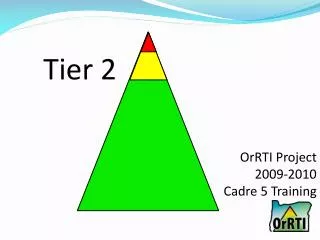
Continuum of Interventions &Braiding of Supports • Intensive • Individually designed instruction • Intensive • Function-based supports • Targeted • Core curriculum + • Pre-teach, re-teach • Small group • Supplemental programs • Targeted • Check-in/check-out • Social skills Social Behavior Supports Academic Supports • Universal • Expectations and rules taught • Reinforce pro-social behavior • Continuum of consequences • Universal • Core curriculum • Formative Evaluation Kowalko et al., 2007; Bethel School District Eugene, OR
Teams in IPBS Schools • IPBS Team • Meets every 2 weeks • Coordinates and monitors school wide behavioral interventions (may include academic interventions) • Analyzes data • Recommends supports or changes to supports that are currently in place • Student centered team (SST/FBA/BSP) • Meets at least twice -- more if needed • Creates an academic and/or behavior support plan • Determines what the intervention looks like • Makes decisions about when to implement or modify an intervention
IPBS Team Roles • Team Leader (organizes agenda; facilitates meeting) • Process Monitor (someone whose role is to monitor group processes) • Screening Coordinator (someone who collects screening data and brings it to the meeting • Coordinators of Tier II Interventions -- CICO; Academic Seminar/Strategies; (bring progress monitor data to meetings) • Coordinator of Tier III Interventions (Behavior Support Plans based on Functional Behavioral Assessment) • Note Taker
Administrative Support • Attend meetings • Visible support for decision-making process of teams • Allocates resources for: • Delivery of interventions • Trainings in practices; meeting times
IPBS/SST No-No’s • Admiring the problem • Blaming the student • Extended discussions of intervention possibilities we cannot deliver • Who’s my Process Monitor? • It’s time to speak up
Old Model: SST/TAT I am in my happy place… ISS? Wow, I hadn’t thought about that. What if we started an ADHD evaluation? That would help wouldn’t it? Yes, I do. He has mentioned that his stepdad is really mean and that his parents fight a lot. I bet that is really bothering him. Jeremy is just not making progress. He is really defiant and refuses to follow direction. I bet he does. You know, Jeremy is in my afternoon class and he is really difficult there too. Do you know what he did last week…. Maybe, but you know, I think that he already gets too much support; he makes excuses for his behavior. I was thinking about in-school detention. I bet it is too. Also, doesn’t’ his older sister have ADHD? Maybe he does too. He is a handful. I was thinking he should be in my mentoring group. He would really benefit from some of that support He often seems really angry when he gets to school; do you think that plays into it?
Team Work Tasks • Do you have an existing team focused on individual student behavior support in your school? • What are the merits/challenges of your existing process v. IPBS? • Would you like to? – or how can you?... shift the function of the team to be more effective and efficient? • What steps need to be taken? • Define a team meeting schedule for the current year & next year • Identify Team members, roles & responsibilities • Team Leader, Process Monitor, Note Taker • Screening Coordinator, Tier 2 Coordinator, Tier 3 Coordinator
What Do We Need to Start? • Administrator Orientation • Create a Team • Recruit personnel to fill team roles • Allocate resources for interventions • Start w/ CICO & FBA/BSP • Team member training in processes and procedures -- data sources; forms; communication patterns; etc. • Coaching • Attend meetings to help team establish good meeting habits • Model skills • Trainings in practices
Obtaining/Maintaining Staff Buy-In • Staff Orientation • Clear, logical explanation of big ideas • Pre correct common misconceptions • Rapid Response • Action within two weeks • Clear Communication Patterns • Staff Meeting Agendas -- Summary of Current Status • Systematically seeking input
District Support • District Coach attends team meetings • Trainings in practices (CICO; FBA; Academic Seminar) provided throughout school year • Technical Assistance • Problem Solving • Modeling FBA’s • Link to district if additional resources are needed for implementation of support plans
Student Screening & Identification Emphasize early identification
Universal ScreeningBefore the 1st Day of School • Review Data from last year • Your school data • And data on incoming students (if available) • Identify students who had Behavior Support Plans in place per IEP (or otherwise) • Prepare to implement BSP with necessary modifications from beginning of the school year • Identify returning students with more than 5 referrals last year who might benefit from behavioral support to begin the year
Previous Years Discipline data Who needs to be on our radar from Day 1? Who had FBA/BSP’s last year? Which students moved on? Which are returning this year? Can we get data for our incoming class & new students? Decision Rule
At-Risk Students for early intervention • 13 students had 8+ referrals last year • 5 moved on to HS & 2 moved out of school • 6 are returning • 11 students had 5 to 7 referrals last year • 4 left for HS & 1 moved out of school • 6 are returning • Incoming students • 1 with FBA/BSP • 3 with 5+ referrals in elementary school
Returning Students (8+ referrals) Three returning students had FBA/BSPs last year • Students w/ 16, 11, & 10 referrals • Make modifications to last years BSP & prepare to implement from beginning of school year These returning students did not have behavioral interventions in place last year • Robbie - 9 referrals last year • Jaden - 8 referrals last year • Jorge – 10 referrals last year • Logan – 11 referrals last year • Galen - 11 referrals last year • Get all 5 started on CICO during 1st week of school Plan a Check-In Event (orientation) for students before the school year begins Start Supports from the beginning of year – NO WAITING TO FAIL!
Continuing Screening through the Year • I-PBS team reviews student referral data every 2 weeks at each meeting • Many referrals might also go directly to the CICO manager • Develop Decision Rules for continuing Student Identification through the year • Example: Students receiving 3rd referral or 2nd in a month
Student Requiring Additional Individualized Support • For most students… • Start EARLY in the school year • Start with Level 2 – Check-In/Check-Out • We want to do the smallest intervention that is likely to be effective for a student • There should be very little time (0-2 minutes) spent on assessment & selecting interventions at Level 2 • Collect data for 2 weeks & make decision re: escalating intervention intensity
Team Tasks – Universal Screening • Develop a plan for Universal Screening to implement before Day 1 of the school year: • Who will meet? when? & where? • What data will you use to ID students for intervention? • Develop DECISION RULES for identifying students: • At the beginning of the year? • On a continuing basis throughout the year • Using your current data, which students do you want to target for intervention NOW & Next Fall? • What interventions & activities will you implement to support these students from the beginning of the school year? • CICO • FBA/BSP • Other?
Progress Monitoring Meeting Student outcomes & fidelity of implementation Tier 2 & 3 interventions
Processes • Meeting every 2 weeks throughout the year to Monitor Progress • Meeting Structure • Template • Decision Making Framework • Flowchart
> 1 hour meeting Review Tasks • Facilitator • Process Monitor • Notetaker • Tier 2 Intervention Coordinator • Tier 3 Intervention Coordinator • Screening Coordinator
IPBS Data Teaming Process Decision Rule Decision Rule Decision Rule Decision Rule
Were data collected? YES NO • Problem solve data collection—determine how to get data • Collect data for 2 weeks and reconvene Are goals being met? YES NO • Celebrate and continue • Have plan for fading Is plan being implemented as designed? YES NO • Modify intervention • Consider move to next level • Problem solve barriers to implementation • Collect data and reconvene in 2 weeks
> 1 hour meeting • Facilitator • Process Monitor • Notetaker Review Tasks
> 1 hour meeting • Facilitator • Process Monitor • Notetaker Review Tasks • Tier 2 Intervention Coordinator
Tier 2 Intervention Coordinator Review Data in Advance Responders Borderline Non-Responders
Sample Decision Rules • Stay as is: • < 6 weeks of success or upward trend • Borderline Responder (average 70-79%) = small change to intervention • Fading Support 1) Move to Self-management > 6 weeks with 4 days per week of success. 2) Graduate off CICO 4-6 weeks of success on Self-management • Move to more intense support • 2 weeks without improvement
% of Points Earned by Students on CICO in Last 2 weeksElementary School % of Points Earned 24 of 31 (77 %) students are responding to CICO – YAHOO! Decision: Can we begin fading anyone off of intervention? Considerations: Consistent success Enduring success (6 wks +) Who are the: Responders? Borderline? Non-Responders? Students
% of Points Earned by Students on CICO in Last 2 weeksElementary School % of Points Earned Who are the: Responders? Borderline? Non-Responders? Decision: Try 2 more weeks? Small intervention change? Students
% of Points Earned by Students on CICO in Last 2 weeksElementary School % of Points Earned Decision: Student Centered team? Small intervention change + 2 more weeks? Who are the: Responders? Borderline? Non-Responders? Students
Team Task • Identify your teaming and decision making process for monitoring progress of students receiving Tier 2 interventions • Develop decision rules for: • Maintaining the intervention • Fading the intervention • Move to Self Management • Graduate from CICO • Increasing support
Borderline Responders Interventions
Small Changes“Tweaks” • In Progress Monitoring meetings – always weighing Minutes/Kid • Tweaks to the plan for Borderline Responders should only take a couple of “minutes” • Not an extensive discussion • Should have a menu of quick changes/”tweaks”: • Change CICO mentor • Change incentives • Change/individualize goals • More frequent check-ins
Data Collection • Focus on Efficiency • Generic point card • Expectations linked to School-wide rules • Limited individualization • We do not want to spend time tailoring the point card at this level of intervention