Animal Form and Function
Animal Form and Function. Internal Transport (Circulatory system). Why do animals NEED an ITS?. Cells need a constant supply of nutrients and oxygen Cells produce waste to be removed Small organisms can use diffusion for these “tasks” but that is too inefficient for large organisms.

Animal Form and Function
E N D
Presentation Transcript
Animal Form and Function Internal Transport (Circulatory system)
Why do animals NEED an ITS? • Cells need a constant supply of nutrients and oxygen • Cells produce waste to be removed • Small organisms can use diffusion for these “tasks” but that is too inefficient for large organisms.
Functions of an ITS • Supplies nutrients, oxygen, hormones to cells • Remove CO2 and other waste from cells • Maintain fluid balance, temperature and defend against infection
What are the main structures of an ITS? • Fluid – (ex: blood, haemolymph) liquid that contains nutrients and wastes and some dissolved gases. • Pump – Heart that circulates the blood. • Vessels – network of vessels that transports blood.
Types of ITS’s • Open circulatory system – -Mainly found in invertebrates (insects, crustaceans, molluscs) -Blood is free to float through tissues of body cavity -Blood pumped by tubular heart -Blood enters through ostia and pumped toward head through dorsal vessel. -Diagram
Types of ITS’s • Closed circulatory systems -Earthworms and vertebrates -Blood contained within vessels and pumped by a heart -Exchanges between blood and fluid around cells occurs by diffusion across capillaries. -Can be single or double circulation
Single circuit closed system • Fish and earthworms • Blood is returned to heart after every circulation • Diagram:
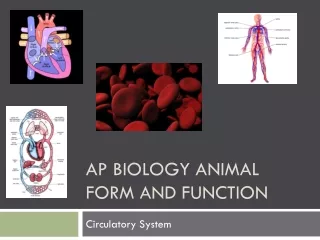
Double Circuit closed system • Mammals and other vertebrates • Deoxygenated blood pumped to lungs where it is oxygenated then returns to the heart where it is pumped again before returning to body to distribute oxygen/nutrients • Diagram
Efficiency of the systems • Closed – single: -Blood loses pressure at gills and flows at low pressure around the body (overcome by swimming) -One circuit • Closed – double: -High blood pressure maintained -Lungs circuit separated from body circuit
Pumps (Hearts) • Earthworms – 5 “pseudo” hearts with valves for one way flow • Insects – tubular heart running along dorsal surface, blood enters through ostia and pumped to head • Vertebrates – 2, 3, or 4 chambers. ATRIA collect blood and VENTRICLES pump blood
Vertebrate hearts con’t. • Fish – 2 chambered (one A one V) • Amphibians – 3 chambered (2 A one V). Not fully divided, some mixing occurs (overcome by absorption from skin) • Mammals/Birds – 4 chambered (2 A 2 V). Oxygenated and deoxygenated separated.
Pigment (all about O2) • Note: Haemolymph has NO pigment because no O2! • Haemoglobin – Found in closed systems. Oxygen binds to IRON. Red when oxygenated, blueish when not. • Haemocyanin – Found in open systems. Oxygen binds to COPPER. Blue when oxygenated, clear when not.
Structure of blood • Plasma – 90% water, 10% proteins/ions (for pH regulation and membrane permeability)/hormones/dissolved gases/nutrients/wastes • White blood cells and platelets – for defense and immunity (WBCs) and clotting (platelets) • Red blood cells – mainly to transport OXYGEN • Diagram
Vessels • Arteries - carry blood AWAY from the heart • Elastic and stretchy to withstand high pressure • Muscle layer to help push blood through • THICK outer layer • ARTERIOLES are small arteries that deliver blood to capillaries
Vessels • Veins • Return blood to heart (deoxygenated) • Same sort of structure as arteries, but less elastic tissue • Many have one way valves to prevent backflow • Blood is at low pressure (after passing though capillaries • VENULES are small veins that return blood from capillaries
Vessels • Capillaries -VERY SMALL vessels that connect artery and vein systems -allow efficient exchange of gases, nutrients and wastes between tissues -present in the form of “beds” -Fluid leaks out and returned to blood system – some picked up by lymphatic (gland) system.