Understanding the Digestive System: Key Terms and Anatomy Overview in Medical Terminology
This overview provides essential medical terminology related to the digestive system, covering critical terms and anatomical structures. It explores the gastrointestinal (GI) tract's components, including the mouth, esophagus, stomach, small intestine, large intestine, and accessory organs like the pancreas and liver. Key concepts such as digestion, absorption, and common pathologies like ulcers and hernias are discussed, making it a valuable resource for students and professionals in the medical field. Discover how each part plays a crucial role in maintaining digestive health.

Understanding the Digestive System: Key Terms and Anatomy Overview in Medical Terminology
E N D
Presentation Transcript
The Digestive System Medical Terminology
Key Terms: GI • Asymptomatic • Defecation • Duodenal bulb • Endoscope • Exocrin • Pepsin • Varices • Sphincter
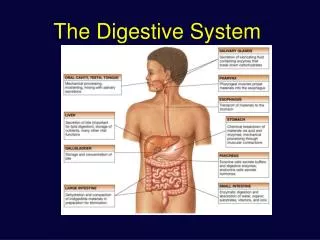
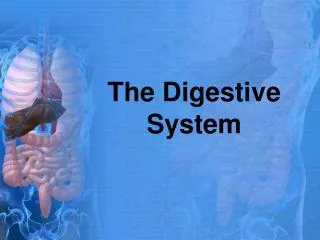
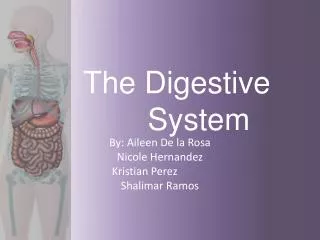
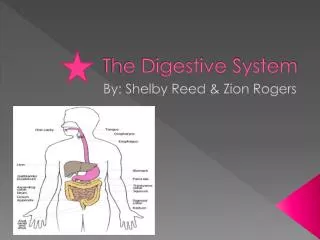
GI Anatomy • Mouth • Pharynx • Esophagus • Stomach • Small intestine • Large intestine • Rectum • Anus
Mouth Anatomy • Oral cavity/buccal cavity • Teeth • Enamel, dentin, pulp (nerves & vessels), gingiva • Salivary glands • Begin chemical breakdown of food into nutrients • Bolus (of food) • Chemical processing • Mechanical processing (mastication)
Mouth Anatomy • Tongue • Assists mechanical processing of food • Assists swallowing (deglutition) • Has papillae (taste buds) • Sweet, sour, salty, bitter • Hard and soft palates • Hard palate = anterior • Soft palate = posterior
Pharynx • Uvula • Inferiormost portion of pharynx • Divides into • The trachea (anteriorly) • The esophagus (posteriorly) • Has the epiglottis • Protective fold of tissue over the trachea • Prevents aspiration
Abdominal Structures • Stomach • In LUQ • Allows both chemical & mechanical digestion • Parts: Fundus, Body, Pylorus • Separated by LES (lower esophageal sphincter, or cardiac sphincter) and pyloric sphincter • Has rugae (tissue folds) and glands that make HCl, make bolus into chyme • Has peristalsis to move bolus into duodenum
Small Intestine • Approximately 20 + feet in length • Has three parts: • Duodenum • Jejunum • Ileum, ends at the ileocecal valve
Digestive Organs • Pancreas • Exocrine part of the gland • Assists in fat digestion • Pancreatic enzymes enter into the duodenum • Liver • Helps to make bile • Also assists in fat digestion • Bile is stored (with cholesterol) in the gall bladder • Bile enters in the duodenum
Liver • Bile production (fat digestion) • Synthesis of glycogen from glucose • Maintaining glucose levels • Glucose synthesis from amino acids • Vitamin storage (B12, A,D,E,K,) • Destruction, recycling of RBC’s and bilirubin • Metabolism of drugs & toxins • Protein synthesis • Including clotting factors
Pancreas • In upper abdomen, across RUQ & LUQ • Endocrine function: insulin secretion • Exocrine function: digestive enzymes • Trypsin: digests proteins • Amylase: digests CHO • Lipase: digests fats • Through pancreatic duct to duodenum
Gall Bladder • Sac-like storage structure, infrahepatic • Stores bile in solution with cholesterol • Bile helps in fat digestion • Stimulus for GB secretion is duodenal or distal stomach bolus of food • Has cystic duct • Merges with hepatic duct to become the CBD (common bile duct) which enters the duodenum
Large Intestine • Approximate length is 5 feet • Secretes mucus, absorbs water • Five major parts • Cecum (including appendix) • Ascending colon (to hepatic flexure) • Transverse colon (to splenic flexure) • Descending colon • Sigmoid colon, recum, anus
GI Combining Forms • Oro-, stomato- = mouth • Gloss-, linguo- = tongue • Bucco- =cheek • Chielo-, labio- = lip • Dento-, odonto- = teeth • Gingivo- = gums • Sialo- =salivary glands
Combining Forms: GI • Entero- = intestinal (small intestine) • Colo-, colono- = large intestine • Procto- = anus, rectum • Cholangio- = biliary vessel • Chole-, cholecysto- = gall bladder • Choledocho- = bile vessel
Suffixes: • -emesis = vomit (hematemesis, hyperemesis) • -megaly = enlargement (hepatomegaly) • -orexia = appetite (anorexia) • -pepsia = digestion (dyspepsia) • -phagia = swallowing, eating (polyphagia) • -prandial = meal (post-prandial) • -rrhea = discharge, flow (diarrhea)
Pathology: Ulcers • Peptic Ulcer Disease (PUD) • Related to hydrochloric acid and pepsin in gastric secretions • S/S: burning upper abd pain, nausea, may be exacerbated or improved with food intake, supine symptoms • Various degrees: • From GERD (mild) to ulcers in duodenum or stomach • Helicobacter pylori • Risk factors: NSAID’s, caffeine, smoking, Etoh
Hernia • Abnormal protrusion of a body cavity wall. • May contain soft tissues, organs, etc. • Abdominal types of hernia: • Inguinal: in groin area, commonest in infancy • Strangulated: tissues inside hernia are ischemic • Umbilical: through umbilicus • Diaphragmatic: from abdomen into chest, may be traumatic or congenital, respiratory symptoms • Hiatal: involves lower esophagus and the stomach, through hiatus in diaphragm • Incarcerated: contents are trapped inside hernia, not ischemic
Ulcerative Colitis • Chronic inflammatory disease of large intestine (colon) and rectum • Starts in sigmoid or rectum • Profuse, watery diarrhea with mucus, pus, blood • Mucosal lining involvement only, no intervening normal mucosal tissue • High risk of colon cancer • Treatment is largely surgical
Bowel Obstruction • May occur in small or large bowel • Most common etiology: adhesions (scar tissue) from previous surgery or GI disease • Several types of obstruction: • Volvulus: coil of intestine twists on itself • Intussusception: telescoping of bowel into itself • Compression from outside the bowel: adhesions, etc.
Hemorrhoids • Varicosities of veins in the anal canal • Internal or external • Nonsurgical treatment usually • Associated with high intraabdominal pressure: • Straining, pregnancy, liver disease (cirrhosis), standing or sitting for long periods.
Liver Diseases • Hepatitis = inflammation of liver • Etiology may be viral or chemical, medications • Hepatitis A (infectious hepatitis): from food or drink • Hepatitis B (serum hepatitis): from transfusions and sexual contacts • Cirrhosis = fibrotic scarring of liver • Usually due to chronic damage of some sort • Alcohol is common etiology, also chemicals, heredity • Jaundice (icterus): yellowish color of skin due to excessive bilirubin in serum
Diverticulosis • Diverticuli (tiny, blister-like pockets of epithelium) herniate through the intestinal wall. • Most common in sigmoid colon area (LLQ) • May become inflamed, infected, or rupture (diverticulitis) • Treatment is usually antibiotics and pain control, rarely surgical except in cases of large intraabdominal abscesses
Oncology: • Stomach Cancer • Rare in US, epithelial cancer • Persistent indigestion, often acid symptoms • Colorectal Cancer • Epithelial layer is source • S/S: changes in bowel habits, blood in feces, weight loss, abdominal pain, sudden obstruction
Oncology • Esophageal Cancer • Obstructive symptoms, poor prognosis • Hepatocellular Carcinoma • More common in cases of chronic inflammatory conditions of liver, poor prognosis • Pancreatic Cancer • Difficult to find and resect • Locally invasive, involvement of spinal nerves so often painful, pain radiates posteriorly • Poor prognosis
Related Terms • Anorexia • Appendicitis* • Ascites* • Borborygmus • Cachexia • Cholelithiasis* • Crohn’s Disease (regional enteritis) (ileum)*
Related Terms • Cirrhosis* • Colic • Deglutition • Dysentery (inflammatory intestinal condition usually caused by bacteria, parasites, bloody diarrhea is hallmark of disease) • Dyspepsia • Dysphagia -common with esophageal diseases
Related Terms: • Eructation • Fecalith • Flatus • GERD (gastroesophageal reflux disease)* • Halitosis • Hematemesis • IBS (irritable bowel syndrome): unknown etiology*
Related Terms • Malabsorption Syndrome • Oral leukoplakia • Melena • Pancreatitis* • Peristalsis • Pyloric stenosis • Regurgitation • Steatorrhea
Diagnostic procedures & tests • Endoscopy • Upper GI (gastroscopy) • Lower GI (colonoscopy) • Liver function tests & hepatitis panel • Stool culture & stool guaiac • Barium enema & swallow • CT, ERCP, Ultrasonography, Biopsy
Therapeutic Procedures • Nasogastric intubation/suction (NGT) • Resections and ostomies • Colectomy, colostomy, ileostomy, etc • Various GI anastomoses • Lithotripsy • Polypectomy • pyloromyotomy
Pharmacology: • Antacids • Antidiarrheals • Antiemetics • Antispasmodics • Laxatives • Antibiotics • Antiulcer (histamine-2 blockers & proton pump inhibitors)