High Performing Organizations
This reading material explores key insights from influential books on managing high-performing organizations. Highlighting frameworks from "Peak Performance," "The Tipping Point," and "Essentials of Organizational Behavior," it emphasizes aligning employee motivation with organizational goals, fostering innovation, and leveraging collective talent. With strategies for creating engaging workplace cultures and driving effective change, this resource is invaluable for leaders aiming to enhance team dynamics, accountability, and overall performance in rapidly evolving business environments.

High Performing Organizations
E N D
Presentation Transcript
High Performing Organizations MGMT 500 Team 1 5/28/2003
Readings • The Manager’s Bookshelf • “Peak Performance: Aligning the Hearts and Minds of your Employees” by Jon R. Katzenbach • “The Tipping Point” by Malcolm Gladwell • “Organizing for the Future” by Jay R. Galbraith and Edward E. Lawler III & Associates • “Developing Management Skills” by David A. Whetten and Kim S. Cameron • “Essentials of Organizational Behavior” by Stephen P. Robbins • “Hidden Value” by Charles A. O’Reilly and Jeffery Pfeffer Team 1
“Peak Performance: Aligning the Hearts and Minds of your Employees” • Harness & maximize emotional energy • Balanced Path Concept:Management commitment to achieving a balance between enterprise performance and individual worker fulfillment • Pick a Path (Tactic) • Missions, Values, and Pride • Process & Metrics • Entrepreneurial Spirit • Individual Achievement • Recognition & Celebration Team 1
“The Tipping Point” • How do fads get started? • Contagious behavior • The Three Rules • The Law of the Few • The Stickiness Factor • The Power of Context • With a slight push in just the right spot … • Reaffirmation of the potential for change & the power of intelligent action Team 1
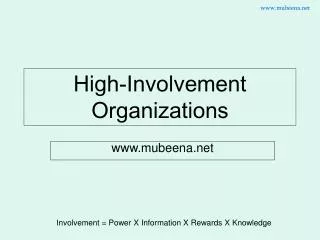
“Organizing for the Future” • Business environment is becoming increasingly more complex and unpredictable • Fierce competition often shortens the lifespan of traditional competitive advantages • Ability of a company to organize effectively and manage change will form the basis for achieving longer-term advantage • High-Involvement Organizations • Access to information • Opportunity to influence decision making • Rewards • Knowledge Team 1
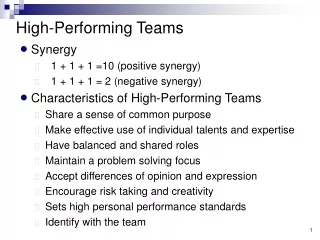
“Developing Management Skills” Attributes of High-Performing Teams • Performance outcomes • Specific, shared purpose & vision • Mutual, internal accountability • Blurring of formal distinctions • Coordinated, shared work roles • Inefficiency leading to efficiency • Extraordinarily high quality • Creative continuous improvement • High credibility & trust • Clarity of core competence Team 1
“Essentials of Organizational Behavior” • An organization’s internal structure contributes to employee attitudes & behavior • HR policies influence performance • Employee selection • Training • Performance appraisal • Strong culture: core values are intense & shared • Management of organizational change Team 1
“Hidden Value” • Fully use the talent and unlock the motivation of the people already in the organization • Success isn’t from “winning the war” for talent • Common themes identified: • Clear set of values • Values are widely shared • Values form the foundation of management practices • All senior managers are leaders • Primary role is to ensure that the values are maintained and constantly made real to all of the people in the organization • Not just CEO & founders Team 1
Open Discussion • Other important characteristics? • Caveats? • Examples, good or bad? Team 1