The Rise and Fall of the Ottoman Empire: Understanding the Power of the Sultans
130 likes | 262 Vues
The Ottoman Empire, ruled by all-powerful Sultans, fascinatingly emerged from nomadic Turkish warriors fleeing the Mongols. Key to their strength were the elite Janissaries, young war captives converted into loyal soldiers. Despite challenges from leaders like Timur and the eventual decline starting with Suleiman the Magnificent’s death, the Ottoman governance was noted for its efficient administration and millet system, allowing diverse communities to coexist. The Empire faced significant decline through corruption, internal strife, and territorial losses, culminating in its dissolution in 1923.


The Rise and Fall of the Ottoman Empire: Understanding the Power of the Sultans
E N D
Presentation Transcript
Essential Question • Why were the Ottoman Sultans able to rule as all-powerful rulers?
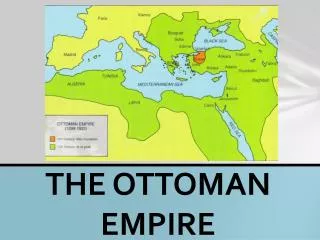
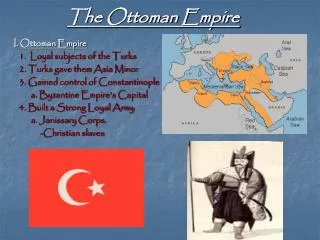
Introduction • The 1st Ottoman were nomadic Turkish warriors for Islam, from Central Asia • Fled from Central Asia to escape the Mongols • Attacked the Byzantines • Failed to capture Constantinople (Capital) • Captured Adrianopolis (2nd most important city) • 1396 – 1st Sultan (ruler) appointed
Elite Ottoman Army • Known as Janissaries • Made up of young war captives & Christian slaves • Were converted to Islam, then trained as soldiers • Belonged to the Sultan, & served for life • Gained power & influence, eventually became important political group
Timur Challenges the Ottomans • Timur – Turko-Mongol leader • Born in 1336, claimed he was a descendant of Genghis Khan • Created an army, built power in Central Asia, & began a career of conquest • 1402 – Defeats Ottoman Army in Battle of Ankara • Captures Sultan, forced Ottomans to return territory they took from others
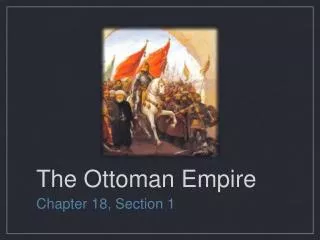
Recovery & Expansion • Civil war broke out over who should be next Sultan • Murad II took power & began to expand empire • Defeated last European crusaders in Battle of Varna • Followed by Mehmed II • Conquered Constantinople (Byzantine Capital) in 1453 • Renamed city Istanbul – Became Ottoman capital
Suleiman the Magnificent • Greatest Ottoman Sultan • Ruled from 1520 – 1566 • Led Ottoman Empire to Golden Age • Reunited Muslim world (except Persia & Afghanistan) by conquering North Africa
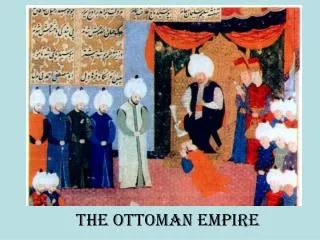
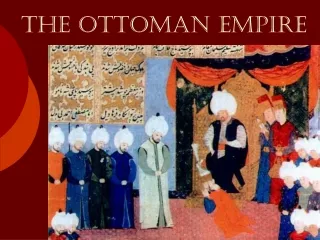
Government & Society • Sultan • Governed from Istanbul as all-powerful ruler • Empire was well-organized & efficiently governed • Assisted by Janissaries • 2nd in Command – Grand Viziers
Government & Society • Society – 2 major groups • Small ruling class • Reaya – Larger group of ordinary people • There was social mobility
Government & Society • Millet System • Reaya made up of different groups of people • Muslim Turks, Christians, Jews, & Arabs • Strong religious tension • Religious freedom was allowed by Sultans • Millet – Separate religious communities of Reaya • Under control of Sultan, but governed themselves • Each has its own laws, customs, courts, taxes, education, health system, & defense
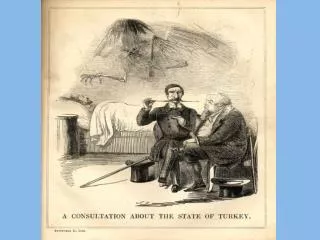
The Slow Decline • 1566 – Suleiman the Magnificent dies • Marked beginning of the decline • 1571 – Phillip II leads Spanish navy to defeat Ottomans • Battle of Lepanto – Europeans defeat Ottomans near Greece
The Slow Decline • 1600 – Government & Economy face problems • Lost control of silk & spice trade • New trade routes bypassed Ottoman Empire • Power of Sultans weakened • Government became corrupt due to internal power struggles • Rebellions among the Janissaries • Lost territory to Russia & France • 1923 – Empire ends when Turkey establishes a republic