Nurturing Healthy Relationships: The Reality Beyond Perfection
220 likes | 282 Vues
Explore the truth about relationships, soul mates, and personal growth. Learn to communicate effectively, manage expectations, and handle conflicts with care. Prioritize relationships for lasting happiness and fulfillment.


Nurturing Healthy Relationships: The Reality Beyond Perfection
E N D
Presentation Transcript
The Myth of ‘The Perfect Relationship’ • Soul mates; ‘The One’ • Nobody can meet ALL of your needs • Every relationship has some problems • Healthy expectations from the beginning
Compatibility • A Triangular Theory of Love (Sternberg, 1986) Intimacy Passion Commitment
Maintaining Oneself Within a Relationship • You will change due to your relationships • Remaining true to oneself • Whose needs are met through the relationship? • Not always 50/50
Maintaining Oneself Within a Relationship, cont’d. • Keeping a life outside your relationship • Knowing the self in relation to others • Enhancing one another’s growth
Supporting Your Relationship • You can’t go it alone! • Surround your relationships with support • Couple’s Resource Map
Expectations • How realistic are your expectations for your partner? • How realistic are your partner’s expectations for you?
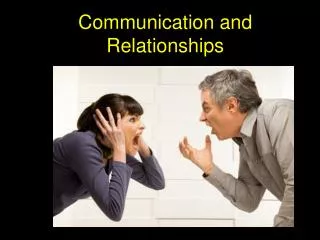
Fighting • Is fighting healthy? • “Growing pains” • What can you learn from a fight?
Fighting, cont’d. • The Four Horsemen of the Apocalypse (Gottman, 1999) • Criticism • Defensiveness • Contempt • Stonewalling
Fighting Fair • Focus on the issue at hand • Remain focused on the present • Not the time to bring up the past • Listening—Knowing when it is your turn • NO physical violence • Seek counseling when necessary
Breaking up is hard to do…. • Give yourself time to move on • Nurture your other relationships • Take time to reflect on the lessons you can learn from the relationship AND the break-up
Relationships and Transitions • Potential for increased negative interactions • Protective defense mechanisms • Increased awareness
Making Relationships A Priority • Relationships are often taken for granted • Make a commitment to care for your relationships before it is too late!!
Listening • Making the effort • Non-verbal cues • Eye contact • Notice underlying feelings
Direct Communication • Speak clearly and directly • Say what you mean • Verify understanding • Avoid beating around the bush
Self-Disclosure • Sharing personal experience • Necessary for intimacy • Trust is important! • Appropriate levels of disclosure
Non-verbal Communication • As speaker • Gestures • Increase interest • As listener • Awareness • Inconsistencies
Passive, Aggressive, and Assertive Communication • Passive: Not expressing feelings or standing up for yourself • Aggressive: Expressing feelings in an overbearing manner • Assertive: Expressing feelings without violating others’ rights
Advice • Proceed with caution!
Focus on the Behavior • Avoid labeling • Personal attacks lead to defensiveness • Negotiate behaviors