Wartime Politics
50 likes | 162 Vues
Learn about the effects of the Emancipation Proclamation during the American Civil War, its symbolic significance, and how it shaped wartime politics and the Union's stance on slavery.


Wartime Politics
E N D
Presentation Transcript
Confederacy Seeks British Aide • Britain Remains Neutral • Britain had new sources of cotton in Egypt & India • Wheat crop had failed, needed Northern corn and wheat more than Southern cotton • Trent Affair • British ship carrying two Confederate diplomats intercepted by Union ship • Britain sent 8,000 troops to Canada • Lincoln frees the two men
Lincoln and Slavery • Though personally opposed, the war was about preserving the Union, not slavery • Emancipation of slaves began as a practice similar to seizing Confederate supplies during wartime • Britain was opposed to slavery – emancipation would discourage Britain from supporting the Confederacy
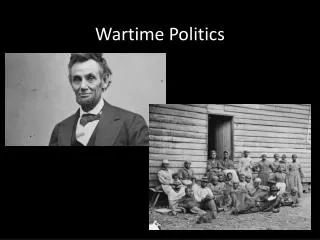
Emancipation Proclamation • Issued on January 1, 1863 • Though it freed slaves, only applied to those behind Confederate lines • Was a military action to weaken the South • Did not free slaves in lands under Union control or in slave states that had not seceded
Effects of the Proclamation • Little practical effect, huge symbolic importance • Gave the war a high moral importance • Free blacks able to join Union army • Confederacy realized compromise was no longer an option – win or lose way of life • Immigrants in the North fear freed slaves will compete for jobs