SlideServe
Menu
Préférences
© SlideServe · v2026

Character

imaran avatar
11 diapositives · 353 Views · Jul 25, 2014

Character . An imagined person who inhabits a story. . Stock characters:.

Character - slide 1
01 / 11Character
1 / 17

Télécharger la présentation

Character
Une image / un lien ci-dessous est fourni (tel quel) pour télécharger la présentation

Politique de téléchargement : le contenu du site vous est fourni TEL QUEL pour votre information et votre usage personnel ; il ne peut être vendu, concédé sous licence ni partagé sur d’autres sites sans l’accord de son auteur.Le contenu vous est fourni TEL QUEL, pour votre information et votre usage personnel uniquement. Téléchargez la présentation en cliquant sur ce lien. Lors du téléchargement, si vous ne parvenez pas à télécharger une présentation, l’éditeur a peut-être supprimé le fichier de son serveur.Pendant le téléchargement, si vous ne parvenez pas à obtenir une présentation, le fichier a peut-être été supprimé par l’éditeur.

F I N

Plus de contenu associé

Transcription de la présentation
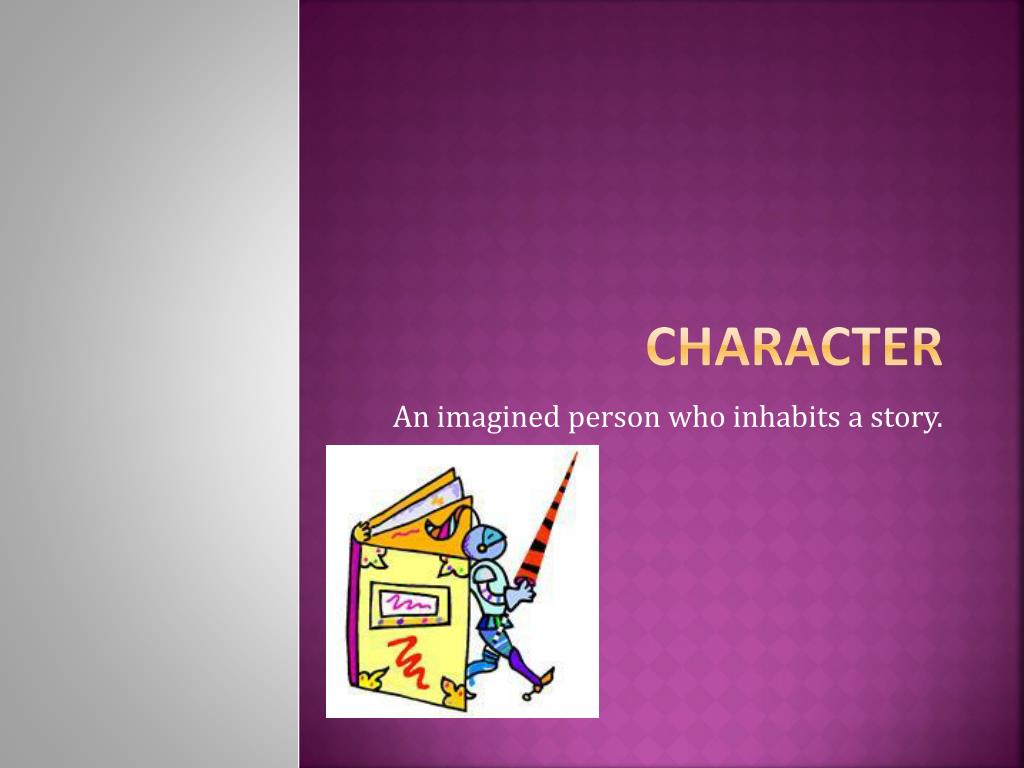
  1. Character An imagined person who inhabits a story.

  2. Stock characters: • Stereotyped characters known for some outstanding trait or traits ( Prince Charming, the mad scientist or fearless detective). They require little detailed portraiture. “ In the finest literary creations, characters are drawn”…not as stereotypes , but as unique individuals”. They exhibit many facets to their personalities and have more than one dimension.

  3. Types of Characters: • Flat Characters- known for only one outstanding trait. They are rarely the central characters in a narrative and stay the same throughout the story. • Round Characters - are represented in depth in a narrative. Round characters are those who change significantly during the course of a narrative or whose full personalities are revealed gradually throughout the story.

  4. Dynamic and Static characters: • Dynamic characters – These characters change or evolve through the course of the story. • Static characters – remain fixed and do not experience significant change.

  5. Hero: a character who exhibits ideal qualities valued by the world he/she inhabits.

  6. Antihero: • A protagonist conspicuously lacking in one or more of the usual attributes of the traditional hero. They can be loners rather than leaders in their society . They are human rather than ideal.

  7. Motivation: • Sufficient reason for characters to behave as they do

  8. How a Character is revealed • Speech- This includes dialect, tone, volume, style frequency of communication. • Actions- What a character does and does not do • A character’s surroundings and the atmosphere with which they are associated. • Physical Appearance

  9. How a character is revealed: • Style of dress – attire • Position in society- economic status, profession, level of authority • What other characters think and say about a character- reputation • Relationships- the response of other characters • Enemies and Friends • What the author directly says about the character.

  10. Characters :

  11. Source: • Glau, Gregory R., Barry M. Maid, and Duane Roen., The McGraw-Hill Guide Writing for College, Writing for Life. New York: McGraw-Hill, 2010.