
SlideServe
Menu
Préférences
© SlideServe · v2026

Managing Conflict

ira avatar
24 diapositives · 493 Views · Jun 15, 2012

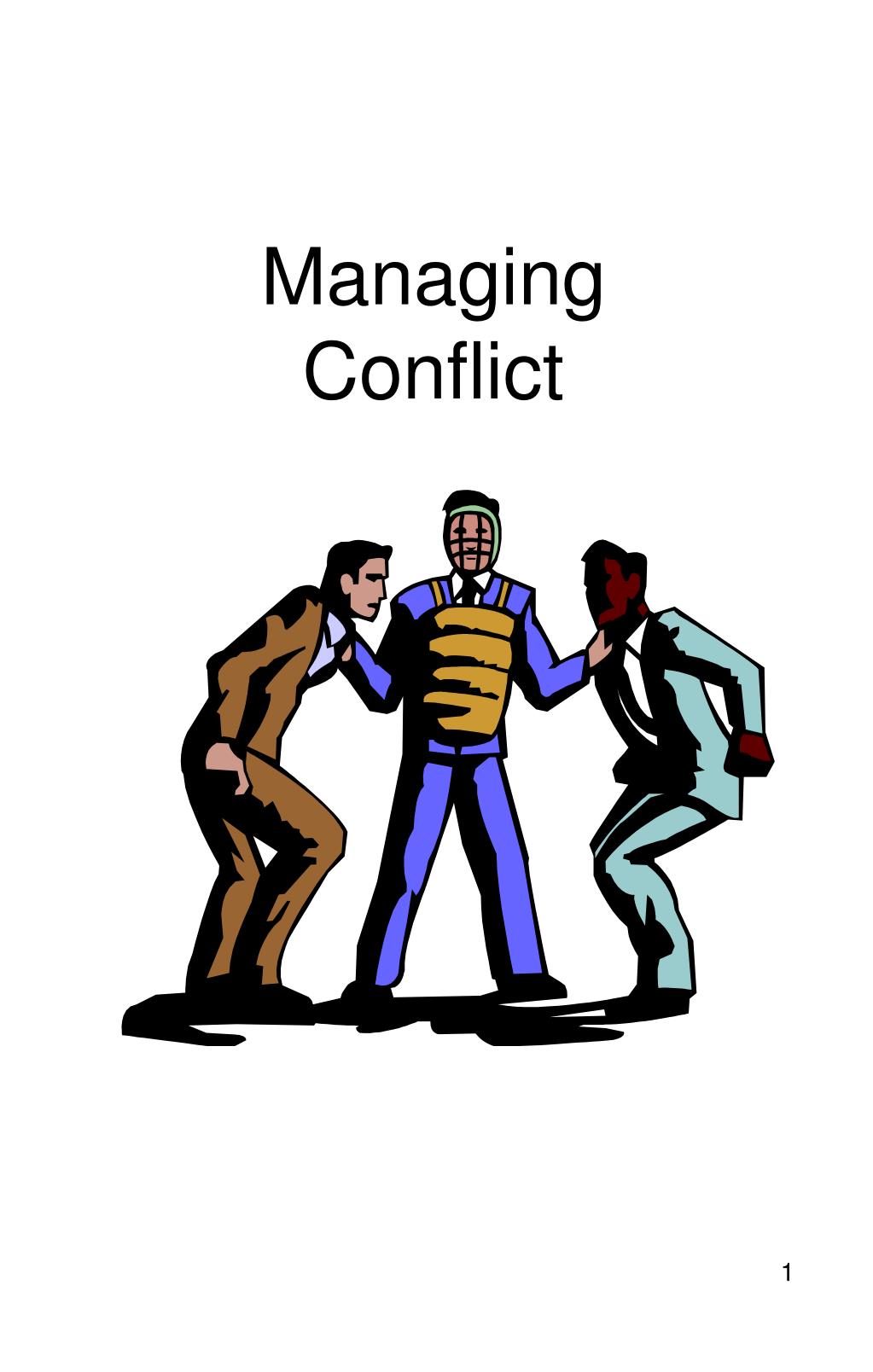
Managing Conflict. The Scoutmaster. Managing Conflict. Finding common ground Tools for people to settle their own disputes Stepping in to make unilateral decisions. Exercise. Strategies Point of the exercise. Possible Strategies. Bribery Concern Persuasion Interest
Managing Conflict - slide 1
01 / 24Managing Conflict
1 / 17

Télécharger la présentation

Managing Conflict
Une image / un lien ci-dessous est fourni (tel quel) pour télécharger la présentation

Politique de téléchargement : le contenu du site vous est fourni TEL QUEL pour votre information et votre usage personnel ; il ne peut être vendu, concédé sous licence ni partagé sur d’autres sites sans l’accord de son auteur.Le contenu vous est fourni TEL QUEL, pour votre information et votre usage personnel uniquement. Téléchargez la présentation en cliquant sur ce lien. Lors du téléchargement, si vous ne parvenez pas à télécharger une présentation, l’éditeur a peut-être supprimé le fichier de son serveur.Pendant le téléchargement, si vous ne parvenez pas à obtenir une présentation, le fichier a peut-être été supprimé par l’éditeur.

F I N

Plus de contenu associé

Transcription de la présentation
  1. ManagingConflict

  2. The Scoutmaster

  3. Managing Conflict • Finding common ground • Tools for people to settle their own disputes • Stepping in to make unilateral decisions

  4. Exercise • Strategies • Point of the exercise

  5. Possible Strategies • Bribery • Concern • Persuasion • Interest • Straightforwardness

  6. Ultimately… • You can only empower yourself • You can encourage others to act

  7. Be aware of yourself • Look at yourself • Resolve your conflict

  8. Be Aware of Others “When are people most likely to do what you ask them to do, especially if it is something they are less than excited about?”

  9. When the group finds you • Trustworthy • Reliable • Making decisions for the good of the group • Care about them

  10. Listening to Learn • Active • Empathetic

  11. CooperativeResolutions • INVOLVEMENT • INVOLVEMENT • INVOLVEMENT

  12. The Most Important Question • What do you want?

  13. Most Important Follow-Up Questions • What are you willing to do to get what you want? • Is what you are doing working? • Do you want to figure out another way?

  14. Questions for Cooperative Conflict Resolution • What do you want? • What are you doing to get it? • Is it working? • Do you want to figure out another way?

  15. Effective Communiction In Conflict Situations • What do you want? • What do you want? • What do you want? • What do you want?

  16. Managing Your Emotions • Step away from emotional responses • Slow breathing • Step away -- give it space and time • Regain objectivity • Work on issues in present/future NOT PAST

  17. Negotiating Limits and Rules • Know limits -- and respect them • Group determines limits

  18. CooperativeApproach • Engage everyone on an equal basis • Help them come up with a solution on their own What do you want? What are you doing to get it? Is it working? Do you want to figure out another way?

  19. ProscriptiveApproach If cooperation fails: - Proscriptive conflict resolution

  20. Statements for Proscriptive Conflict Resolution • This is what I want. • This is what I understand you are doing. • This why that isn’t working for me. • Here is what I need you to do.

  21. Stepping in… • Trust • Reliability • History of good decisions for the group • Caring Based on established…

  22. Contract Between Leaders & Those Led My Job Is • To do all I can to ensure your safety Your Job Is • Top tell me when you don’t feel safe

  23. Ideas Not Often Shared • If I’m doing something that bothers you, I’d like you to tell me in a respectful way. • How will it be if we really get along? What will that be like? • If I see you’re having a problem, what do you want me to do?

  24. Conclusion