Download
1 / 14
140 likes | 253 Vues
The Bald Eagle (*Haliaeetus leucocephalus*), a symbol of strength and freedom, can weigh between 10-14 pounds, with males measuring 30-34 inches and females 35-37 inches tall. With a wingspan of 72-90 inches, they boast keen eyesight for spotting prey from afar. They typically lay 2-3 eggs, which both parents incubate for 35 days. While they can live up to 20 years in the wild, they face threats from hunting and habitat loss. Conservation programs are ongoing to protect this iconic species, highlighting the importance of awareness and community action.

E N D
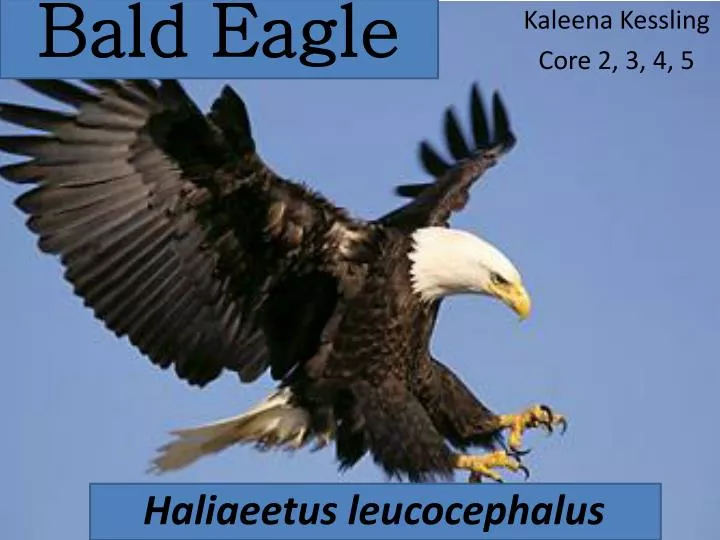
Bald Eagle Kaleena Kessling Core 2, 3, 4, 5 Haliaeetus leucocephalus
Species Statistics • Bird • Weight: • Both male and female: 10-14 pounds • Height • Male: 30 to 34 inches • Female: 35 to 37 inches • Wing Span • Male: 72 to 85 inches • Female: 79 to 90 inches
Life Span • Life Cycle: • Juveniles are brown and white with black beaks (Takes 5 years to mature into adult coloring) • Sexual maturity @ 4/5 years • Mate for life • Lay 2/3 eggs • Male and female incubate eggs for 35 days. • Some migrate when Northern lakes and rivers freeze. • Captivity: 30-50 years • Wild: 15-20 years
Vital StatisticsCarnivore Carrion Fish
Vital Statistics cont. After the death- bald eagle is eaten by decomposers (Bacteria) and larger scavengers Bald Eagle dies in the wild from: Hunting
Differences in Sexes Male Female Larger than males Wider/broader beak Smaller than females During incubation period male brings sprigs of conifer branches into the nest
Habitat and Ecosystem Live in nests in large trees near rivers/coasts As of 2011- about 70,000 eagles remain Ecosystem: Forests and mountain areas in North America
Keen Eyesight: 4x better than 20/20 Helpful Adaptations Long broad wings Sharp hooked beak Razor sharp talons
Unusual Features Can see an animal as small as a mouse from a mile away When newly hatched eaglets eyes are open and they are covered in light grey down feathers. Eagles do not have vocal cords. But still make high-pitched, shrill squeaking and screeching sounds via the air that passes the bones in their neck.
World Map Found in North America (Most of the U.S., Alaska, and parts of Mexico)
Reasons for Endangerment DDT Poisoning Power lines Hunting
What is being done? 1. Breeding and nesting programs 2. It is extremely illegal to hunt the Bald Eagle (Big fine$ and prison time) 3. Beak Repair programs
What can YOUdo? • Adopt an Eagle in your name • Begin a recycling program in my town • Write a letter to President Obama and Alaska Legislatures about passing a law about mandatory clean up of used fishing line.










![[4] [5] [3] [2] [4]](https://cdn1.slideserve.com/2491770/slide1-dt.jpg)