Understanding Key Terms in Respiratory Anatomy and Medical Terminology
This guide delves into essential medical terminology related to the respiratory system, covering critical terms such as carbon dioxide, oxygen, and respiratory failure. It explains the anatomy of the upper and lower respiratory tracts, including structures like the nasal cavity and lungs, as well as the physiological processes of ventilation and respiration. Key conditions such as asthma, chronic bronchitis, and emphysema are outlined, alongside basic concepts like gas exchange and the significance of surfactant. Perfect for students and health professionals alike.

Understanding Key Terms in Respiratory Anatomy and Medical Terminology
E N D
Presentation Transcript
Respiratory System Medical Terminology
Key terms: • Carbon dioxide: product of cellular metabolism • Granuloma • Mucosa: epithelial layer lining cavities and lumens • Mucus • Naris: nostril • Oxygen • pH
Key Terms • Respiratory failure • Vs. respiratory distress • Septum • Sputum • Status asthmaticus • Critical extreme of asthma symptoms • Surfactant: lipoprotein that reduces surface tension of alveoli and allows their patency
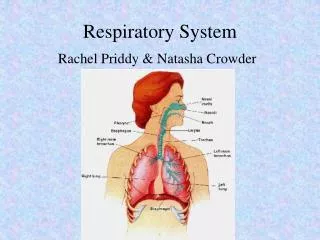
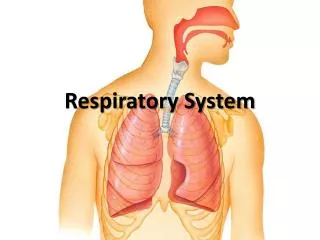
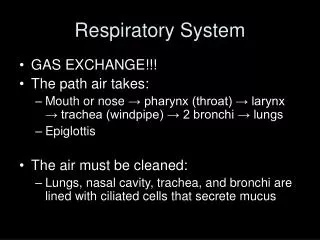
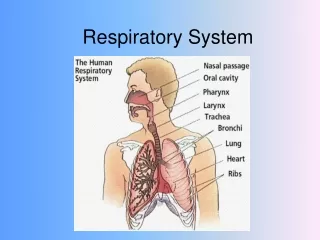
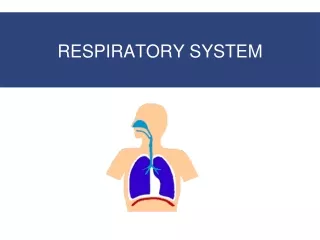
Anatomy • Upper respiratory tract: • Nasal cavity • Cilia, nasal septum, olfactory neurons • Nasopharynx • Adenoids, tonsils (palatine) • Oropharynx • Laryngopharynx • Larynx (phonation), epiglottis, trachea
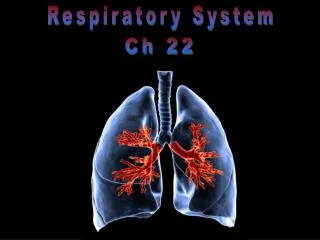
Anatomy • Lower respiratory tract: • Trachea • Right & Left mainstem bronchi • Lungs • Within lungs: • Bronchioles • Alveoli • Pulmonary capillaries
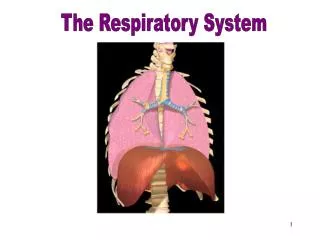
Anatomy • Other thoracic structures: • Intercostal muscles (between ribs) • Mediastinum • Heart, aorta, esophagus,bronchi • Pleural cavities • Pleura (visceral & parietal) • Diaphragm • Separates abdomen from thorax • Initiate the mechanics of ventilation • Begins inspiration • expiration
Respiration • Process by which: • Oxygen is absorbed from inhaled air • Oxygen is then transported to cells for their metabolic processes • Cellular waste products of metabolism (carbon dioxide & water) are brought back to the lung • Lungs return CO2 and water to environment.
Respiration: Processes • Ventilation: the mechanics • External respiration • Exchange of gases between alveoli & pulmonary capillaries • Transportation of respiratory gases through CV system to cells and back • Internal respiration • Exchange of gases between tissues & systemic capillaries
Ventilation • Involves • Involuntary movement of air in and out of respiratory tract • Inspiration & expiration • Stimulus for this is oxygen & carbon dioxide levels in the blood • Autonomic NS stimulates diaphragm and intercostal muscles
Combining Forms • Naso- or rhino- (nose) (rhinoplasty) • Septo- (septum) septal hematoma • Sinuso- (sinus) • Adenoido- (adenoids) (adenoidal hypertrophy) • Tonsillo- (tonsillectomy) • Pharyngo- (Pharyngeal) • Epiglotto- (epiglottitis)
Combining Forms • Laryngo- (laryngomalacia) • Tracheo- (tracheostomy) • Bronchio- or broncho- (bronchiectasis) • Bronchiolo- (bronchioloconstriction) • Alveolo- (alveolar) • Pneumo-, pneumono- or pulmono- (lungs) • Pleuro- (pleurocentesis)
Combining Forms • Anthraco- (coal) anthracosis • Atelo- inperfect/incomplete (atelectasis) • Conio- (dust) (pneumoconioses) • Cyano- • Lobo- (lobe) lobectomy • Ortho- (straight) (orthopnea) • Oxo- or oxi- (oxygen) oximeter
Combining Forms • Pectoro-, stetho-, thoraco- (chest) • Phreno- (diaphragm) phrenic nerve • Spiro- (breathe) spirometry
Suffixes: • -capnia (CO2) (hypercapnia) • -osmia (smell) (anosmia) • -phonia (voice) (dysphonia) • -pnea (breathing) (apnea, tachypnea) • -ptysis (spitting) (hemoptysis) • -thorax (chest) (hemothorax, chylothorax)
Chronic Obstructive Pulmonary Disease (COPD) • Includes three major disease components: • Asthma, chronic bronchitis, emphysema • Major etiology in US: smoking • Risk factor for pulmonary infections & CA • Major symptoms and signs: dyspnea, labored respirations, chronic cough, hypoxia, hypercarbia, cyanosis
Asthma • Three major disease components: • Bronchospasm, increased mucus production, airway inflammation • Reversible bronchospasm • Increased risk of asthma during URI or pulmonary infections, allergen contact, aspirin-sensitivity, with exercise.
Asthma • Usual symptoms and signs: • Dyspnea, frequent cough, audible wheezing, trouble sleeping, decreased exercise tolerance • Status asthmaticus • Life-threatening exacerbation of asthma
Chronic Bronchitis • Ongoing inflammation of epithelial (mm) lining of airways • Chronic cough and mucus production • Acute bronchitis: • Active infection • May be bacterial or viral • Change in cough and sputum pattern
Emphysema • Alveolar walls are destroyed • Have fewer, much larger, less absorptive alveoli with more fragile walls • Air trapping occurs, barrel chest appearance, chronically low blood O2 and chronically high CO2 blood levels
Influenza • Viral respiratory disease (Types A, B, C) • Pandemics (Type A) • Local geographical outbreaks (Type B) • S/S: myalgias, fever, chills, HA, anorexia, may have cough and nasal congestion, secondary bacterial pneumonias due to immunecompromise, 5 day course usually
Pleural Effusions • Any abnormal fluid collection between the parietal and visceral pleura • Examples are: hydrothorax, hemothorax, chylothorax, empyema (pneumothorax is abnormal collection of air or collapsed lung) • Etiologies of effusions: CHF, any hypervolemic condition, CA, infections, trauma • Diagnosis: ascultation/percussion, thoracentesis, CXR.
Tuberculosis • Systemic infection due to the tuberculosis mycobacterium • Slower growing than usual bacteria • Treatment for months-years • Increase in multiple-drug resistance over the years • Recent increase in TB in immunocompromised pts and immigrants
Tuberculosis • Aerosolized transmission • S/S: chronic cough (months or years), night sweats, hemoptysis, weight loss, febrile episodes • Primary tuberculosis (lungs) • Tubercle is a focal granuloma
Pneumonia • Inflammation in lungs, may cause consolidation • May be infectious or due to contact with chemicals • Infectious agents: viruses, bacteria, fungi • Some categories of pneumonia: • Aspiration, lobar, bronchopneumonia (more diffuse), opportunistic
Cystic Fibrosis • Hereditary exocrine disorder • Exocrine glands secrete especially viscous mucus that obstructs ducts of pancreas, GI tract, sweat glands and bronchioles in lungs • Risk for infection and autoimmunity • Sweat test (+ for CF if elevated Cl in sweat) • Fatal illness, survival approx 30 YOA
Respiratory Distress Syndrome • Diseases of reduced lung compliance (elasticity) due to surfactant deficiency or other factors • IRDS (hyaline membrane disease) • Premature infants, diabetic mothers, ground glass appearance on CXR, hypoxia, cyanosis • ARDS • Etiology varies, “white out” appearance of lungs on CXR, hypoxia, often capillary leak
Oncology • Primary lung cancer • Bronchogenic CA • Most common CA in lungs • Cigarette smoking is risk • Basal cells of epithelium are origin • Commonly metastasizes to other areas of lungs • Best px: early stages (resection) • Usually very poor px, rarely found early
Related Terms • Acidosis • Increased acid (H + ions) in blood • May be respiratory or metabolic in origin • Asphyxia • Insufficient oxygen intake • Atelectasis • Cheyne-Stokes respirations • Abnormal respiration pattern, deep regular breaths • May be a sign of respiratory, neurological, toxicological, or metabolic diseases
Related Terms: • Compliance: ease of ventilation of lung tissue that reflects tissue elasticity • Coryza • Croup: viral upper airway infection • Deviated nasal septum • Epiglottitis: obstructive bacterial infection of the airway • Epistaxis: nosebleed
Related Terms • Finger clubbing: distal phylangeal enlargement due to chronic hypoxia • Hypoxemia (in blood) • Hypoxia (in tissues) • Pertussis: whooping cough, long duration bacterial infection • Pleurisy: symptom of pleural inflammation, pleuritic pain (worse with inspiration)
Related Terms • Pneumoconiosis: dust inhalation diseases • Pulmonary edema: excessive fluid in lungs • Pulmonary embolus: clot lodged in lungs • Rales: incontinuous sound (crackles) • Rhonchus: more sonorous sound • Stridor: inspiratory sound, airway obstruction • SIDS (sudden infant death syndrome) • Wheeze: whistling sound of air movement through narrowed airway.
Diagnostics • Mantoux test: intradermal TB test • Oximetry • Pulmonary function testing: dynamic testing and depiction of various lung volumes • Spirometry: the technique for PFT’s • Bronchoscopy • Laryngoscopy
Diagnostics • Arterial blood gases (ABG’s) • Sputum culture • Sweat test • Throat culture: usually looking for Strep A • CXR • Chest CT • Ventilation/perfusion scan: nuclear scan
Therapeutics • Aerosol therapy (nebulizer) • For treatment of wheezing in asthma & COPD • Lavage (usually diagnostic) • Postural drainage • Rhinoplasty/ septoplasty • Pneumonectomy/lobectomy • Thoracentesis • Thoracostomy (Tube or open) (Chest tube)
Pharmacology • Antihistamines (Benadryl, Allegra, etc) • Antitussives (codeine) • Bronchodilators (albuterol) • Corticosteroids (prednisone) • Decongestants (pseudoephedrine) • Expectorants (guaifenesin) • Antibiotics