SlideServe
Menu
Préférences
© SlideServe · v2026

ROCKY INTERTIDAL ZONE

ivory avatar
9 diapositives · 484 Views · Jul 17, 2014

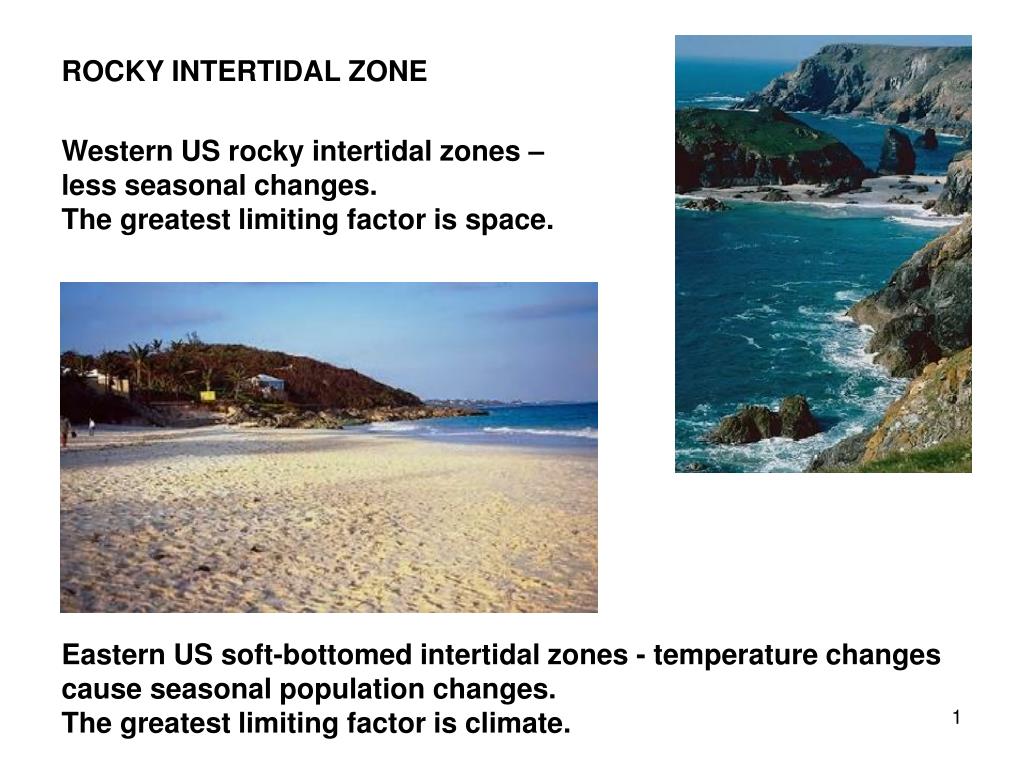
ROCKY INTERTIDAL ZONE. Western US rocky intertidal zones –less seasonal changes. The greatest limiting factor is space. Eastern US soft-bottomed intertidal zones - temperature changes cause seasonal population changes. The greatest limiting factor is climate.
ROCKY INTERTIDAL ZONE - slide 1
01 / 9ROCKY INTERTIDAL ZONE
1 / 17

Télécharger la présentation

ROCKY INTERTIDAL ZONE
Une image / un lien ci-dessous est fourni (tel quel) pour télécharger la présentation

Politique de téléchargement : le contenu du site vous est fourni TEL QUEL pour votre information et votre usage personnel ; il ne peut être vendu, concédé sous licence ni partagé sur d’autres sites sans l’accord de son auteur.Le contenu vous est fourni TEL QUEL, pour votre information et votre usage personnel uniquement. Téléchargez la présentation en cliquant sur ce lien. Lors du téléchargement, si vous ne parvenez pas à télécharger une présentation, l’éditeur a peut-être supprimé le fichier de son serveur.Pendant le téléchargement, si vous ne parvenez pas à obtenir une présentation, le fichier a peut-être été supprimé par l’éditeur.

F I N

Plus de contenu associé

Transcription de la présentation
  1. ROCKY INTERTIDAL ZONE Western US rocky intertidal zones –less seasonal changes. The greatest limiting factor is space. Eastern US soft-bottomed intertidal zones - temperature changes cause seasonal population changes. The greatest limiting factor is climate.

  2. Rocky coasts are characterized by: - abundant food supply with good light - tides produce hours of flooding in cool water followed by desiccation (drying out) and high temperatures - tidal pools are created and emptied - temperature and salinity fluctuate - very distinct zonation worldwide - wave shock http://www.youtube.com/watch?v=6pZ0PZBNgU4 - competition for space fierce (limiting factor)

  3. COPING STRATEGIES / ADAPTATIONS: • WATER LOSS: • run & hide, clam up, tolerate • allow drying out • find tide pools • http://www.youtube.com/watch?v=6QaMA5S1E1E • http://www.youtube.com/watch?v=IyNEG-PvZmM • TEMPERATURE • tolerate • move to moist areas • light color • SALINITY • clam up • tolerate • RESTRICTED FEEDING (MOST ARE FILTER FEEDERS) • only feed when tide is high • tide height determines where they can live

  4. COPING STRATEGIES / ADAPTATIONS: • WAVE SHOCK: • attach (holdfasts, byssal threads, glue) • cling (suction cups) • fish lack swim bladders • find shelter • thicker shells • compact shape • low profile • go with the flow / flexible

  5. Wave action cuts rocks into sea caves, cliffs and sea stacks that provide shelter. Competition for these limited living spaces is high. Inhabitants must find a place to attach or hide or be crushed between waves and rocks. Methods of attachment include cement, byssalthreads, holdfasts, muscular and tube feet, and boring.

  6. Adaptations also include symbiosis and reproductive strategies, like hermaphrodites and organisms that change sex. NOAA The rocky coastal communities’ succession has a predictable pattern that is often controlled by sea urchins. Grazing urchins remove algae from rocks.

  7. New communities can then begin because one group doesn’t over populate the area. Pioneer stage - bacteria and algae Juvenile - protozoa and worms Mature - barnacles, rockweed, mussels, seastars and sea urchins Collectively these animals became known as fouling communities because of their harmful effects on ship’s hulls, docks, pilings, and the smell they create at low tide.

  8. THE BATTLE FOR SPACE • AVAILIBILITY OF SPACE LIMITS • POPULATIONS IN INTERTIDAL • COMPETITION FOR SPACE • DOMINANT BIOLOGICAL FACTOR • HOW TO COMPETE • - be first to get to open space - effective dispersal - reproduce rapidly - take over - grow over

  9. VERTICAL ZONATION • UPPER, MIDDLE & LOWER ZONES • UPPER LIMIT SET BY PHYSICAL FACTORS • LOWER LIMIT SET BY BIOLOGICAL FACTORS (predation & competition)