Understanding HIV and Alcohol: Essential Insights for Clinicians
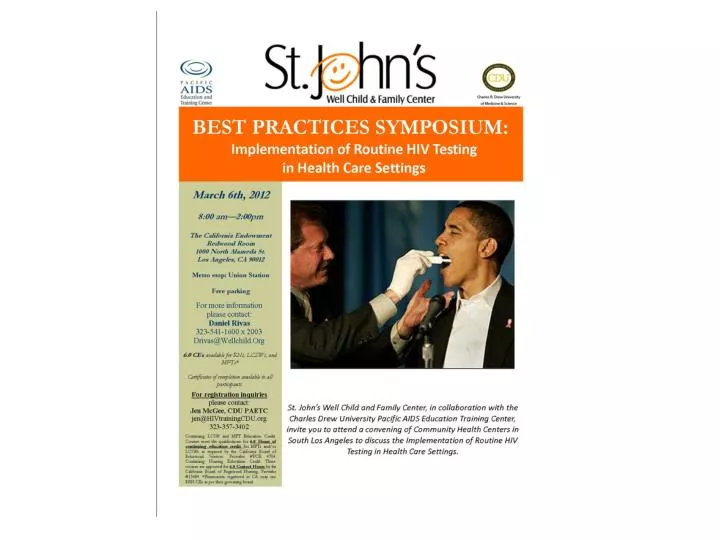
Join us for an informative session on HIV and alcohol with Sherry Larkins, PhD, Program Director of the Pacific Southwest Addiction Technology Transfer Center, on March 14, 2012, from 9:00 AM to 11:30 AM at the LA County Division of HIV & STD Programs. Additionally, engage in our Last Tuesday Series on HIV and Mindfulness with Bram Conley, MA, MS, on March 27, 2012. Don't miss the opportunity to explore crucial topics for nurses and mental health providers at the "Coping with Hope" event on May 17, 2012. Register online for these events.

Understanding HIV and Alcohol: Essential Insights for Clinicians
E N D
Presentation Transcript
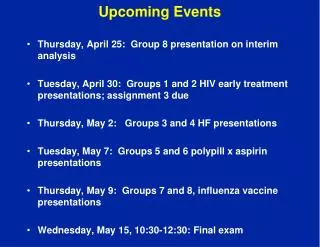
Upcoming Events HIV and Alcohol: What Clinicians Need to Know March 14th, 2012 Sherry Larkins, PhD; Program Director, Pacific Southwest Addiction Technology Transfer Center 9:00am -11:30am LA County Division of HIV & STD Programs (Formerly OAPP) Register Online: http://tinyurl.com/HIVandAlcohol
Upcoming Events Last Tuesday Series: HIV and Mindfulness March 27th, 2012 Bram Conley, MA, MS; 9:00am -10:30am Cobb Building Room 281, Charles Drew University, 1731 East 120th St, LA 90059 1.5 CEs available for RNs, LCSWs, MFTs Register Online: http://tinyurl.com/HIVandMindfulness
Upcoming Events Nurses and Mental Health Providers Save the date! Coping with Hope 2012 HIV, Healthcare Reform and Mental Health California Endowment 8:00 am – 4:30 pm Thursday, May 17th, 2012
Charles Drew University Pacific AIDS Education and Training Center For more information on our trainings: Jennifer McGee, MPHc Program Coordinator Jen@HIVtrainingCDU.org 323-357-3402 Training Calendar: www.HIVtrainingCDU.org
In 2012, I have been forgetting to… • workout • Eat green veggies • Floss • 1 and 2 • 1 and 3 • 1 and 2 and 3 • Not me! I do 1, 2 and 3 daily!
How many patients visited your clinic last year? • Less than 500 • 500 to 1,000 • 1,000 to 3,000 • 3,000 to 5,000 • More than 5,000 • Not applicable
Beatrice • Beatrice is a 28 year old African American mother of 2 who comes to your clinic irregularly. She presents no risks for HIV. • She has worked off and on, but 2 years ago she lost her job and recently her unemployment insurance ran out. • She comes to the clinic to see her primary care provider because she has a bad cold and is ‘anxious.’ Her son also has a cold. • Beatrice is HIV+, but has never been tested.
Would your clinic automatically test Beatrice for HIV? • Yes • No • I’m not sure. • Not applicable
Which best describes how you test patients with UNKNOWN HIV status? • Every patient, every visit. • Every patient, at least yearly. • Only new patients, at intake. • Only if risk factors are present. • Only if patient brings it up. • Not at all. • Does not apply/Other/Unsure
What types of HIV testing are available at your clinic? • Whole blood EIA • Rapid HIV testing – blood • Rapid HIV testing – oral • Confirmatory Western blot • Two or more of the above • Unsure/Other/Not applicable
Does your organization have policies in place regarding routine HIV testing? • Yes, for all new patients • Yes, for all patients at risk • No • I don’t know. • Not applicable/Other
How does your clinic typically respond when patients test positive for HIV? • We treat them for all HIV care at our clinic. • We provide primary HIV care, but refer for HIV specialty care and services • We provide HIV referral information • Other • Not applicable
Our staff have been adequately trained to provide HIV testing services • Strongly agree • Agree • Neutral • Disagree • Strongly disagree • Not applicable
Antonio • Antonio is a 32 year old man who has sex with men. He comes to your clinic because he has an earache. • He knows he is HIV positive but fell out of HIV care 2 years ago. • He will opt-out of routine HIV testing and will offer “I already know I’ve got it. I don’t need it.”
Does your clinic have a protocol in place to re-engage Antonio back into HIV care? • Yes • No • I’m not sure.
Our staff have been adequately trained to provide HIV referral and reengagement services • Strongly agree • Agree • Neutral • Disagree • Strongly disagree • Not applicable