Exploring Earth's Diverse Biomes: Characteristics and Life Forms
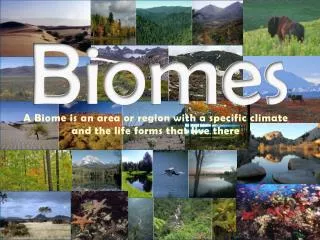
This overview summarizes the world's major biomes, including deserts, tundras, grasslands, deciduous forests, taiga, and tropical rainforests. Each biome is defined by its location, climate, soil quality, and the unique plants and animals that inhabit it. Highlights include the hot, dry conditions and mineral-rich soil of deserts; the cold, nutrient-poor tundra; the rich ecosystems of grasslands; the varied deciduous forests; the coniferous taiga; and the biodiversity of tropical rainforests. Discover how life adapts to these diverse environments.

Exploring Earth's Diverse Biomes: Characteristics and Life Forms
E N D
Presentation Transcript
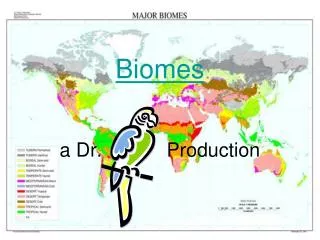
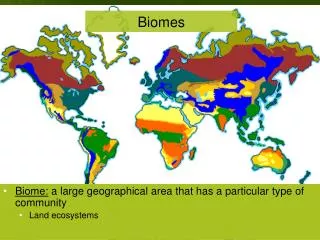
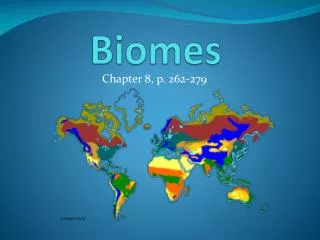
Desert Location: midlatitudes Climate: generally very hot days, cool nights; precipitation less than 10 inches a year Soil: poor in animal and plant decay products but often rich in minerals Plants: none to cacti, yuccas, bunch grasses, shrubs, and a few trees Animals: rodents, snakes, lizards, tortoises, insects, and some birds. The Sahara in Africa is home to camels, gazelles, antelopes, small foxes, snakes, lizards, and gerbils
Tundra Location: high northern latitudes Climate: very cold, harsh, and long winters; short and cool summers; 10-25 centimeters (4-10 inches) of precipitation a year Soil: nutrient-poor, permafrost layer a few inches down Plants: grasses, wildflowers, mosses, small shrubs Animals: musk oxen, migrating caribou, arctic foxes, weasels, snowshoe hares, owls, hawks, various rodents, occasional polar bears
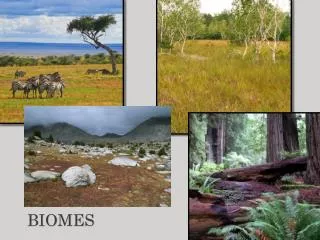
Grassland Location: midlatitudes, interiors of continents Climate: cool in winter, hot in summer; 25-75 centimeters of precipitation a year Soil: rich topsoil Plants: mostly grasses and small shrubs, some trees near sources of water Animals: american grasslands include prairie dogs, foxes, small mammals, snakes, insects, various birds. African grasslands include elephants, lions, zebras, giraffes.
Deciduous Forest Location: midlatitudes Climate: relatively mild summers and cold winters, 76-127 centimeters (30-50 inches) of precipitation a year Soil: rich topsoil over clay Plants: hardwoods such as oaks, beeches, hickories, maples Animals: wolves, deer, bears, and a wide variety of small mammals, birds, amphibians, reptiles, and insects.
Taiga Location: mid- to high latitudes Climate: very cold winters, cool summers,; about 50 centimeters (20 inches) of precipitation a year Soil: acidic, mineral-poor, decayed pine and spruce needles on surface Plants: mostly spruce, fir, and other evergreens Animals: rodents, snowshoe hares, lynx, sables, ermine, caribou, bears, wolves, birds in summer
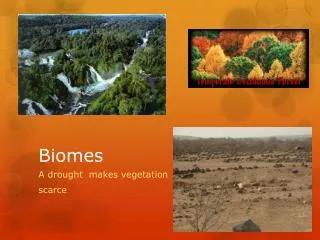
Tropical Rainforest Location: near the equator Climate: hot all year round, 200-400 centimeters (80-100 inches) of rain a year Soil: nutrient-poor Plants: greatest diversity of any biome; vines, orchids, ferns, and a wide variety of trees Animals: more species of insects, reptiles, and amphibians than anyplace else; monkeys, other small and large mammals, including in some places elephants, all sorts of colorful birds