Respiratory System
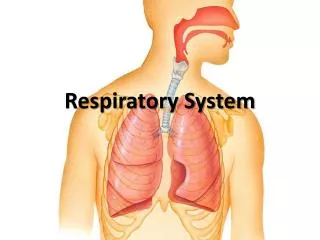
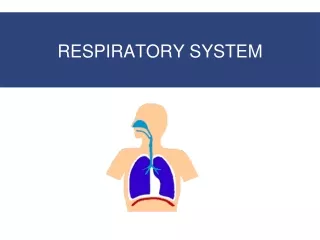
The respiratory system plays a crucial role in gas exchange, allowing us to take in oxygen for cellular respiration while expelling carbon dioxide as waste. This intricate system begins with air entering the nasal cavity, filtered and warmed before passing through the pharynx and epiglottis. The larynx produces sound, and air travels down the trachea into the bronchi and bronchioles, ultimately reaching the alveoli, where gas exchange occurs. Together with the circulatory system, the respiratory system ensures that oxygen reaches every cell, supporting overall health.

Respiratory System
E N D
Presentation Transcript
DRUG DOSE
Good Do Air or Quality
Shallow Breath
http://www.lung.ca/children/pdfs/grades7_12_respiratorysystem.pdfhttp://www.lung.ca/children/pdfs/grades7_12_respiratorysystem.pdf
Major Function • Gas exchange • Take-in oxygen for cellular respiration (in mitochondria): ENERGY • Release carbon dioxide: WASTE • Works together with circulatory system which transports the exchanged gases to all cells of body
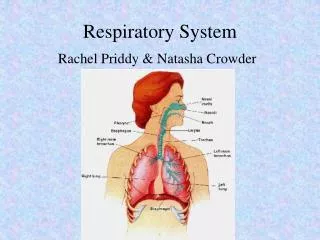
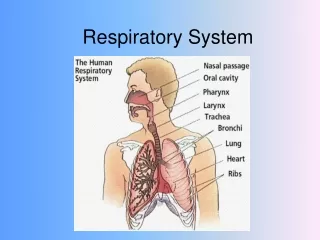
Nasal Cavity • Air enters through nostrils • Lined with tiny hairs and mucous to filter particles from air • Warms and moistens air
Pharynx & Epiglottis • Air passes pharynx-back of throat • Air passes epiglottis which is a flap that closes over windpipe when food is swallowed pharynx epiglottis
Larynx & Trachea • Larynx or voice box contains 2 thin ligaments called vocal cords • Trachea-windpipe: c-shaped cartilage keeps shape and doesn`t collapse
Bronchi & Bronchioles • The trachea branches into 2 bronchi • Bronchi go from trachea into lungs • then branch into network of bronchioles
Alveoli • Where gas exchange takes place with circulatory system • Tiny air sacs • About 150 million in each lung means increased SA