Personal protective equipment
Personal protective equipment. Personal Protective Equipment. Personal Protective Equipment or PPE is selected based on the specific job hazards you face. Job Hazards. Examples of Job Hazards are: Noise Chemicals Accidental Impact Sharp objects Flying Particles Dust & Mists Bright Light

Personal protective equipment
E N D
Presentation Transcript
Personal Protective Equipment • Personal Protective Equipment or PPE is selected based on the specific job hazards you face.
Job Hazards • Examples of Job Hazards are: • Noise • Chemicals • Accidental Impact • Sharp objects • Flying Particles • Dust & Mists • Bright Light • Vibration
About PPE • You should know • Limitations of PPE • How to use PPE • When to use PPE • Inspect before use • Replacement • Cleaning & Storage
PPE Limitations • PPE acts as a barrier between you and a hazard. • PPE will not protect you if it is: • Not designed for the specific hazard. • Damaged or worn. • Not adjusted properly.
Using PPE • For PPE to be effective in protecting you: • Use it in the manner you have been trained. • Use it only for the specific hazards for its design.
Inspect before using • Before you use your PPE, inspect it for: • Worn or damaged parts • Leaks, cracks or deformities • Cleanliness • Correct size
Replace • If any PPE is damaged or worn: • Get it repaired or replaced immediately. • Do not work without replacement PPE. • TELL your supervisor you need new PPE.
Cleaning & Storage • Clean your PPE regularly. • Do not store it where it will be in contact with: • Dust & Dirt • Chemicals • Sunlight • Water
Protecting your eyes • Your eyes are very sensitive organs and may be easily injured. • Eye Hazards include: • Chemical Splashes • Flying dist, chips, sparks • High Heat • Intense or UV light
Specific hazards include… • Impact - Chipping, grinding machining, masonry work, woodworking, sawing, drilling, chiseling, powered fastening, riveting, and sanding. • Heat - Furnace operations, pouring, casting, hot dipping, welding. • Light or Radiation- Electric arc welding, gas welding, gas cutting. • Irritants / Corrosives - Mists, dusts, sprays, splashes.
Face Protection • Use a face shield when any of the following hazards exist: • Chemical splashes • Liquid spray • Flying chips or sparks • High Heat • Special face shield
When using a face shield… • Always us the correct type eye protection with a face shield… • A facsimiled is NOT designed to protect your eyes
Types of Eye Protection • Safety Glasses – for flying chips & low hazards. • Vented Goggles – for dust and non-hazardous mist. • Non-Vented Goggles – hazardous chemicals. • Dark Lenses – intense or UV light.
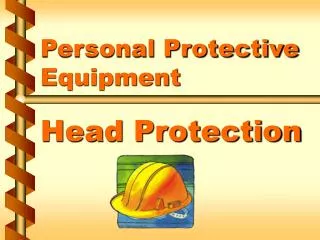
Hard hats… • Hard hats are needed to protect against: • Falling objects • Accidental impact • Use an electrically rated hard hat when there is a potential for contact with live circuits.
Replace your hard hat if… • The suspension system shows signs of deterioration such as: • Cracking • Tearing • Fraying • The suspension system no longer holds the shell from 1 inch to 1 1/4 inches away from the head.
Replace your hard hat if… • The brim or shell is cracked, perforated, or deformed. • The brim or shell shows signs of exposure to heat, chemicals, ultraviolet light, or other radiation. Signs include: • Loss of surface gloss • Chalking • Flaking
Foot Hazards • Heavy objects such as barrels or tools that might roll onto or fall onto your feet. • Sharp objects such as nails or spikes that might pierce the soles or uppers of ordinary shoes. • Molten metal that might splash. • Hot, slippery or wet surfaces. • Corrosive Chemicals.
Hazardous conditions… • Impact - Carrying or handling materials such as packages, objects, parts or heavy tools which could be dropped. • Compression - Work activities involving skid trucks (manual material handling carts, around bulk rolls, around heavy pipes. • Puncture - Sharp object hazards such as nails, wire, tacks, screws, large staples, scrap metal, etc. • Chemical - Check MSDS for protection.
Inspect footwear daily… • Look for: • Cracked, torn or worn uppers. • Wear, holes, tears, cracks, loss of tread on bottom. • Separation between soles and uppers.
Hand Hazards • Cuts & punctures • Chemical exposure • Vibration • Electric shock • Burns • Heat & Cold • Biohazards
Glove selection • Not all gloves are created equal…. Ensure the glove you use will protect your hands from the specific hazards of the job. • Chemical gloves do not last forever… understand the chemical and “break-through” characteristics of your specific glove.
Before you use… • Use the proper glove for the task. • Remove rings & bracelets. • Do not wear gloves if they can be caught in machinery. • Check gloves for wear and damage.
Electrical glove checks • Hole, tear, puncture, or cut. • Ozone cutting or ozone checking An embedded foreign object. • Swelling, softening, hardening, or becoming sticky or inelastic. • Any other defect that damages the insulating properties. • Air Test before each use.
Protect your hearing… • Use hearing protection when: • In high noise areas. • Using power saws, impact tools, etc. • Off the job when shooting, using power tools, etc. • Replace worn or broken hearing protectors immediately.
Symptoms of hearing loss • Ringing in ears. • Difficulty hearing normal conversations. • Noises are "fuzzy" or muffled.
Hearing protection must • Be kept clean. • Fit snugly against the head or in the ear. • Have no gaps or breaks.
Protect yourself… • Use the right PPE for the Hazard. • Inspect your PPE before using. • Replace damaged or worn PPE. • Store your PPE properly so it will be ready for the next use. • Keep your PPE clean. • Notify your supervisor if you need new PPE.