Understanding the Respiratory System: Key Components and Functions
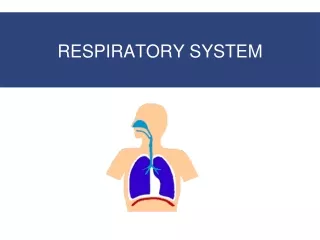
The respiratory system is essential for gas exchange and maintaining oxygen levels in the blood. Key parts include the nose, pharynx, larynx, trachea, bronchi, and lungs. The nose warms, moistens, and filters incoming air, while the pharynx serves as a passage for air and food. The larynx connects the pharynx to the trachea and houses the vocal cords. The trachea, supported by cartilage, branches into bronchi leading to the lungs. Gas exchange occurs in the alveoli, where oxygen is absorbed, and carbon dioxide is expelled, facilitated by breathing muscles, primarily the diaphragm.

Understanding the Respiratory System: Key Components and Functions
E N D
Presentation Transcript
Do Now – Monday, 4/4/14 • List the parts of the respiratory system (that you know right now)
1, 3, 5, 7 2, 4, 6, 8 Field Day Review Review
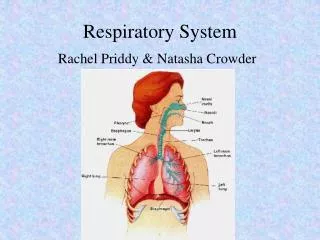
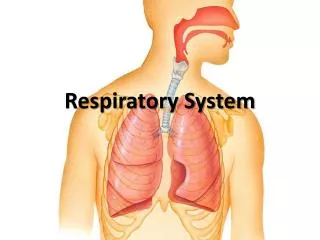
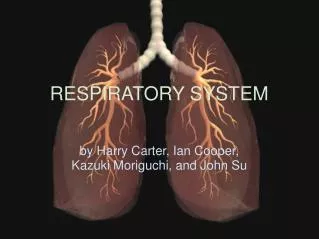
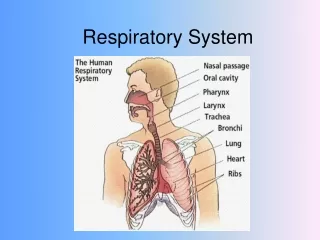
What makes up the respiratory system? • Nose • Pharynx (throat) • Larynx (voice box) • Trachea (windpipe) • Bronchi • Lungs
Nose • Consists of bone and cartilage • Responsible for warming, moistening and filtering incoming air
Nose • Inhaled air is warmed by the vessels • Mucus is secreted to moisten air and trap dust particles • Cilia move mucus and trapped particles to pharynx
Pharynx (throat) • Passageway for air and food
Larynx (voice box) • Connects pharynx to trachea • Home to vocal cords • Closes during swallowing to prevent liquid and food from going into the lungs
Trachea (windpipe) • Cartilaginous rings to provide structure • Air passage
Bronchi • Division of the trachea • Splits into smaller bronchioles for air exchange
Lungs • Surrounded by pleural cavity (lubrication) • Composed of lobes
Gas Exchange • The exchange of oxygen and carbon dioxide between the blood and lungs occurs in alveoli.
Gas Exchange Gas Exchange
Gas Exchange • As blood flows through the pulmonary capillaries, it picks up oxygen from the alveoli and unloads carbon dioxide into the alveoli
Inhalation • The most important muscle of inhalation is the diaphragm • Flattens during inhalation