Download
1 / 10
110 likes | 361 Vues
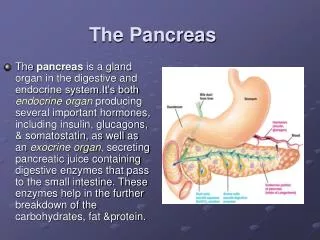
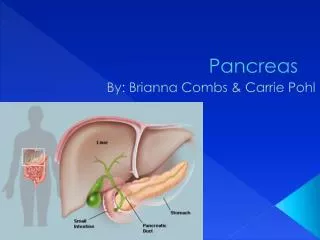
The pancreas is a vital organ with both exocrine and endocrine functions, playing a key role in digestion and hormonal balance. It produces digestive enzymes and hormones like insulin and glucagon, essential for regulating blood glucose levels. Located retroperitoneally, behind the stomach and below the liver, the pancreas consists of the head, body, and tail, with the pancreatic duct connecting to the duodenum. Learn about the intricate relationship between insulin and glucagon, and their impact on metabolism and overall health.

E N D
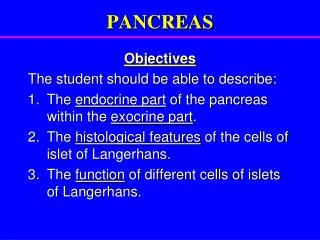
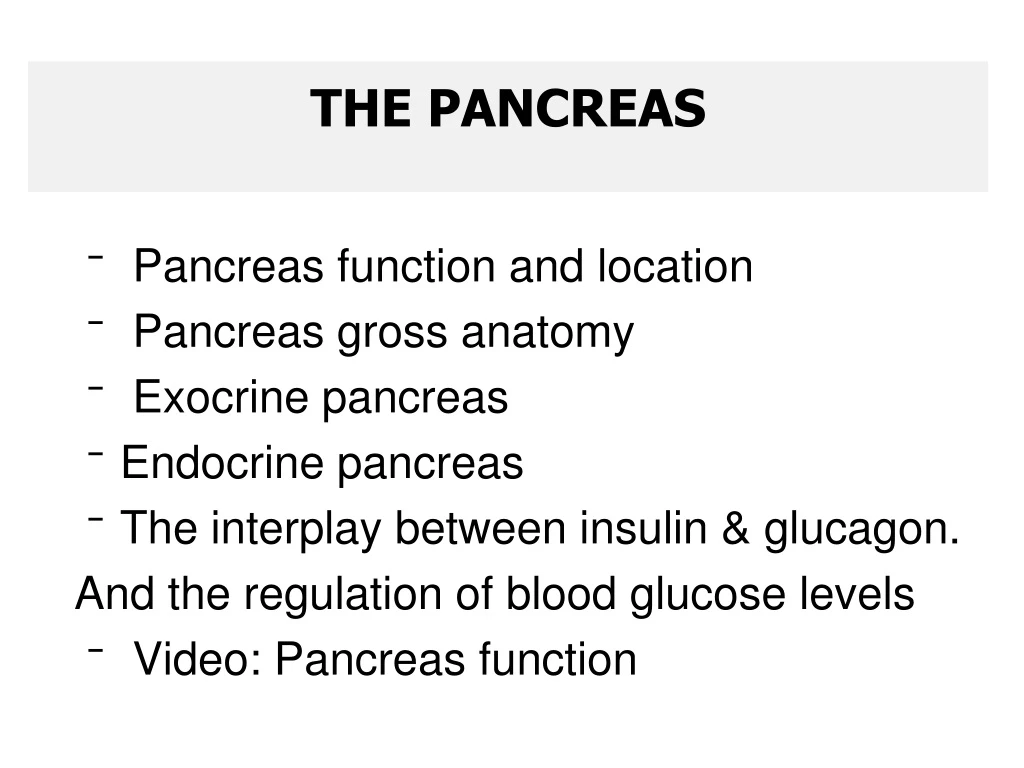
THE PANCREAS Pancreas function and location Pancreas gross anatomy Exocrine pancreas Endocrine pancreas The interplay between insulin & glucagon. And the regulation of blood glucose levels Video: Pancreas function
ThePancreasfunction Thehumanpancreasisanamazingorganwithtwomainfunctions: • To producedigestiveenzymes. • To produce endocrine hormones The hormone function of thepancreasplaysanimportant role in maintainingsugar in ourbodies
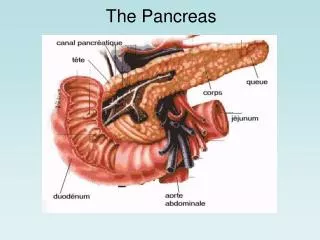
Pancreas location • Retroperitoneal • Posterior to stomach • Inferior to liver
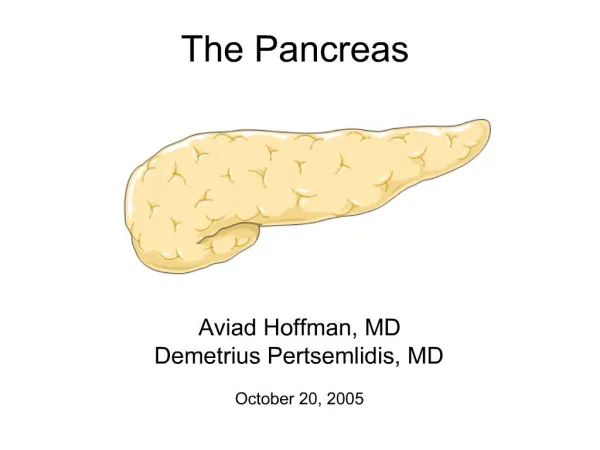
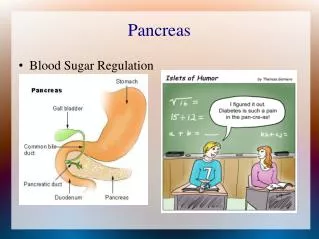
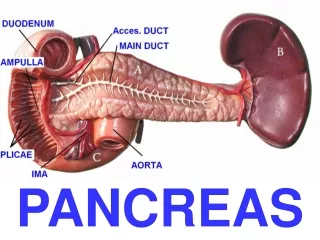
Pancreas gross anatomy • Head, body, tail • Pancreatic duct Joins bile duct Hepatopancreatic ampulla to duodenum Anatomy
Exocrine pancreas Sizes of cells, viruses, and other small things • Acinar cells • rER • Mitochondria • Secretory granules • Digestive enzymes
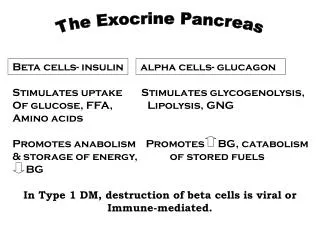
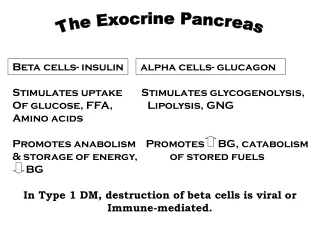
Endocrine pancreas Islets of Langerhans • cells – secrete • blood sugar levels • cells – secrete • blood sugar levels • Insulin acts through glucose transporters (e.g., ) glucagon Raises insulin Lowers GLUT4 Endocrine
The interplay between insulin and glucagon. Metabolism Pancreas Liver