Analyzing the Climax and Symbolism in Literature
This analysis explores the climax of the narrative where conflicts peak, focusing on key events like Jack's secession and Piggy's death. The aim is to identify the climax, justify your stance with written arguments, and discuss shifts in perspective after peer discussions. Moreover, it delves into the symbolism of characters, searching for supporting examples from the text. Additionally, we will evaluate representations of good and evil throughout the story, providing specific examples and page references to understand moral complexities.

Analyzing the Climax and Symbolism in Literature
E N D
Presentation Transcript
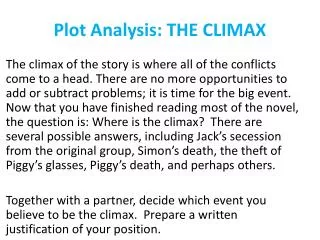
Plot Analysis: THE CLIMAX The climax of the story is where all of the conflicts come to a head. There are no more opportunities to add or subtract problems; it is time for the big event. Now that you have finished reading most of the novel, the question is: Where is the climax? There are several possible answers, including Jack’s secession from the original group, Simon’s death, the theft of Piggy’s glasses, Piggy’s death, and perhaps others. Together with a partner, decide which event you believe to be the climax. Prepare a written justification of your position.
Plot Analysis: THE CLIMAX After listening to your classmates’ viewpoints, have you changed your mind? Explain why or why not.
Symbolism: CharactersIn the chart below, find these four characters and suggestions for what they symbolize. In each space, provide some examples(3 specific examples from the text including page numbers) to support these assertions. EVALUATE: Which character best represents his corresponding idea? Why?
Drawing Comparisons: Good vs. Evil DIRECTIONS: Looking back through Chapters 1-11, find examples of the good, the bad, and mixtures of the two. JUDGE WHETHER IT BE GOOD OR WHETHER IT BE EVIL: Find five examples of goodness, five examples of evil, and three examples that are neither good nor evil. Include page numbers.