Mastering the Present Progressive Forms in Spanish
Learn the irregular forms of present progressive in Spanish. Understand the rules for forming present participle with various verbs. Practice using pronouns with present progressive.

Mastering the Present Progressive Forms in Spanish
E N D
Presentation Transcript
Present Progressive: Irregular Forms P. 171 Realidades 2
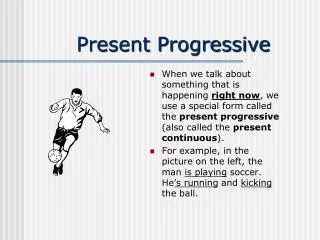
Present Progressive: Irregular Forms • Do you remember your regular present progressive forms? • To say that something is happening right now, use the present tense forms of estar + the present participle (-ando or -iendo)
Present Progressive: Irregular Forms • doblar > doblando • Ella está doblando a la izquierda • aprender > aprendiendo • Estamos aprendiendo a manejar. • escribir > esciribiendo • Están escribiendo una carta.
Present Progressive: Irregular Forms • Some verbs have irregular present participle forms. • To form the present participle of -ir stem-changing verbs, the e in the infinitive form changes to i, and the o in the infinitive form changes to u.
Decir Pedir Repetir Seguir Servir Vestir Dormir Diciendo Pidiendo Repitiendo Siguiendo Sirviendo Vistiendo Durmiendo Present Progressive: Irregular Forms
Present Progressive: Irregular Forms • In the following -er verbs, the i of -iendo changes to y. • creer: creyendo • leer: leyendo • traer: trayendo
Present Progressive: Irregular Forms • When you use pronouns with the present progressive, you can put them before the conjugated form of estar or attach them to the present participle.
Present Progressive: Irregular Forms • Notice that if a pronoun is attached to the present participle, an accent mark is needed. • Write the accent mark over the vowel that is normally stressed in the present tense.
Present Progressive: Irregular Forms • ¿Están Uds. esperando el autobús? • Sí, lo estamos esperando. • Or • Sí, estamos esperándolo.