Understanding Flower Reproductive Structures and Pollination Strategies
This article by Lorraine Kuun (July 2011) explores the intricate reproductive structures of angiosperms. It details the male organs, stamens, which produce pollen containing male gametes, and the female organ, the pistil, which houses the ovum. The process of pollination, crucial for fertilization, is explained, including types such as self-pollination and cross-pollination. The role of various pollinators, predominantly insects like bees, and adaptations of flowers for effective pollination are also discussed, emphasizing how colors, scents, and pollen traits attract these essential agents.

Understanding Flower Reproductive Structures and Pollination Strategies
E N D
Presentation Transcript
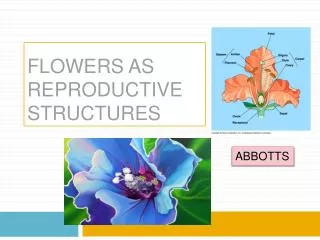
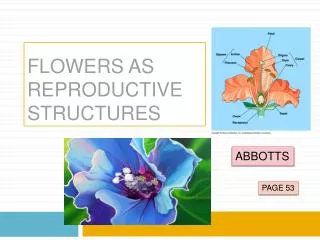
FLOWERS AS REPRODUCTIVE STRUCTURES Lorraine Kuun, July 2011
The Angiosperm flower Lorraine Kuun, July 2011
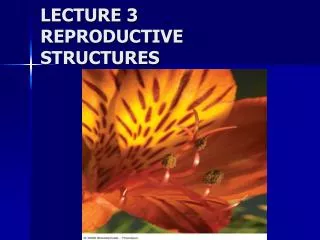
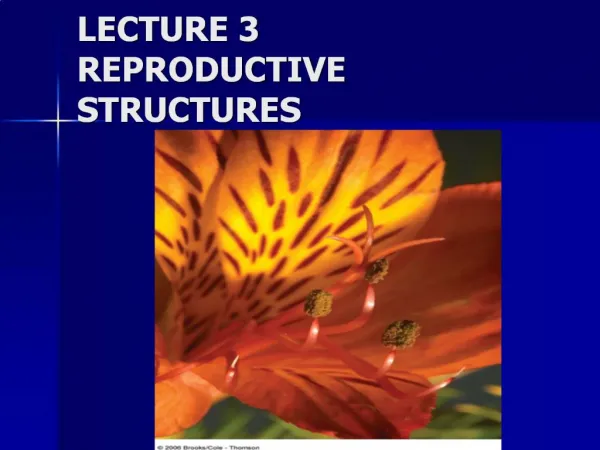
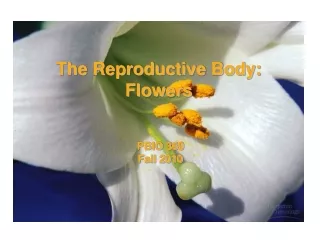
Male and female whorls • The stamens are the male organs and produce pollen that contain the male gametes • The pistil with the stigma, style and ovary is the female organ of the plant. The ovum is found in the ovule. Lorraine Kuun, July 2011
POLLEN, BEARERS OF MALE GAMETES • Stamens consist of an anther with a filament. • The anther produces pollen in the pollen sac. • The pollen grains contain the male gametes. Lorraine Kuun, July 2011
POLLINATION is the transfer of ripe pollen from the anther to a receptive stigma of a flower of the same species Lorraine Kuun, July 2011
Self pollination 2. Geitonogamy 3.Cross-pollination Lorraine Kuun, July 2011
POLLINATORS • Most pollinators are insects e.g. Bees, moths, butterflies, beetles. • Some vertebrates also pollinate flowers e.g. Bats, mice, birds (mainly). • Many flowers are pollinated by wind. Lorraine Kuun, July 2011
Flower adapted for insect pollination • Bright colours (bees cannot see red), white for night pollinators e.g. moths • Often sweet scent (attracts moths and butterflies) • Reward of nectar and pollen • Contrasting markings on petals to locate centre of flower (usually not visible to human eye – ultraviolet) • Pollen cling to hair on insect bodies Lorraine Kuun, July 2011