Acids and Bases
Acids are ubiquitous in our daily lives, found in various foods and essential for many chemical processes. Examples include citric acid in oranges, ethanoic acid in vinegar, and hydrochloric acid in our stomachs. Acids are typically sour, hazardous, and change the color of indicators. They react with metals, carbonates, and bases, producing gases like hydrogen and carbon dioxide. Understanding their properties and reactions is crucial for safety and practical applications, such as in cleaning and cooking.

Acids and Bases
E N D
Presentation Transcript
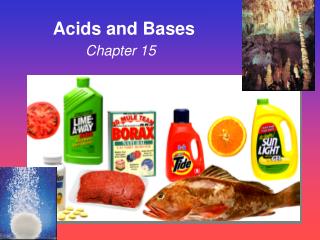
Examples of Acids • Acids can be found in your foods. • Citric acid – oranges, lemons, limes • Ethanoic acid – vinegar, tomato juice • Tartaric acid – grapes • Tannic acid – tea • Lactic acid – sour milk, yoghurt
Acids and Bases in Our Daily Lives They are all around us and are involved in many chemical processes. YUM, acid!
Examples of Acids • Other examples of acids: • Methanoic acid – insect bites, e.g. bee stings, ant bites • Hydrochloric acid – produced in your stomach • Lactic acid – produced in body during power exercises
Examples of Acids Lead-acid battery Toilet bowl cleaner Do-it-yourself cleaners Make a cleaner out of vinegar, baking soda and lemon juice! http://msucares.com/pubs/infosheets/is1436.htm
Laboratory Acids • Hydrochloric acid, HCl • Sulphuric acid, H2SO4 • Nitric acid, HNO3
Types of Acids Many naturally-occuring acids, e.g. citric acid in oranges, are sometimes known as organic acids. The other group of acids is called the mineral acids. Most of these are man-made, e.g. sulphuric acid.
What is an acid? • A substance which produces hydrogen ions, H+, when it is dissolved in water • All acids produce hydrogen ions, H+, in aqueous solution. • All acids contain hydrogen ions. • BUT, not all compounds containing hydrogen are acids.
Properties of Acids • Acids have a sour taste. • The word ‘acid’ comes from a latin word ‘acidus’, which means sour. • Acids are hazardous. • Irritants • Acids change the colour of indicators. • Acids turn blue litmus red – a simple test for acid. • Acids dissolve in water to form solutions that conduct electricity.
Chemical Reactions of Acids (1) • Acids react with reactive metals to form hydrogen and a salt. • Test for the presence of hydrogen • A burning splint is brought near the mouth of the test tube. • If hydrogen is present, it burns with a ‘pop’ sound.
Chemical Reactions of Acids (2) • Acids react with carbonates and hydrogencarbonates to produce carbon dioxide gas • Test for the presence of carbon dioxide • The gas is bubbled through limewater. • If carbon dioxide is present, a white precipitate is formed.
Chemical Reactions of Acids (3) • React with metal oxides and hydroxides to from a salt and water. • Neutralisation reaction
Storage of Acidic Foods • Acids are stored in glass, plastic jars or clay pots. • Acidic foods are not usually stored in metal containers because metals can react with acids.
Do you know? • Acid Bath Murder http://www.discoverychannel.co.uk/web/crime-museum-uk/episode-guide/acid-bath-murder/
So, what have you learnt today? • Examples of acids • Definition of an acid • Properties of acids • Acids have a sour taste. • Acids are hazardous. • Acids change the colour of indicators. • Acids dissolve in water to form solutions that conduct electricity. • Chemical reactions of acids • Test for gases: Hydrogen and carbon dioxide