Download
1 / 4
40 likes | 175 Vues
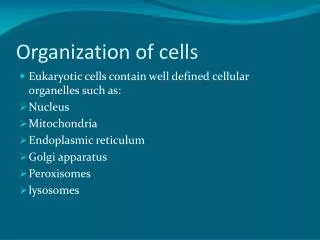
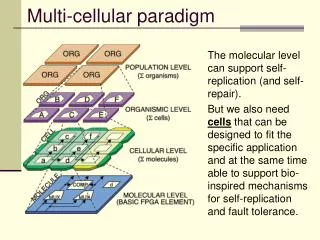
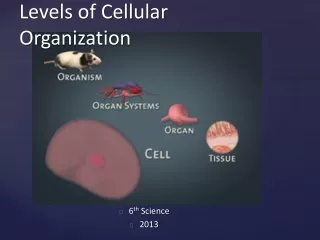
This resource explores the cellular organization in various multi-cellular organisms. It examines the building blocks of plant cells, the strings of fungal mycelium, and the sheets of animal cells, highlighting differences in tissue layers across species. Through electron microscope images and cross-sectional views, we delve into the anatomy of sunflowers, oyster mushrooms, and sponges. Moreover, the resource provides insights into human organ systems, demonstrating the complexity of multi-cellular structures and their functional significance in different organisms.

E N D
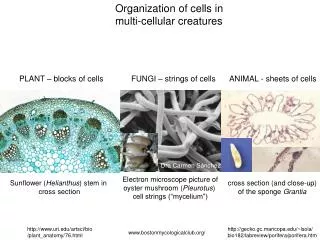
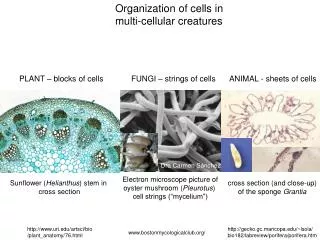
Organization of cells in multi-cellular creatures PLANT – blocks of cells FUNGI – strings of cells ANIMAL - sheets of cells Dra Carmen Sánchez Electron microscope picture of oyster mushroom (Pleurotus) cell strings (“mycelium”) Sunflower (Helianthus) stem in cross section cross section (and close-up) of the sponge Grantia http://www.uri.edu/artsci/bio/plant_anatomy/76.html http://gecko.gc.maricopa.edu/~lsola/ bio182/labreview/porifera/porifera.htm www.bostonmycologicalclub.org/
animals differ in their numbers of tissue layers, from one to three HUMAN (abdomen cross section) SPONGES HYDRA 1 cell layer 2 cell layers 3 cell layers http://gecko.gc.maricopa.edu/ ~lsola/bio182/labreview/porifera/ porifera.htm http://www.madsci.org/cgi-bin/ cgiwrap/~lynn/image?a_vm1640 krupp.wcc.hawaii.edu/BIOL200/ powerpnt/cnidaria/sld006.htm
human organ systems muscular/ skeletal circulatory nervous lymph http://www.gorhams.dk/html/ the_lymphatic_system.html http://web.jjay.cuny.edu/~acarpi/NSC/14-anatomy.htm
http://137.222.110.150/calnet/ irish_cal/exotics/reptiles/Snakes/ babcock.cals.wisc.edu/de/html/ ch1/nutrition_eng_ch1.html www.cropsci.ncsu.edu/turffiles/ CS495/slide28.htm http://www.health-news- and-information.com/ 3saintmarysreno/libv_ espanol/p29s.shtml0 http://www.netherworld.com/~cowboy/ Anatomy/DigestiveSystemInSitu.jpg