
SlideServe
Menu
Préférences
© SlideServe · v2026

Phylum Porifera : Sponges

jud avatar
20 diapositives · 827 Views · Jul 19, 2014

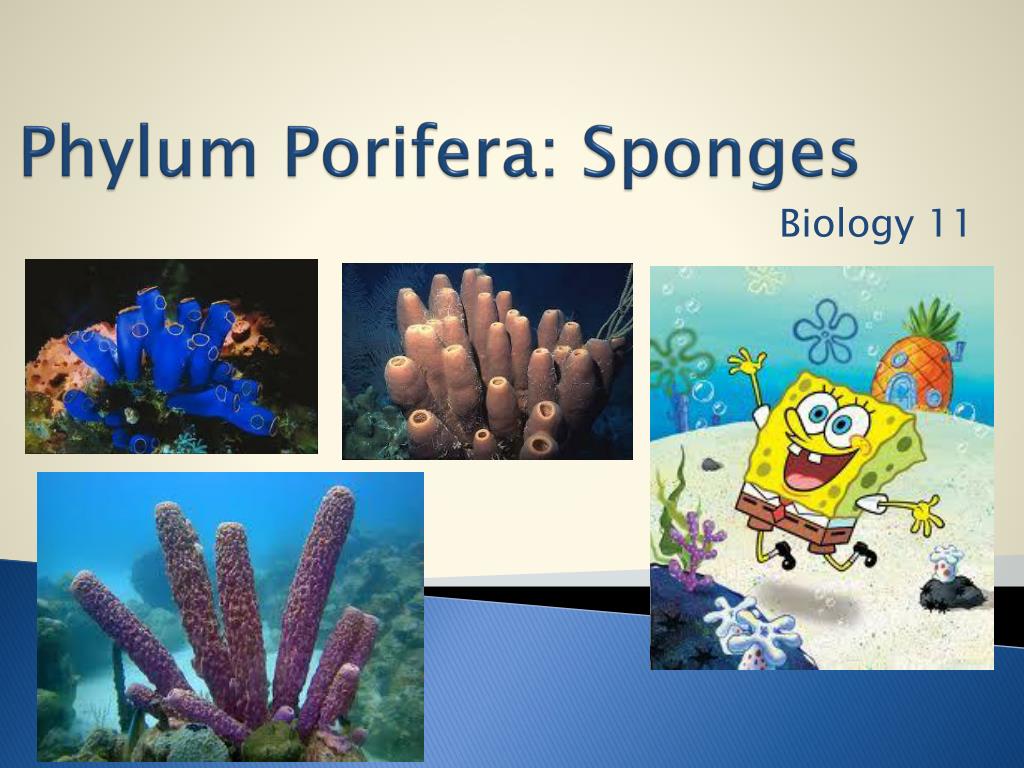
Phylum Porifera : Sponges. Biology 11. Characteristics. Name means “pore bearers”- body has many pores in it Sessile Multicellular Mostly marine (only 100/9000 are freshwater). Structure. Asymmetrical body shape Made of 2 cells layers Ectoderm Endoderm
Phylum Porifera : Sponges - slide 1
01 / 20Phylum Porifera : Sponges
1 / 17

Télécharger la présentation

Phylum Porifera : Sponges
Une image / un lien ci-dessous est fourni (tel quel) pour télécharger la présentation

Politique de téléchargement : le contenu du site vous est fourni TEL QUEL pour votre information et votre usage personnel ; il ne peut être vendu, concédé sous licence ni partagé sur d’autres sites sans l’accord de son auteur.Le contenu vous est fourni TEL QUEL, pour votre information et votre usage personnel uniquement. Téléchargez la présentation en cliquant sur ce lien. Lors du téléchargement, si vous ne parvenez pas à télécharger une présentation, l’éditeur a peut-être supprimé le fichier de son serveur.Pendant le téléchargement, si vous ne parvenez pas à obtenir une présentation, le fichier a peut-être été supprimé par l’éditeur.

F I N

Plus de contenu associé

Transcription de la présentation
  1. Phylum Porifera: Sponges Biology 11

  2. Characteristics • Name means “pore bearers”- body has many pores in it • Sessile • Multicellular • Mostly marine (only 100/9000 are freshwater)

  3. Structure • Asymmetrical body shape • Made of 2 cells layers • Ectoderm • Endoderm • No specialized tissue or organ systems • Individual cells sense and react to environmental changes

  4. Specialized Cells • Do have specialized cells that fulfill the sponge’s life functions • Epidermal cells • Pore cells • Collar cells • Amoebocytes

  5. Epidermal cells form outer covering • Water is drawn in through pore cells into a central cavity

  6. The collar cells have flagella that beat to create a current to make sure water is being drawn in through pore cells • Water flows out of sponges through a larger opening called the osculum

  7. Amoebocytes • Make spicules • Needle-like structures that provide structural support • Made of silica or calcium carbonate • Some made of spongin protein (softer skeleton) • Carry nutrients to other cells • Aid in reproduction

  8. Collar Cell • Contain a flagellum to move water in • Brings oxygen and food particles into body of sponge

  9. Movement of Water • Water acts as the circulatory, respiratory, reproductive, and excretory systems • Brings in food, oxygen, carries away waste, gametes, larvae • Oxygen is brought in and carbon dioxide and other metabolic wastes are given off

  10. Life Functions • Feeding and Digestion • No mouth or digestive tract • Are filter feeders- sift food particles from the water • Driven by water flow • Filtered by collar cells • Excretion • Driven by water flow

  11. Respiration • Oxygen diffused from surrounding water into cells • Carbon dioxide diffused from cells to surrounding water

  12. Movement • Adults sessile: Remain attached, don’t move • Larvae are mobile

  13. Reproduction • Sexual • Most are hermaphrodites (produce both egg and sperm)

  14. Sperm released out of osculumand swim to another sponge (with the help of currents) • Enter another sponge’s pore cell • Picked up by collar cells • Carried to an egg by amoebocytes • Fertilization occurs • Zygote develops into a flagellated larvae which is mobile (can be dispersed)

  15. Why do sessile animals tend to be hermaphroditic? • Increase change of fertilization • They do not fertilize their own eggs with their own sperm

  16. Can also reproduce asexually by: • Fragmentation: part of sponge breaks off • Budding: mitotic growth and break off • Gemmules: collection of cells that are enclosed by hard outer covering contain spicules • Form when conditions are unfavourable

  17. Ecological Importance • Provides habitat for many other animals • Like snails, shrimp, sea stars, bacteria… • Is a food source for other animals • Provides a symbiotic relationships with bacteria (bacteria provide food and oxygen to sponge and remove wastes)

  18. Used as bath sponges • Produce chemicals (to discourage other animals from eating them) that are being used in research for cancer, viruses, and antibiotics