

SlideServe
Menu
Préférences
© SlideServe · v2026

Phylum Arthropoda

wynn avatar
14 diapositives · 2.9K Views · Jul 14, 2014

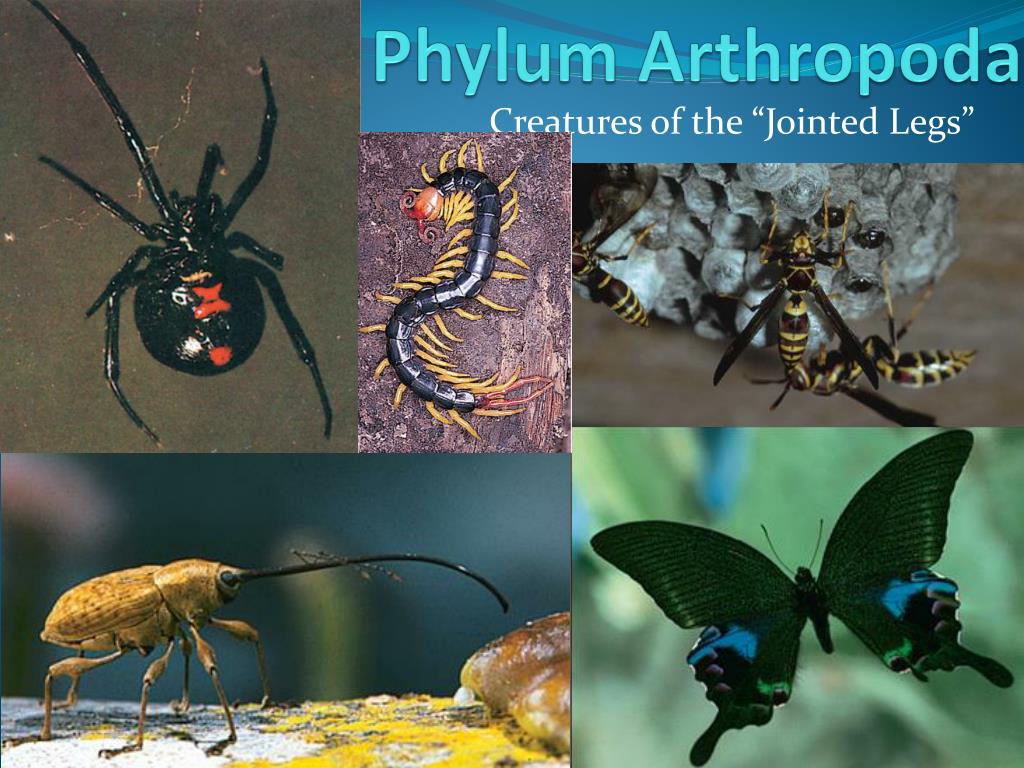
Phylum Arthropoda. Creatures of the “Jointed Legs”. Phylum Arthropoda. I. Characteristics of Arthropods A. External exoskeleton divided into segments (segmentation is known as metamerism ) B. Jointed Appendages C. True Coelomates
Phylum Arthropoda - slide 1
01 / 14Phylum Arthropoda
1 / 17

Télécharger la présentation

Phylum Arthropoda
Une image / un lien ci-dessous est fourni (tel quel) pour télécharger la présentation

Politique de téléchargement : le contenu du site vous est fourni TEL QUEL pour votre information et votre usage personnel ; il ne peut être vendu, concédé sous licence ni partagé sur d’autres sites sans l’accord de son auteur.Le contenu vous est fourni TEL QUEL, pour votre information et votre usage personnel uniquement. Téléchargez la présentation en cliquant sur ce lien. Lors du téléchargement, si vous ne parvenez pas à télécharger une présentation, l’éditeur a peut-être supprimé le fichier de son serveur.Pendant le téléchargement, si vous ne parvenez pas à obtenir une présentation, le fichier a peut-être été supprimé par l’éditeur.

F I N

Plus de contenu associé

Transcription de la présentation
  1. Phylum Arthropoda Creatures of the “Jointed Legs”

  2. Phylum Arthropoda I. Characteristics of Arthropods A. External exoskeleton divided into segments (segmentation is known as metamerism) B. Jointed Appendages C. True Coelomates D. Open circulatory system E. Advanced nervous and muscular systems F. Respiration by trachea, book lungs, body surface, or gills G. Sexes are usually separate males and females

  3. II. There are six major classes of Arthropods A. Class Insecta – The largest and most successful class of organisms in the world. B. Class Crustacea – mostly aquatic; shrimp, crabs, lobsters, crayfish, etc. C. Class Arachnida – spiders, mites and ticks D. Class Chilopoda – poisonous centipedes E. Class Diplopoda - nonpoisonous millipedes F. Class Merostomata(Xiphosuridae) – The Horseshoe Crabs

  4. III. ClassificationA. Insecta 1. Three body segments – Head, Thorax and Abdomen 2. Three pairs of legs – all attached to the thorax 3. Some insects live socially, sharing a division of labor 4. Some insects carry out Metamorphosis a. complete metamorphosis – significant change such as that seen in butterflies or beetles b. Incomplete metamorphosis – not so great a change such as seen in crickets or grasshoppers 5. Defense includes stings, mimicry, protective or warning coloration, secretions, bites, and sprays.

  5. Incomplete Metamorphosis – Egg Nymph Adult

  6. Egg Larva Complete Metamorphosis Pupa Adult

  7. B. Arachnida 1. Two body segments –Cephalothorax & Abdomen 2. Four pairs or 8 legs 3. Eight simple eyes 4. Anterior appendages called chelicerae have fangs 5. Only two dangerous species in the USA Black Widow Brown Recluse

  8. Dust Mite Scorpion Other Arachnids Harvestman (Commonly misnamed Daddy-Longlegs) NOT Poisonous!

  9. (crabs, shrimp, lobsters, crayfish, pillbugs ) C. Crustacea 1. Two pairs of antennae 2. Gills used for respiration 3. Usually five or more pairs of legs 4. Mostly aquatic – a few are terrestrial Pillbugs

  10. More Crustaceans

  11. Numerous body segments with ONE pair of legs per segment – except the one behind the head and the last two. They DO NOT have 100 legs! D. Class Chilopoda 2. Poisonous fangs produce toxins to kill prey “Centipedes – The creatures of a hundred legs” 3. Carnivorous – Eat only worms and insects, some dangerous to humans through painful bites. Scolopendragigantea A typical centipede

  12. “ creatures of a thousand legs” E. Class Diplopoda 1. Numerous body segments with TWO pairs of legs per body segment, except the one behind the head and the last two. 2. Produce a noxious secretion and coil up when threatened 3. Herbivorous – They eat decaying organic matter and leaf litter. A Typical Millipede

  13. also known as Xiphosurida F. Class Merostomata 1. Horseshoe shaped carapaceor dorsal surface. 2. Long fused telson, or tailpiece, also found in crustaceans 3. Reproductive cycles very important to shorebird migration Horseshoe Crab