
SlideServe
Menu
Préférences
© SlideServe · v2026

Phylum: Arthropoda

masako avatar
12 diapositives · 423 Views · Jul 25, 2014

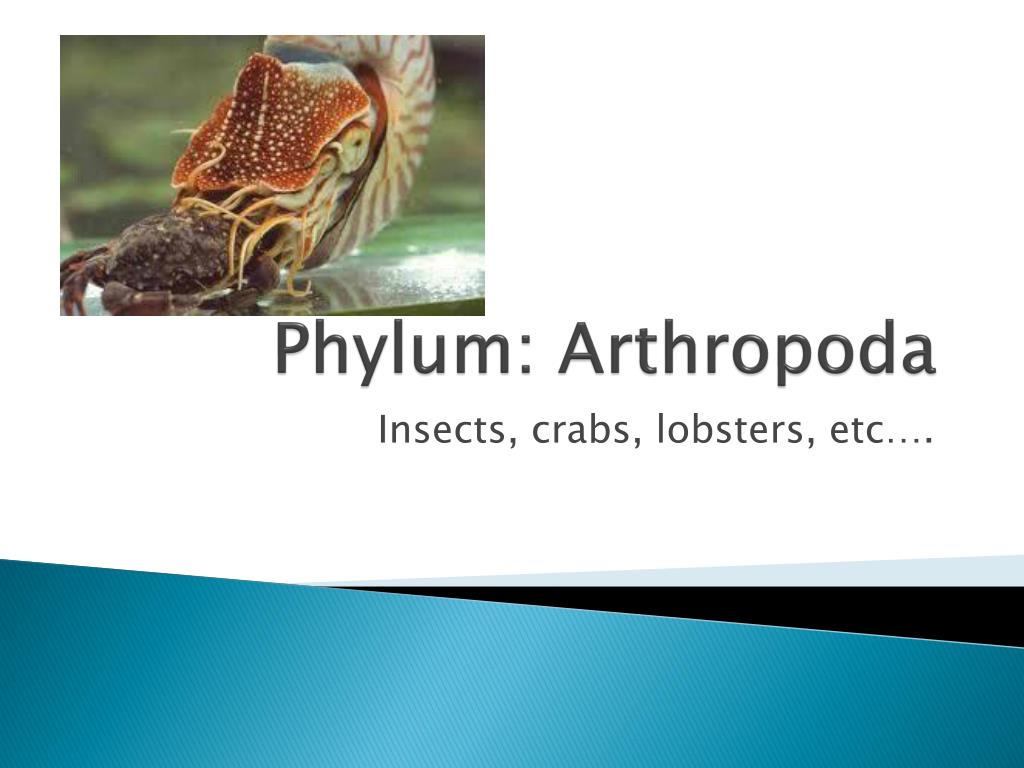
Phylum: Arthropoda. Insects, crabs, lobsters, etc…. General Information. Diversity: Over 85% of all known animals are arthropods The most successful animals on the planet! They live in the widest range of habitats and eat the greatest varieties of food
Phylum: Arthropoda - slide 1
01 / 12Phylum: Arthropoda
1 / 17

Télécharger la présentation

Phylum: Arthropoda
Une image / un lien ci-dessous est fourni (tel quel) pour télécharger la présentation

Politique de téléchargement : le contenu du site vous est fourni TEL QUEL pour votre information et votre usage personnel ; il ne peut être vendu, concédé sous licence ni partagé sur d’autres sites sans l’accord de son auteur.Le contenu vous est fourni TEL QUEL, pour votre information et votre usage personnel uniquement. Téléchargez la présentation en cliquant sur ce lien. Lors du téléchargement, si vous ne parvenez pas à télécharger une présentation, l’éditeur a peut-être supprimé le fichier de son serveur.Pendant le téléchargement, si vous ne parvenez pas à obtenir une présentation, le fichier a peut-être été supprimé par l’éditeur.

F I N

Plus de contenu associé

Transcription de la présentation
  1. Phylum: Arthropoda Insects, crabs, lobsters, etc….

  2. General Information • Diversity: • Over 85% of all known animals are arthropods • The most successful animals on the planet! • They live in the widest range of habitats and eat the greatest varieties of food • “Arthropod” – jointed legs (appendages) • Appendages are used for eating, moving, mating, respiring, feeling, sensing, or defense

  3. Group:Crustacea • The word crustacean originates from the crusty exoskeleton produced by crustaceans • Chitin – the organic material produced by the crustacean to form a hard exoskeleton • this distinguishes them from mollusks whose shells are made of calcium carbonate (CaCO3) • “Insects of the sea” • Live in all aquatic environments plus a few land-dwellers

  4. Anatomy • Exoskeleton (outer shell) • Hard, protective outer surface; this shell must be molted in order for the arthropod to grow • Muscles attach to the inside of the skeleton • Cephalothorax • the fused head and thorax section; literally means “head breastplate” (Fig 7-4) • Swimmerets • the posterior pairs of jointed appendages (legs) that mostly function as swimming legs • Walking Legs • the middle pairs of legs that are used for most movement • Maxillae & Mandibles • The anterior appendages that are used for food getting apparatuses • Antennae • Anterior pairs of appendages that are used as sensory organs

  5. Habitat • Most crustaceans live in the ocean • Lobsters, shrimp, crabs… • Some live in freshwater • Crayfish & crabs • Few live on land • Isopods and pill bugs • Even fewer are extremophiles! • Kiwahirsuta

  6. Freshwater Crab Horseshoe Crab Another freshwater crab Kiwahirsuta or the Yeti Crab

  7. Sexual Reproduction • Lobsters & Crayfish …. • Sex is determined by (somewhat) easy to see external structures • Swimmerets – • Males: • Large and point towards the front of the body • Use the 1st pair to transfer sperm to the female • Females: • Have hairs on the swimmerets that make them look like feathers • Used to hold fertilized eggs against the abdomen until ready to hatch

  8. Sexual Reproduction • Crabs • They have smaller abdomens with not so easy to see reproductive structures • Males: • Narrow abdomen that fits into a groove on the underside of the cephalothorax • Females: • The abdominal flap is very broad and covers most of the underside of the cephalothorax • She can store sperm until her eggs are ready • The female holds the fertilized eggs between the abdominal flap and the body with a natural adhesive • This is sometimes referred to as “berrying” or “berried”