Download
1 / 9
90 likes | 210 Vues
Explore the impact of the Triangular Trade on continents, the journey of enslaved Africans through the Middle Passage, and the trading of cheap manufactured goods in the 18th century. Learn about the exchange of trinkets for slaves, the use of slaves on plantations, and the profits made from the trade. Dive into discussions about the effects on populations and cultures of different continents.

E N D
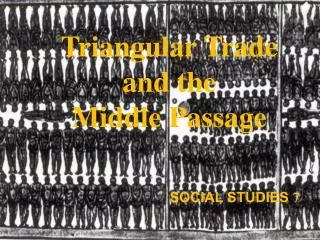
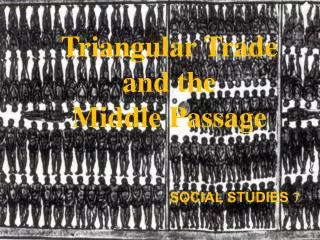
Triangular Trade and the Middle Passage SOCIAL STUDIES 7
CHEAP MANUFACTURED GOODS TRIANGULAR TRADE Trinkets – pots, pans, beads, shells, cloth SLAVES WERE USED ON PLANTATIONS, GROWING SUGAR, TOBACCO, COTTON. THIRD STAGE – RAW MATERIALS SENT TO EUROPE Profits from slave sales were used to buy produce from the plantations e.g.. sugar, tobacco, cotton, which were sold for great profit in Europe. Cheap trinkets exchanged for slaves FIRST STAGE – EUROPE TO AFRICA U.S.A. TRIBAL CHIEFS EXCHANGE SLAVES , OR SLAVES ARE CAPTURED Mexico Caribbean Islands SECOND STAGE - THE MIDDLE PASSAGE SLAVE TRADERS THEN SOLD THE SLAVES TO PLANTATION OWNERS *Create a definition for Triangular trade Brazil THE ‘MIDDLE PASSAGE’ – THE JOURNEY ACROSS THE ATLANTIC.. THE WORLD AROUND 1750
Middle Passage – passage across the Atlantic Ocean from West Africa to the Americas that was the route of the African American slave trade. Where were the majority of enslaved Africans taken?
A Typical Slave Ship, at port in London’s East India docks – getting ready for the next slave run. A typical cargo included: IRON BARS COWRIE SHELLS
30 million taken from their homes • 10 million die during capture phase • 10 million die during middle passage Number of people enslaved • 10 million survive to make it over the ocean
Tight Pack - Loose Pack This model [right] and the charts were used by slave reformers at the end of the 18th century, to show how a Liverpool slave ship of 320 tons could carry 400 slaves. On one voyage the ship carried 609 slaves.
Africans were crowded and chained cruelly aboard slave ships.
Discussion questions:1. How was each continents’ population affected?2. How would a population shift/change affect each continent’s culture?3. Was the trade beneficial or detrimental to each continent?