The British Encroachment in India: Power, Politics, and Cultural Tensions
70 likes | 190 Vues
This document explores the British takeover of India, focusing on their acquisition of trading rights through the East India Company and the subsequent political and social unrest. The British capitalized on India's internal chaos, driven by economic interests. The Sepoy Rebellion of 1857 exemplified the tensions caused by unpopular laws, including forced military service abroad and the introduction of new laws perceived as a threat to Hindu beliefs. The exploitation of religious sentiments and the introduction of offensive practices led to widespread resistance and growing nationalism among Indians.


The British Encroachment in India: Power, Politics, and Cultural Tensions
E N D
Presentation Transcript
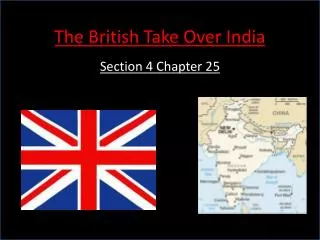
The British Take Over India By: Jeffrey Rolland
Vocabulary • Cash crop: crop raised to be sold for $ on the world market • Examples?
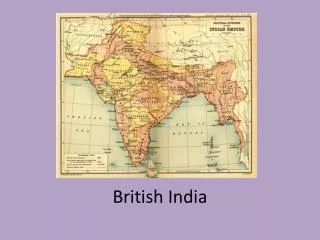
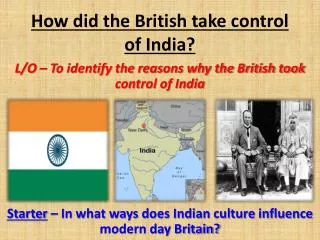
The East India Company • acquired trading rights on the Mughal empire border • The British gained power by taking advantage of India's confusion • Main goal: $$$
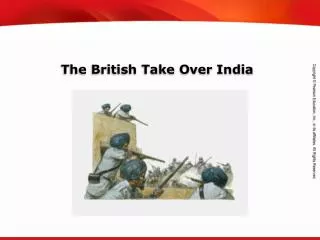
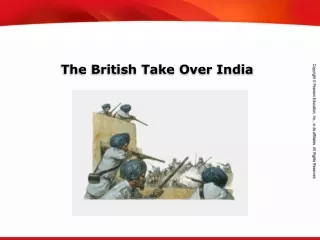
The Sepoy Rebellion • In 1859, the East Indian Company made many unpopular changes in India • Forced sepoys to serve anywhere, not just in India • it was against Hinduism belief to travel overseas • sepoys were Indian troops • A new law that allowed Hindu widows to remarry • Hindus saw both changes as a Christian conspiracy to under mine their form of belief • The final insult occurred in 1857 when the British gave the sepoys new guns • The British had the sepoys bite off the cartridges, which they greased with animal fat, before loading the guns • The animal fat came from cows and pigs • cows are sacred to Hindus • Muslims were forbidden to eat pigs