Analysis of Force-Frequency Relationship in Myocardial Function with Hemodynamic Parameters
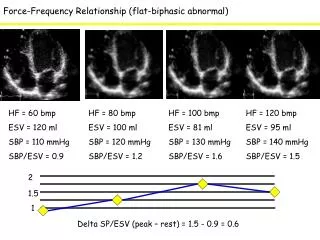
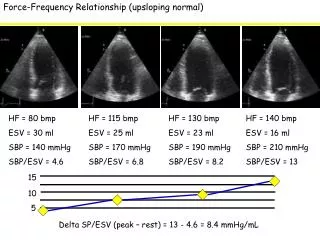
This study examines the force-frequency relationship in cardiac function, focusing on various hemodynamic parameters including heart frequency (HF), end-systolic volume (ESV), and systolic blood pressure (SBP). The relationship between SBP and ESV is depicted, highlighting significant variations in cardiac performance at different frequencies. Data show changes in SBP and ESV, revealing a peak to rest delta, providing insights into cardiac efficiency and potential clinical implications for heart failure management.

Analysis of Force-Frequency Relationship in Myocardial Function with Hemodynamic Parameters
E N D
Presentation Transcript
Force-Frequency Relationship (upsloping normal) HF = 80 bmp ESV = 30 ml SBP = 140 mmHg SBP/ESV = 4.6 HF = 115 bmp ESV = 25 ml SBP = 170 mmHg SBP/ESV = 6.8 HF = 130 bmp ESV = 23 ml SBP = 190 mmHg SBP/ESV = 8.2 HF = 140 bmp ESV = 16 ml SBP = 210 mmHg SBP/ESV = 13 15 10 5 Delta SP/ESV (peak – rest) = 13 - 4.6 = 8.4 mmHg/mL