Interacting in Groups
This guide delves into the essentials of group dynamics, clarifying the difference between prescribed norms (set rules taught to members) and emergent norms (rules developed through interaction). It outlines three key group roles—Initiator, Moderator, and Tension Reliever—and defines the qualities that influence group dynamics, such as member interaction and purpose. Finally, it describes four characteristics of effective group discussions, emphasizing the importance of interaction, focus, organization, and cooperation. Enhance your group interaction skills today!

Interacting in Groups
E N D
Presentation Transcript
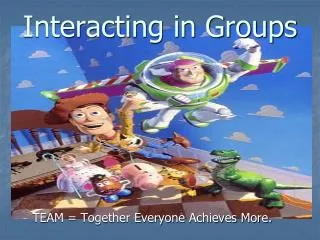
TEAM = Together Everyone Achieves More. Interacting in Groups
Objectives 1. Explain the difference between prescribed norms and emergent norms. 2. Define the 3 group roles. 3. List the qualities that affect group dynamics. 4. Describe the 4 characteristics of group discussion.
The informal, often unstated rules about what behavior is appropriate in a group. What are “group norms?”
Two Types of Group Norms… • Prescribed Norms: • A rule or appropriate behavior that is routinely taught to new group members. • Emergent Norms: • Any group norm that develops from the group interaction and the mix of the group members’ personalities.
Group Roles • Initiator: • Works towards getting the group started toward achieving the group goal. • Moderators – keep the group moving, give deadline reminder • Tension Relievers – make jokes to relieve the tension. • Facilitator: • A person who adds energy to the group by helping group members follow through on task. • Challengers – play Devil’s Advocate in order for all sides to be heard. • Agitator: • Injects negativity into the group process. • Monopolizers - interrupt, ramble, repeat • Distracters – bring up irrelevant things to waste time • Skeptics – don’t like any solution the group comes up with.
Non-participant Distracter Clown Complainer Critic Absentee Types of agitators…
Group Dynamics • The energy created as group members communicate and interact with each other in committees, teams, and other groups. • What affects group dynamics? • Norms • Member’s roles & personalities • Interaction or lack of interaction of members • Group purpose
Group Discussion: Occurs when three or more people exchange ideas on a specific topic for a specific purpose. Is there a difference between discussion and conversation? How do we solve problems in groups?
*Discussion Formats* • PRIVATE GROUP DISCUSSIONS • sometimes called a round table discussion • used in business and government • used to share information on a specific subject • each member of the group gives a report on one aspect of the subject and then the group discusses the separate reports and how they fit together.
*Discussion Formats* • PANEL DISCUSSIONS • a group that discusses a topic of common interest to its members and to a listening audience • usually composed of four to six members who are experts on a particular topic • the group shares information and opinions • questions from the audience may be entertained
*Discussion Formats* • SYMPOSIUM • four to six people present short prepared speeches and then discuss the ideas which have been presented. • has a listening audience • audience has a chance to ask questions and make comments
4 Characteristics of Group Discussion • 1. The group is interactive. • Everyone’s involved. • 2. The group’s focused. • Everyone stays on task. • 3. The group is organized. • The group moves from one point to the next. • 4. The group is cooperative. • WORK TOGETHER!!!
Review • What is the difference between prescribed norms and emergent norms? • What are the 3 group roles? • What qualities affect group dynamics? • What are 4 characteristics of group discussion? • What are 3 effective strategies in group participation?