Download
1 / 50
510 likes | 671 Vues
This comprehensive overview traces the evolution of art from the Ancient Near East, through diverse cultures including the Sumerian, Egyptian, Greek, and Roman eras, to the innovative movements of the Modern age. Explore the progression from naturalism to abstraction, the impact of historical events like the Reformation and the Industrial Revolution, and the emergence of influential styles such as Impressionism, Cubism, and Surrealism. This guide provides insights into how art reflects societal changes and individual creativity across millennia.

E N D
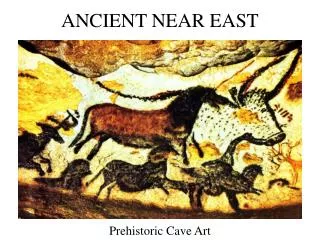
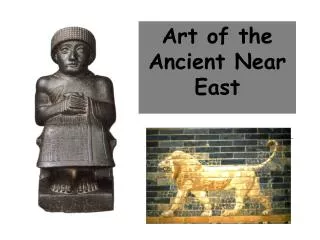
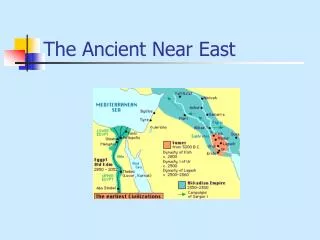
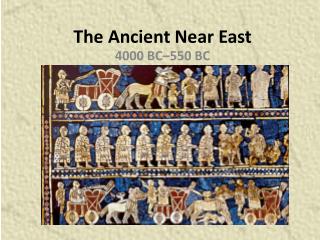
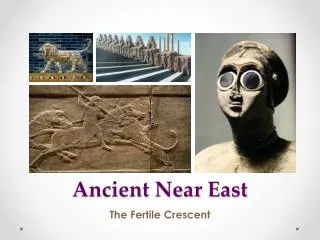
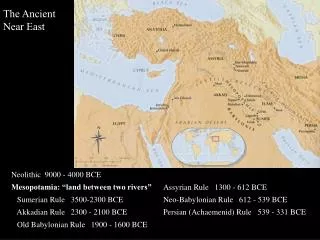
Ancient Near East Sumerian Akkadian Babylonian Assyrian Persian
Ancient Egypt Pre-dynastic Period Old Kingdom Middle Kingdom New Kingdom Amarna Period New Kingdom cont. Late Period
Proto-Greek Cycladic Minoan Fresco Secco Mycenaean Corbeling
Ancient Greek Archaic Greek—6th century Persian Wars [Darius the Great & Xerxes] Classical Greek—5th century[idealized naturalism] Contrapposto Polykleitos’sCannon of Proportions y = 2x + 1 Pericles Late Classical—4th century [humanized naturalism] Peloponnesian War (Sparta vs. Athens) death of Alexander the Great (323 BCE) Hellenistic Greek—3rd – 1st century BCE [dramatized naturalism]
Ancient Rome Republican Period [509 BCE – 27 BCE] Imperial Period [27 BCE – 410 CE] Early / High Empire Late Empire / Late Antiquity Concrete Rounded arch Second Style (illusionism) Linear perspective Atmospheric perspective
Early Christian / Late Antiquity [ca. 200 – 500 CE] Greco-Roman influence Mosaic Central plan Longitudinal plan
Byzantine [527 – 1453] Justinian & Theodora Pendentives& Squinches Iconocalsm Flat Fromal Frontal Floating
Early Medieval [400 – 1000] Hiberno-Saxon [600s – 700s] Carolingian [800s] Viking [800s] Ottonian [900s]
Romanesque [1050 – 1200 CE] Pilgrimage Church Increased size of nave and side aisles Added transepts Reliquaries / Relics Radiating chapels Rounded arches Barrel vault / Groin vault Masonry vaults Buttressing Tympanum Cloister Stone sculpture revived Christ as last judge (pantokrator) Regional Styles (cf. France, Italy, & England)
Abbot Suger • Pilgrimage cont. • venerate relics • Cathedral • High elevation • Regional Styles • (cf. France, Italy, & England) • “Court style” of Louis IX • Flamboyant • Perpendicular Gothic [1140 – 1500 CE] Pointed arch Stained Glass [Lux nova] Clerestory / Triforium Lancets Rose windows Flying buttressing Rib vaulting Tracery Jamb sculpture S-curve
Proto-Renaissance 1300s [14th century] Italio-Byzantine Proto-Renaissance Modeling International Gothic Style
15th century Northern Europe[1400s] Late Medieval Oil paints Increased naturalism Private devotional imagery Symbols Portraiture
Early Renaissance [1400’s / 15th century] Greco-Roman influence Humanism Linear perspective Chiaroscuro
Renaissance [1500’s / 16th century] High Renaissance humanism Sfumato Venetian Renaissance Oil on canvas Arcadian / Pastoral Landscape Protestant Reformation / Catholic Counter-Reformation Mannerism [1420s]
Northern Renaissance [1500’s / 16th century] Protestant Reformation Woodcut print Italian Renaissance influence (Durer)
Baroque Art[1600 – 1750 / 17th century] Protestant Reformation Dutch Baroque Catholic Counter Reformation Dynamic Baroque (Italy/Spain, Flanders) Tenebrism Classical Baroque (France) “”
Rococo [1700– 1750 / 18th century] “Rubeniste”
The Enlightenment [18th century taste for the “natural”] Industrial Revolution Grand Manor Portraiture The Grand Tour
Neoclassicism [1750 – 1850] The Grand Tour Excavation of Pompeii & Herculaneum “Poussinistes”
Romanticism [1750 – 1850] “Age of Revolutions” The Sublime Rousseau—”Natural Man” Hudson River School [1820s]
Beginnings of Photography [Mid-19th century] Daguerreotype—1839 Calotype—1939
Impressionism [1870’s – 1880’s] • En plain air • Salon des Refuses cont. 1874, 1875, & 1886 • Industrialization & Urbanization Bourgeois
Post-Impressionism [1880’s] Avant-Garde Expressionism (color) Formal Analysis Pointillism (aka Divisionism) Japonism
Symbolism [Late-19th century] Primitive artist “Art for art’s sake” Fin de Siecle
Arts & Crafts Movement[Late-1800s] Art based on natural forms Elevation of craftsmanship William Morris
Arts Nouveau [1890s] Art based on natural forms Synthesized media Mass-produced
Early Modern Architecture “Form follows function” – Louis Sullivan Cast iron Steel (1860) Glass
Fauvism [1905] Arbitrary color
German Expressionism[1905 – 1914] Die Brucke—1905 DerBlaue Reiter—1911 non-objective / pure abstraction
Cubism [1907] Analytical Cubism—1907 Fractured space / Breaking the ‘picture plane” Synthetic Cubism—1912 Collage Armory Show—1913
Futurism [1914] Dynamism / Speed / Movement Progress war as cultural cleansing
Dada[1917] Post-WWI nonsensical view of life chance Ready-made photomontage
Surrealism [1930s] Sigmund Freud / Subconscious fantasy / dreams Naturalistic Surrealism Biomorphic Surrealism Automatism
Suprematism[1915] Nonobjective “Pure feeling”—supreme reality through pure feeling
de Stijl[1917] “pure plastic art”—universal reality Primary colors Primary values
The Bauhaus[1920s] Anticipate 20th century needs Strong basic design Embrace industry and mass-production Artist = Craftsman
Modernist Architecture [20th century] International Style [1930s] Prairie Style [early-20th century]
Regionalism [1930s] Nostalgic view of mid-Western American heritage during the Great Depression Establish an American identity
Post WW II Expressionism [1945 – 1950s] Imagery Expressionism
Abstract Expressionism [1950s] Modernist Formalism Gestural Abstraction [Action painting] process Chromatic Abstraction
Post-Painterly Abstraction [1960s] Color field painting Hard-edge painting
Site-Specific Art[1960s] Earth art / Land art / Environmental art
Performance Art[1960s] John Cage Happenings
Conceptual Art[1960s] Art as idea
Pop Art[1960s] Popular culture / mass media
Post-Modernism [1970’s - now] Post-Modern Architecture Deconstructivist Architecture Neo-Expressionism [1980s] Post-Modern Critique Issues of Race Issues of Gender Critique of Commodity Culture Critique of Art