Download
1 / 66
660 likes | 806 Vues
This engaging and informative training program covers essential elements of emergency management. It includes foundational principles, vulnerability assessment, emergency management considerations, and the types and responses to emergencies, including hazmat situations. Participants will learn through interactive sessions, real-life case studies, and practical drills to establish a robust emergency management program. The aim is to prepare organizations to effectively handle unexpected events that can threaten lives, property, and business continuity while enhancing community safety and compliance.

E N D
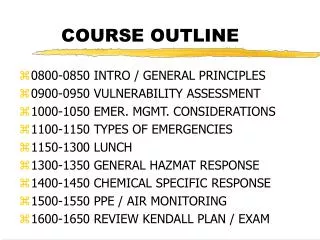
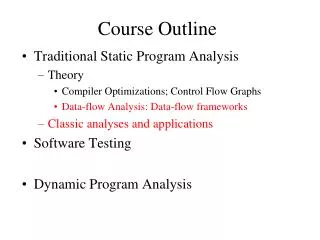
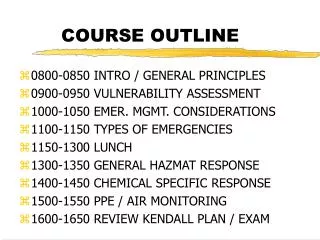
COURSE OUTLINE • 0800-0850 INTRO / GENERAL PRINCIPLES • 0900-0950 VULNERABILITY ASSESSMENT • 1000-1050 EMER. MGMT. CONSIDERATIONS • 1100-1150 TYPES OF EMERGENCIES • 1150-1300 LUNCH • 1300-1350 GENERAL HAZMAT RESPONSE • 1400-1450 CHEMICAL SPECIFIC RESPONSE • 1500-1550 PPE / AIR MONITORING • 1600-1650 REVIEW KENDALL PLAN / EXAM
CLASSROOM BASICS • 50 minute sessions / 10 minute breaks • The Rule of 8’s • Class Atmosphere • questions anytime • clarify Kendall aspects all the time • comfortable, relaxed, no hierarchy • no sleeping (please stand up, walk around)
INTRO GENERAL PRINCIPLES • Our Goal: • Provide a step-by-step discussion on your emergency management program • creation • maintenance • execution • evaluation • Didactic - Interactive - Informative
INTRO GENERAL PRINCIPLES • Background • Augusta Company spills sulfur trioxide • bad press, regulatory attention, public relations • Amoco faces scrutiny over new school • emergency plans helped reduce concern • Pam Tucker • good, tough, honest, but leaving soon • Other Examples • Ford Boiler Explosion, NC Fire, Hurricane Andrew
INTRO GENERAL PRINCIPLES • So What??? • Emergencies take their toll on business in lives, well-being, and dollars • Prevention is the best medicine, but • Preparedness is the key to survival • Other Terms: • emergency management, emergency response, emergency preparedness, emergency planning, contingency planning
INTRO GENERAL PRINCIPLES • The end result is the same: • - limit injuries and damage • - limit civil/criminal liability • - regulatory compliance / avoid fines • + return more quickly to normal operations • + protect employees, community, and env. • + enhances company image • So, lets get into it……...
GENERAL PRINCIPLES • What is an Emergency • Any unplanned event that can cause deaths, or significant injuries to: • employees, customers, or the public • Or, that can: • shut down your business • disrupt your operations • cause physical or environmental damage • threaten the facility’s financial standing • threaten the facility’s public image
GENERAL PRINCIPLES • Numerous Events Can Be Emergencies: • Fire, Explosion, • HazMat Incident • Hurricane, Tornado, Flood, Earthquake, Snow • Civil Disturbance • Avoid the term “Disaster” • confuses impact to different companies
GENERAL PRINCIPLES • What is Emergency Management? • The PROCESS of preparing for, mitigating, responding to, and recovering from one of these events • It is a DYNAMIC process, that MUST include • planning • training • conducting drills • testing equipment • coordinating activities
GENERAL PRINCIPLES • The Five Main Steps: • 1. Establish a planning team • 2. Analyze capabilities and hazards • 3. Develop the plan • 4. Implement the plan • 5. Go to Step 2
GENERAL PRINCIPLES Establish a Planning Team • Forming The Team • Involve all functional areas • Support Services • Management and Personnel • Emergency Response • Communications • Community
GENERAL PRINCIPLES Establish a Planning Team • Establish Authority, Schedule, Budget • commission the team • wear the managers “rank” • issue a mission statement • establish schedules, deadlines, priorities • determine the budget (needed vs. approved)
GENERAL PRINCIPLESAnalyze Capability/Hazards • Gather info about current capabilities • review internal plans and policies • meet with outside groups • identify codes and regulations • identify critical products, services, operations • identify internal resources • identify external resources • Conduct a Vulnerability Analysis • we’ll address this in detail later
GENERAL PRINCIPLESDevelop The Plan • The Plan should include: an Executive Summary, Emer. Mgmt Elements, Emer. Response Procedures, Support Documents • Emergency Management Elements are: • command, control, communications • life safety, property protection • administration and logistics • recovery and restoration • community outreach
GENERAL PRINCIPLESDevelop The Plan • The development process should include: • prioritizing • writing • training • outside coord • corporate comms • review/revision • approval • distribution
GENERAL PRINCIPLESImplementation • Integrate plan into Company Operations • It should become part of the company culture • Senior Management support? • Incorporated into personnel/financial proc.? • How is the plan distributed/communicated? • Are all levels of the organization involved? • Do personnel know what they should do?
GENERAL PRINCIPLESImplementation • Conduct Training • orientation and education sessions • tabletop exercises • walk-through drill • functional drills • evacuation drill • full scale exercise
GENERAL PRINCIPLES • Does Anyone Remember the Last Step? • Go to Step 2
VULNERABILITY ANALYSIS • This systematic process of evaluating the probability and potential impact of each emergency. • Use a numerical system to: • Assign probabilities • estimate impact • assess resources • The Higher The Score the Better
VULNERABILITY ANALYSIS • List Potential Emergencies • Include internal and external emergencies • Factors to consider: • historical • geographic • technological • human error • physical • regulatory
VULNERABILITY ANALYSIS • Historical Factors, what HAS occured • at this facility • at similar facilities • at other facilities in the area • in the community at-large • Geographical Factors (ie. due to location) • flood plains, seismic faults • adjacent company hazards • airports, railroads, highways, nuclear power
VULNERABILITY ANALYSIS • Technological Factors: • Process Safety • Computer Failure • Power Failure • Emergencies from human error due to: • poor training • misconduct • fatigue • drugs/alcohol
VULNERABILITY ANALYSIS • Physical Factors: • layout of equipment • proximity of shelter areas • physical construction • Regulatory Factors: • Limited by regulations? • Required to respond by regulations?
VULNERABILITY ANALYSIS • Estimate Probability • Rate the likelihood of emergency • Use scale of 1 to 5 (1 = lowest probability) • Subjective consideration • Be consistent
VULNERABILITY ANALYSIS • Estimate the Potential Human Impacts • the possibility of death or serious injury • Estimate the Potential Property Impacts • cost to repair/replace • cost of temporary facilities • Estimate the Potential Business Impacts • business interruption • breach of supply contracts • inaccessiblity by employees, customers, shippers
VULNERABILITY ANALYSIS • Assess Internal and External Resources • The lower the score the better • in-house assets/talents sufficient • responsiveness of external support • Add the columns • The lower the score the better • Subjective, but comparisons provide planning and resource priorities.
VULNERABILITY ANALYSIS • Sounds easy, Right??? • Lets do one on a “simple” emergency.
Emergency Management Elements • Command, Control, and Communications • Life Safety • Property Protection • Recovery and Restoration • Administration and Logistics • Community Outreach
Emergency Management Elements • Command, Control, and Communications • SomeONE has to be in charge • Emergency Action Group • Incident Commander • First Aiders, Fire Brigade, HazMat Team • Emergency Management Group • Plant Manager, General Manager, • Safety/Health Manager, Environmental Manager • Public Relations, HR, Logistics
Emergency Management Elements • Incident Command System • Developed specifically for the fire service • Can be applied to all emergencies • Provides for coordinated response and a • CLEAR Chain of Command for safe operations • Incident Commander • frontline management of the problem • tactical planning and execution • determines if outside assistance is needed
Emergency Management Elements • The Incident Commander must have authority to: • assume command • assess the situation • implement the emergency plan • determine response strategies • activate resources • order evacuation • declare the incident is “over”
Emergency Management Elements • Emergency Operations Center • communications equipment • copies of emergency plan / EOC procedures • blueprints, maps, status boards • a list of EAG members and their duties • technical information and data • data/info management capabilities • telephone directories • back-up power, comms and lighting
Emergency Management Elements • Emergency Operations Center • THE centralized management center • Where the EMG (decision makers) operates from during an emergency • The ONLY location/source to override the IC • Must be located in an area of the facility not likely to be involved in any of the Emergency Plan scenarios. • An alternate should also be designated
Emergency Management Elements • Other Command and Control issues: • Need a predetermined line of succession • Define duties of personnel with assigned role • Prepare checklists/procedures for each role • Maintain logs • Use security to isolate the involved area • coordination of outside response
Emergency Management Elements • Communications • Cant stress this enough! • Think about comms during a routine day, then think about them during an emergency • Consider comms between: • the EAG and the IC • the IC and the EOC/EMG • the EOC and everyone else • customers, neighbors, media, fire department
Emergency Management Elements • Contingency Planning Communications • Business/Recovery impact • Prioritize communications • Consider backup communications • messengers • radios: short wave, microwave, CB, etc • satellite • Family Communications
Emergency Management Elements • Communications - Notification • How should employees report an emergency • Post emergency telephone numbers • MAINTAIN a list of repsonders’ numbers • consider a weather radio watch • Communications - Alarm • Be audible or within view of ALL personnel • auxiliary power supply • distinct and recognizable signal
Emergency Management Elements • Life Safety • Evacuation planning • Pre-determine conditions warranting evac • Identify personnel authorized to order evac • Use a system to account for personnel • Establish alternate muster areas • disabled / non-English speaking persons • Define approved shelter areas • physically sound? Supplies?
Emergency Management Elements • Property Safety - Consider: • fire fighting • spill control/clean-up • closing barricades, doors, windows • shutting down equipment • covering/moving equipment • protection systems • retrofitting mitigative modifications • Facility shutdown (similar to evac policy)
Emergency Management Elements • Records Preservation • A major source of “loss”, often overlooked • off site copies • electronic back-ups • improved storage • include in evacuation policy (initial response) • procedure to recreate lost records
Emergency Management Elements • Community Outreach • involving the community • mutual aid agreements • community service • public information • media relations • risk = hazard + outrage
Emergency Management Elements • Recovery and Restoration • involve your insurance carrier • determine critical ops and make plans to bring those on-line first • repair/replace equipment • relocating operations • contracting operations • Community Outreach • Evaluate continuity of management and key personnel
TYPES OF EMERGENCIESFire • Prevention, Prevention, Prevention • Fire Extinguishers / Training • Assign fire wardens to each area • Predetermine the level of response • Meet with Local FD to: • review their capabilities • review their fire plan for your facility • request their help with evac drills
TYPES OF EMERGENCIESHazMat Incidents • Review both on-site and off-site sources • Highly regulatory environment • OSHA - HazWoper, HazComm, Resp Standard, Ventilation • EPA - RCRA, CERCLA, SARA, HMTA, TSCA • Consider: • labelling, MSDS’s (HazComm) • Predetermine the level of response • Meet with the Local FD
TYPES OF EMERGENCIESFloods • Determine if you are in a flood plain • Know NOW where the higher ground is • Establish a weather radio watch • Consider • permanent flood proofing measures • contingent flood proofing • emergency flood proofing
TYPES OF EMERGENCIESHurricanes • The Season is June-November • This far inland storm surge and direct wind damage is unlikely, but • Hurricanes can spawn Tornadoes • Emergency planning involves flood and tornado preparations
TYPES OF EMERGENCIESTornadoes • Winds can reach 300 mph • Damage up to 1 mile wide 50 miles long • Establish a weather radio watch • Designate shelter areas in the plant • area of 6sqft per person • structurally sound (engineer) • away from exterior wall, windows, doors • conduct drills
TYPES OF EMERGENCIESSevere Winter Storms • A little snow can cause a lot of problems • Plan for shutdowns and early releases • Plan for employees stranded at the facility • Back-Up power
TYPES OF EMERGENCIESEarthquakes • Geologically minor risk for Augusta • Ensure new construction considers seismic rating • prevent resultant damage • secure shelves and equipment to floor/wall • secure utility and process piping • move large heavy objects to lower shelves • install safety glass where appropriate • if indoors, stay…if outdoors, get away
TYPES OF EMERGENCIESTechnological Emergency • Loss of utility service, power, information system, or critical business equipment • Avoid or mitigate the loss • redundancy • plan for rapid restoration • establish preventive maintenance system • review building systems with key safety and maintenance personnel