Forces
Experience the thrilling world of forces and glider engineering through engaging PE activities and mystery stations. Students will rotate through quantitative and qualitative investigations, focusing on Newton's three laws of motion. They'll design and execute experiments to explore how motion relates to applied forces, incorporating concepts like inertia, force meters, and free-body diagrams. The culmination is a hands-on glider engineering challenge where students build and optimize a working glider, complete design reports, and participate in a launch competition to test their engineering skills.

Forces
E N D
Presentation Transcript
Forces Glider Engineering Challenge Starting from the end and backwards planning…
activities Forces * * Conceptual development
Mystery Stations • Qualitative • Students rotate around stations • Observe • Explain • Guess at what they all have in common • Newton’s 1st Law–Inertia
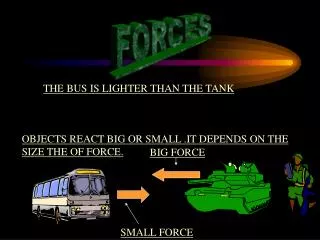
Carts & Masses • Quantitative investigation • Design and execute an experiment to determine how the motion depends on applied force • Represent findings through a graph • Newton’s 2nd Law • Fnet = ma
Force Meters • Introduce force due to gravity • Create home-made force meter • Fgrav = mg • Fspring = -kx
Tug-of-War a. b. • Quantitative • Use force meters to investigate action-reaction • Newton’s 3rd Law • Fa,b = –Fb,a c. d.
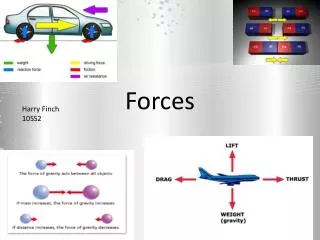
Force Stations • Qualitative Quantitative • Students rotate around stations • “Draw the forces” • Free-Body Diagrams
The Glider Engineering Challenge • Design and build a working glider • Conduct an experiment to optimize the design • Design Report I • Analysis & FBDs • Launch Competition • Design Report II • Analysis of Launch & Reflection
The Glider Engineering Challenge • Build a working glider • Must slide freely in track • Must have notch at nose for string attachment • Conduct an experiment to optimize one aspect of the design • Launch Competition m = 5.70 kg