
SlideServe
Menu
Préférences
© SlideServe · v2026

The Evidence for Evolution

kara avatar
25 diapositives · 575 Views · Aug 09, 2014

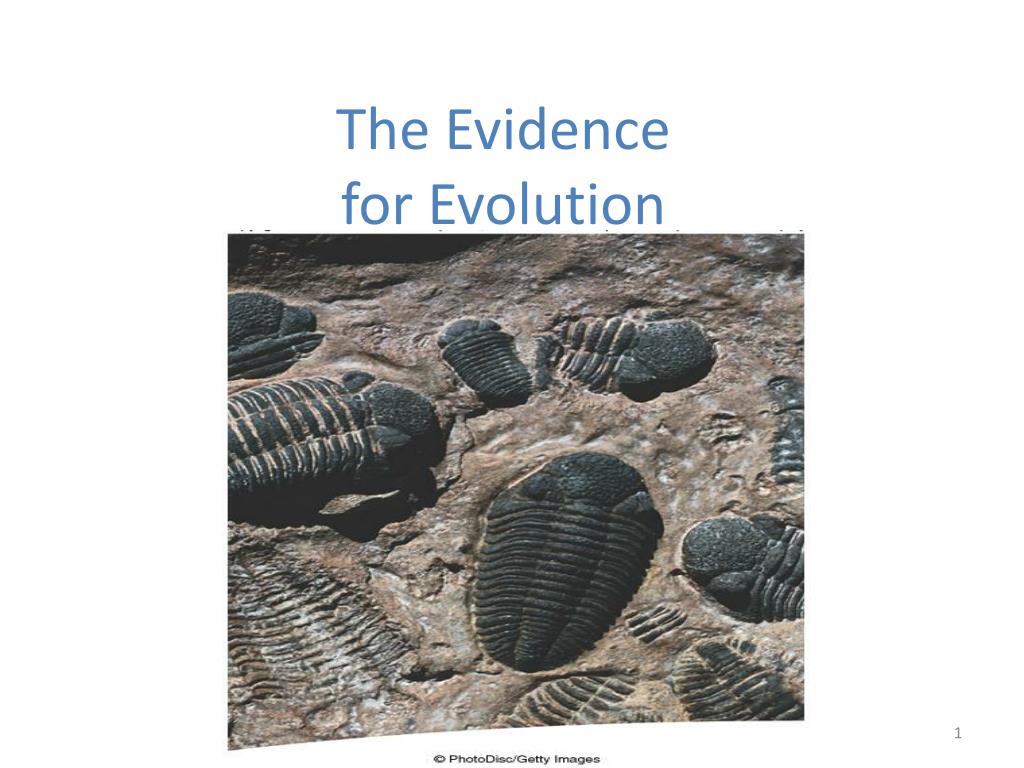
The Evidence for Evolution. Evidence of Evolution #1 – Fossil Record. Fossils are the preserved remains of once-living organisms Rock fossils are created when three events occur organism buried in sediment calcium in bone or other hard tissue mineralizes
The Evidence for Evolution - slide 1
01 / 25The Evidence for Evolution
1 / 17

Télécharger la présentation

The Evidence for Evolution
Une image / un lien ci-dessous est fourni (tel quel) pour télécharger la présentation

Politique de téléchargement : le contenu du site vous est fourni TEL QUEL pour votre information et votre usage personnel ; il ne peut être vendu, concédé sous licence ni partagé sur d’autres sites sans l’accord de son auteur.Le contenu vous est fourni TEL QUEL, pour votre information et votre usage personnel uniquement. Téléchargez la présentation en cliquant sur ce lien. Lors du téléchargement, si vous ne parvenez pas à télécharger une présentation, l’éditeur a peut-être supprimé le fichier de son serveur.Pendant le téléchargement, si vous ne parvenez pas à obtenir une présentation, le fichier a peut-être été supprimé par l’éditeur.

F I N

Plus de contenu associé

Transcription de la présentation
  1. The Evidence for Evolution

  2. Evidence of Evolution #1 – Fossil Record • Fossils are the preserved remains of once-living organisms • Rock fossils are created when three events occur • organism buried in sediment • calcium in bone or other hard tissue mineralizes • surrounding sediment hardens to form rock

  3. Fossil Evidence of Evolution Fossil records document the course of life through time

  4. Fossil Evidence of Evolution • Fossil of Archaeopteryx : It is intermediate between bird and dinosaur • Possesses some ancestral traits and some traits of present day birds

  5. Fossil Evidence of Evolution Whale “missing links”

  6. DivergentEvolution • when one species becomes many different species to fill available niches • Adaptive Radiation: periods of evolution in which organisms form new species due to adaptations that allow them to fill different niches in the community. i.e. Darwin’s Finches on the Galapagos Islands • Homologous Structures

  7. Evidence for Evolution #2 – Morphology • Homologous Structures -Similarity in structure due to common descent (had a common ancestor), regardless of the different environments in which they now live; same structure, different function i.e.- human hands, whale fins, bat wings

  8. Evidence for Evolution #2 – Morphology

  9. Evidence for Evolution #2 – Morphology

  10. Convergent Evolution • the appearance of apparently similar structures/ features in organisms of different lines of descent. • Analogous structures • Birds & Bats • Dolphins & Sharks • Penguins & Seals

  11. Evidence for Evolution #2 - Morphology • Analogous Structures - Similar structures based on naturally selected adaptations for the same function in different organisms but that did NOT result from a common ancestor • i.e – wings in birds, bats, insects

  12. Mimicry • A phenomenon in which an individual gains an advantage by looking like the individuals of a different species. • “A mimic is any species that has evolved to appear similar to another successful species in order to dupe predators into avoiding the mimic, or dupe prey into approaching the mimic.”

  13. Monarch Viceroy

  14. Evidence for Evolution #2 - Morphology • Vestigial Structures - Remnants of once useful structures (in ancestral species) but that no longer serve a purpose in this specific species (although could still be useful in similar species) i.e. – human appendix, hind limbs of snakes and whales

  15. Vestigial structures of a whale

  16. Hip girdles on snake

  17. Blind Salamander

  18. INTRODUCTION TO EMBRYOLOGY

  19. Human Embryo • Cat and human embryos in the tailbud stage. A cat embryo is shown on bottom, a human embryo on top. Note the post-anal tail in both, positioned at the lower left below the head of each. The human embryo is about 32 days old. Cat Embryo

  20. OOPS!

  21. Evidence of Comparative DNA • All creatures on Earth are descendents of a common ancestor. • Therefore: • we have the same mode of inheritance • Genes on chromosomes made of DNA • Why we have similar nucleotide and gene sequences

  22. Evidence of Comparative DNA

  23. Evidence of Comparative DNA