Understanding the Integumentary System: Functions, Parts, and Disorders
The integumentary system serves as the body's first line of defense against external stimuli, including the skin, nails, hair, and glands. Key functions of this system include protection of tissues, regulation of body temperature through sweat glands, and the production of oils by sebaceous glands. This overview also highlights common disorders such as hives, ringworm, eczema, shingles, and skin cancer, along with their symptoms and treatments. Protecting and maintaining the integumentary system is vital for overall health and well-being.


Understanding the Integumentary System: Functions, Parts, and Disorders
E N D
Presentation Transcript
Integumentary System Elizabeth & Kimberly 1st hour
Body’s first line of defense against outside stimuli What is the Integumentary System?
Skin • Nails • Hair • Sweat Glands • Sebaceous Glands Parts
Skin- Protect tissues • Nails- Protective covering • Hair- External insulation • Sweat Glands- Cool the body • Sebaceous Glands- Coat hair with oil Functions
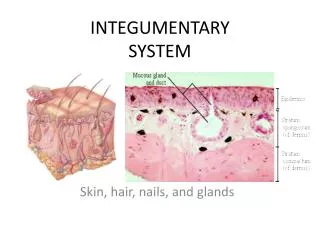
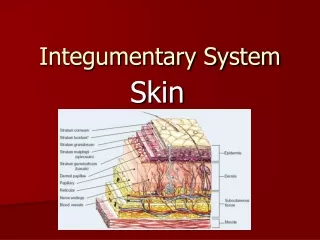
Epidermis: thinner top layer; contains keratin, melanin, and merkel cells • Dermis: deeper, thicker layer composed of connective tissue, blood vessels, nerves, glands, and hair follicles Skin
Nail root: portion of nail under skin • Nail plate: visible portion of nail • Free edge: white edge that extends past finger Nails
Sebaceous: oil glands • Sudoriferous: sweat glands • Eccrine: (most common) regulation of body temperature • Apocrine: responsible for “cold sweat”; stress • Ceruminous: lies beneath dermis; responsible for ear wax Glands
http://www.youtube.com/watch?feature=player_embedded&v=MXPRyrQexfEhttp://www.youtube.com/watch?feature=player_embedded&v=MXPRyrQexfE Video
Outbreak of swollen, pale red bumps • Reaction to allergens • Symptoms: • Dizziness • Swelling of tongue, lips, face • Difficulty breathing • Tightness in chest • Treatment: cool compresses, stay in cold rooms, loose-fitting lightweight clothes Hives
Common fungal infection • Look like ringworm: spider bites, eczema, Lyme disease • Body, scalp, nails, hands, feet, beard, groin • Symptoms: • Dry, bumpy, scaly, itchy bumps • Cluster together to make ring • Treatment: antifungal medication Ringworm
Skin sensitivity • Rash • Heat & sweat; Cold climates; Dry skin; stress • Symptoms: • Itchy rash • Small, painful blisters • Treatment: hydrocortisone creams, mild lotions, short warm showers, reduce stress Eczema
Caused by chickenpox virus • Most common in older adults and people with weak immune systems • Symptoms: • headache, light sensitivity • Feels like flu • Itching, tingling or pain • Cluster of blisters • Fill with fluid, crust over • Treatment: Antiviral and pain medication Shingles
Melanoma, basal cell, and squamous cell • Sun exposure biggest cause • Symptoms: • Thickening/ raising of mole • Itching, tingling, burning • Lump under skin • Unexplained weight loss • Headaches • Seizures • Treatment: Home treatments, medications, surgery Skin Cancer