

SlideServe
Menu
Préférences
© SlideServe · v2026

THE PROKARYOTES

kaspar avatar
25 diapositives · 519 Views · Jul 21, 2014

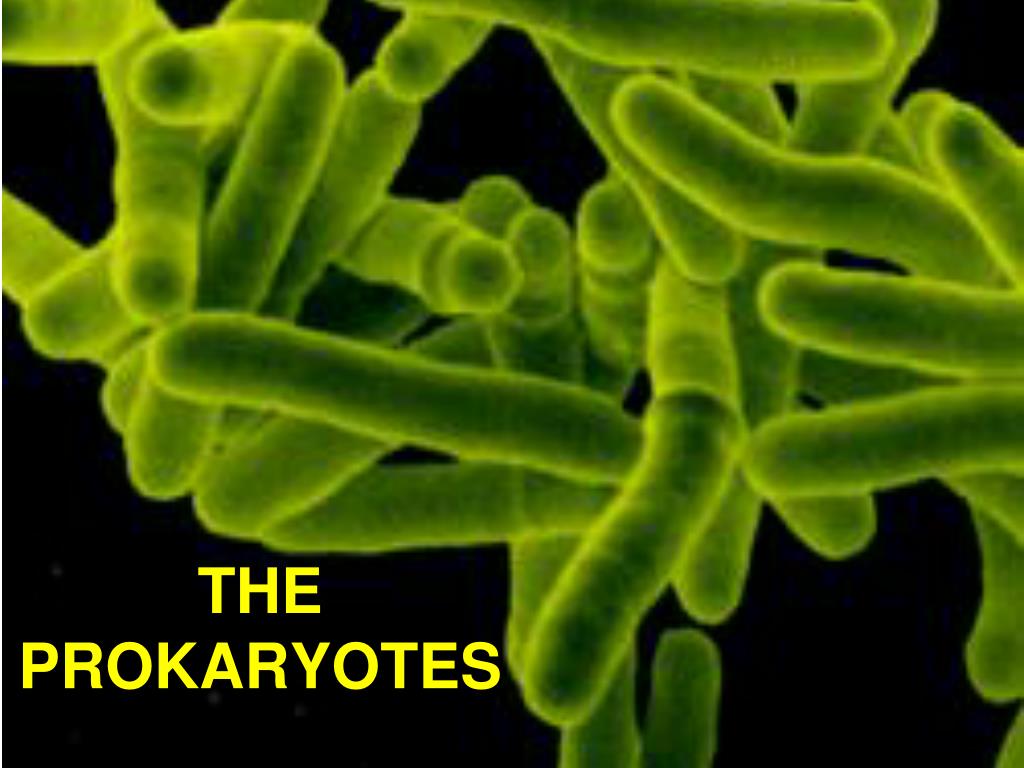
THE PROKARYOTES. Systematics of Prokaryotes. Focus on animals and plants History limited to 20% of evolutionary time How to classify prokaryotes? Limited in morphological characters. Carl Richard Woese. 1928-2012, USA; Developed system based on 16S rRNA in 1977.
THE PROKARYOTES - slide 1
01 / 25THE PROKARYOTES
1 / 17

Télécharger la présentation

THE PROKARYOTES
Une image / un lien ci-dessous est fourni (tel quel) pour télécharger la présentation

Politique de téléchargement : le contenu du site vous est fourni TEL QUEL pour votre information et votre usage personnel ; il ne peut être vendu, concédé sous licence ni partagé sur d’autres sites sans l’accord de son auteur.Le contenu vous est fourni TEL QUEL, pour votre information et votre usage personnel uniquement. Téléchargez la présentation en cliquant sur ce lien. Lors du téléchargement, si vous ne parvenez pas à télécharger une présentation, l’éditeur a peut-être supprimé le fichier de son serveur.Pendant le téléchargement, si vous ne parvenez pas à obtenir une présentation, le fichier a peut-être été supprimé par l’éditeur.

F I N

Plus de contenu associé

Transcription de la présentation
  1. THE PROKARYOTES

  2. Systematics of Prokaryotes • Focus on animals and plants • History limited to 20% of evolutionary time • How to classify prokaryotes? Limited in morphological characters

  3. Carl Richard Woese 1928-2012, USA; Developed system based on 16S rRNA in 1977

  4. Carl Woese and George Fox

  5. rRNA Emile Zuckerkandl (1922-2013); Austria & USA. Molecular biology and molecular clock Linus Carl Pauling (1901-1994) USA Founder of fields like quantum chemistry and molecular biology Suggested that a tree of life might be generated by comparing sequences of biopolymers like RNA Zuckerkandl and Pauling

  6. Why should rRNA be conserved?

  7. DNA molecule • When DNA is transcribed, the result is an RNA molecule Gene 1 Gene 2 Gene 3 DNA strand Transcription RNA Codon Translation Polypeptide Amino acid Figure 10.10

  8. DNA molecule • When DNA is transcribed, the result is an RNA molecule • RNA is then translated into a sequence of amino acids Gene 1 Gene 2 Gene 3 DNA strand Transcription RNA Codon Translation Polypeptide Amino acid Figure 10.10

  9. Ribosomal Function A typical prokaryotic cell may have 10,000+ ribosomes

  10. Where does rRNA enter the picture?

  11. Ribosomal Structure Two subunits

  12. Ribosomal subunits=rRNA molecules + proteins

  13. Prokaryotes Eukaryotes

  14. What’s the ‘S’? • Svedberg units: a measure of how quickly particles sediment in an ultracentrifuge

  15. What’s the ‘S’? • Svedberg units: a measure of how quickly particles sediment in an ultracentrifuge • Larger the particle, the greater its S value • Smaller subunit of a ribosome sinks slower than the larger subunit

  16. Why then does 5S + 23S = 50S?

  17. Why then does 5S + 23S = 50S?Shape AND size determine sedimentation rate…

  18. Ribosomal RNA Molecules • Components of the ribosomes of ALL ORGANISMS • Changes in rRNA nucleotide sequence indicative of evolutionary history SSU rRNA

  19. A modification of Woese from Brock et al. (1994).

  20. Two different supertrees generated by ML methods for complete genomes of 45 taxa. Daubin et al. 2002

  21. Ciniglia et al. 2004

  22. Lang et al. 2013 Using 24 genes and 3000 taxa

  23. Gram Stain and Structure

  24. Eubacteria • >9 Kingdoms • Same type of ribosomes • Polysaccharide of outer wall made of Murein • Most groups involved in global nutrient cycling • Many of economic importance • Disease • Other functions (e.g. antibiotic producers)

  25. Archaea • Differ from the Eubacteria • Form of ribosomes • No murein • Different lipids • Different RNA polymerase