Download
1 / 3
30 likes | 143 Vues
Sexually transmitted infections (STIs) can be bacterial, viral, or parasitic. Common bacterial STIs include Chlamydia, Gonorrhea, and Syphilis. Viral STIs encompass Genital Herpes, Human Immunodeficiency Virus (HIV), Hepatitis B, and Human Papilloma Virus (HPV). Parasitic STIs include Pubic Lice, Scabies, and Trichomoniasis. Symptoms may vary but can include burning during urination, itching, unusual discharge, and rashes. To avoid STIs, educate yourself, practice safer sex, consider mutual monogamy, and delay intercourse until safe.

E N D
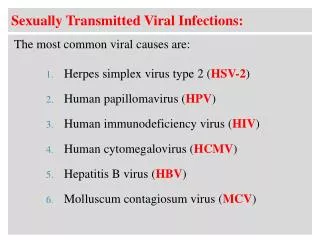
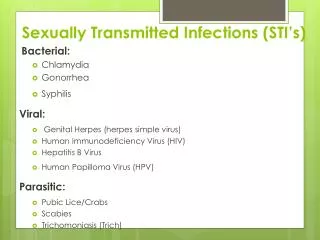
Sexually Transmitted Infections (STI’s) Bacterial: • Chlamydia • Gonorrhea • Syphilis Viral: • Genital Herpes (herpes simple virus) • Human Immunodeficiency Virus (HIV) • Hepatitis B Virus • Human Papilloma Virus (HPV) Parasitic: • Pubic Lice/Crabs • Scabies • Trichomoniasis (Trich)
Signs and Symptoms of STI’s • Burning during urination • Itching • Unusual discharge • Pain during intercourse or urination • Rashes, warts and sores on genitals, anus or throat • No symptoms for weeks, months or years
Important Things to Remember about Avoiding STI’s • Be informed and aware • Abstain from intercourse • Practice mutual monogamy • Practice safer sex • Know the symptoms • Postpone sexual contact and intercourse until: • the relationship is ready • both people want to have sexual contact and intercourse • you know there is no chance of infection • a condom is available