Analysis of Hybridization Signal Distribution in Segregating and De Novo Amplifications
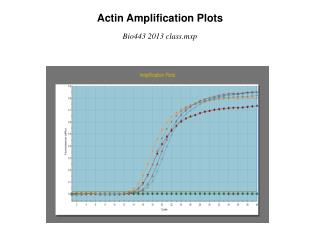
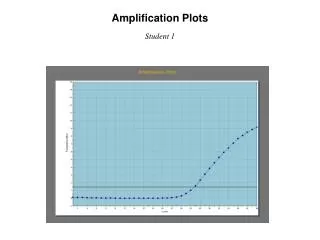
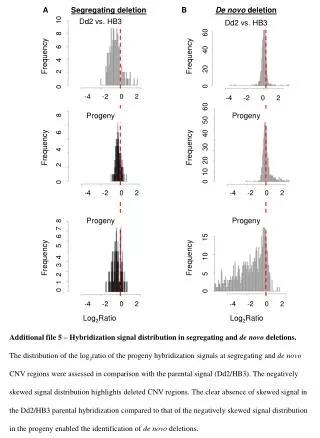
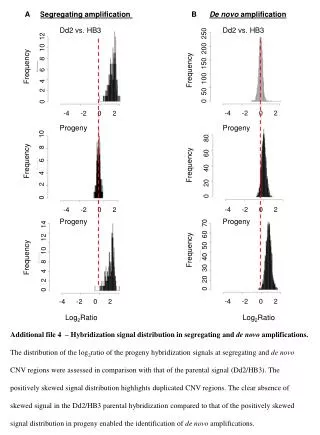
This study explores the distribution of log2 ratios from progeny hybridization signals in segregating and de novo copy number variant (CNV) regions, compared to parental signals of Dd2 and HB3. Results show a positively skewed distribution in progeny, indicating duplicated CNV regions, while parental hybridization signals lack such skewness. This contrast underscores the potential for identifying de novo amplifications in progeny. Overall, the findings contribute to understanding the genetic variations in these populations.

Analysis of Hybridization Signal Distribution in Segregating and De Novo Amplifications
E N D
Presentation Transcript
A Segregating amplification B De novo amplification Dd2 vs. HB3 Dd2 vs. HB3 Frequency 0 50 100 150 200 250 Frequency 0 2 4 6 8 10 12 -4 -2 0 2 -4 -2 0 2 Progeny Progeny Frequency Frequency 0 2 4 6 8 10 0 20 40 60 80 -4 -2 0 2 -4 -2 0 2 Progeny Progeny Frequency 0 20 30 40 50 60 70 Frequency 0 2 4 8 10 12 14 -4 -2 0 2 -4 -2 0 2 Log2Ratio Log2Ratio Additional file 4 – Hybridization signal distribution in segregating and de novo amplifications. • The distribution of the log2ratio of the progeny hybridization signals at segregating and de novo CNV regions were assessed in comparison with that of the parental signal (Dd2/HB3). The positively skewed signal distribution highlights duplicated CNV regions. The clear absence of skewed signal in the Dd2/HB3 parental hybridization compared to that of the positively skewed signal distribution in progeny enabled the identification of de novo amplifications.