Dihybrid Cross Notes
This guide provides a clear understanding of dihybrid crosses, focusing on dominant and recessive traits. It outlines the process of determining genotypes for parents and constructing a Punnett square. With practical examples, we assign letters to traits such as black (B), white (b), hairy (H), and hairless (h). The guide explains how to use gametes from parent genotypes, specifically for a heterozygous black hairless male (Bbhh) and a heterozygous white hairy female (bbHh). It also includes tips on calculating probabilities in genetic outcomes.

Dihybrid Cross Notes
E N D
Presentation Transcript
1. Determine dominant and recessive traits Carefully read the problem
2. Assign letters for the trait B = black b = white H = Hairy h = no hair
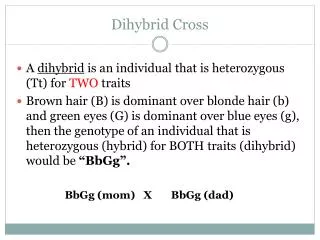
3. Determine genotype for parents *Parents must have 4 alleles Heterozygous, black, hairless male = Bbhh White heterozygous hairy female = bbHh
5. Put parent gamete combinations on box Bbhh gametes: Bh, Bh, bh, bh bbHh gametes: bH, bh, bH, bh Bh Bh bh bh bH bh bH bh
Extra tips • When determining the probability of events • If the problem states “and” then multiply the chances for each • Chance of heads and heads = ½ x ½ = ¼ or 25% • If the problem states “or” then add the chances for each • Chance of heads or tails = ½ + ½ = 1 or 100% As you work the problems write in your own extra tips