Food Security and Agricultural Livelihoods in Kenya: Insights from 2003-2005 Ecosystems Atlas
This chapter explores the dynamics of food security and predominant livelihoods in Kenya, based on data from 2003-2005. It examines cultivation intensity, national production of key crops like maize and wheat, and trends in milk production across Central and Western Kenya. It highlights areas of surplus and deficit in milk production, livestock density, and the economic share derived from fishing and hunting. This comprehensive analysis provides valuable insights into how ecosystems affect human well-being and agricultural practices.

Food Security and Agricultural Livelihoods in Kenya: Insights from 2003-2005 Ecosystems Atlas
E N D
Presentation Transcript
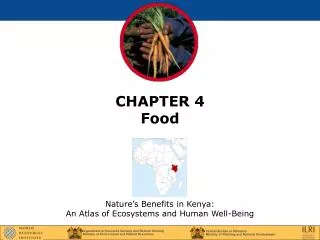
CHAPTER 4Food Nature’s Benefits in Kenya:An Atlas of Ecosystems and Human Well-Being
Predominant Livelihood Strategies Pursued by Households, 2003-2005
Food Crops as Percentage of all Cropland in Central and Western Kenya, 1997
National Production of and Area under Fruit and Vegetables, 1989-2003
Milk Production per Square Kilometer in Central and Western Kenya, 2005
Milk Surplus and Deficit Areas in Central and Western Kenya, 1997 MILK PRODUCTION SURPLUS AND DEFICIT (liters per sq. km per year) High surplus ( > 10,000 surplus) Slight surplus( <= 10,000 surplus) Slight deficit ( <= 10,000 deficit) High deficit ( > 10,000 deficit) No data
Fish Landings, Fisherfolk, and Fishing Vessels By Major Supply Area, 2001
People, Poverty, and Food Cropping – continued on next slide