The Roaring Twenties: Prosperity, Consumer Culture, and Social Change in America
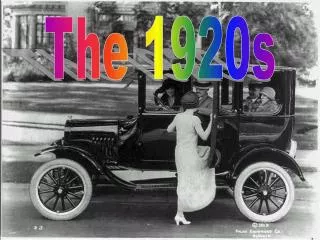
The 1920s, often referred to as the "Roaring Twenties," was a transformative decade for the United States. Following World War I, the economy surged, marked by a significant rise in GNP and consumer spending. Technological advancements led to the proliferation of consumer goods, and advertising became a major influence. However, not all shared in the prosperity—farmers faced economic hardship, and social tensions emerged with changing roles for women and rising nationalism. This era shaped modern American identity through cultural shifts and the rise of celebrity culture.

The Roaring Twenties: Prosperity, Consumer Culture, and Social Change in America
E N D
Presentation Transcript
Prosperity • WWI good for U.S. economy • Brief period of difficulty in moving from war economy • 1922-1929: American economy was vigorous and prosperous • GNP rose at 5.5% annual rate • From $149 billion to $227 billion • Unemployment never exceeded 5% • Real wages rose 15%
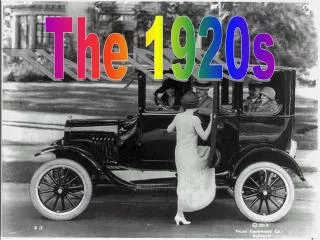
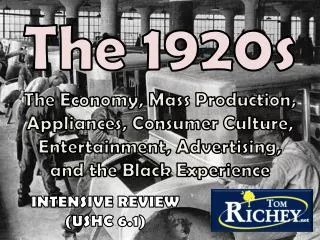
A Consumer Society • 1920s: growth of consumer goods • Cars, tractors, washing machines, electric irons, radios, vacuum cleaners • “Consumer durable” • Fresh fruits and vegetables • Number of cars purchased in the U.S. increased • Paved roads extended beyond the city • Gas stations, hot dog stands, motels • Greater number of Americans bought into the stock market, especially middle class
The Rise of Advertising and Mass Marketing • General Motors and annual model change • Advertising appealed to consumer desires • Professional advertising firms • Beauty products, cigarettes, fashion • Advertisers believed they were helping Americans achieve self-improvement and personal pleasure • Advertising aimed at middle class
Advertising Expenditures Expenditures on Advertising, 1915-1929
An Age of Celebrity • Mega-events and mass marketing • George Herman “Babe” Ruth • Charles Chaplin • Rudolph Valentino • Charles A. Lindbergh • Spirit of St. Louis • Role of media hype in celebrity
Industrial Workers • Skilled workers higher wages, more benefits • Semiskilled and unskilled industrial workers contended with labor surplus • New machines sometimes replaced workers • 40% of workers remained in poverty • Coal and textile workers suffered the most through the 1920s • Unions lost significant ground in the 1920s
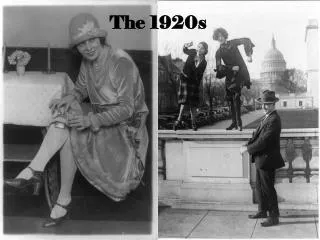
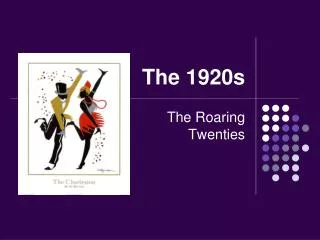
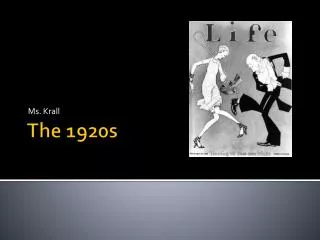
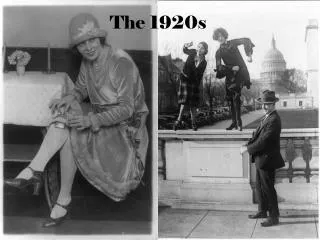
Changing Attitudes Toward Marriage and Sexuality • More open-mindedness • “Flappers” : independent-minded young, single females
Women and Work • Women were excluded from skilled craftsmen • Women were often relegated to areas of “women’s work” within an industry • Received less pay for equal work of a man • Opportunities grew for white-collar work (secretaries, typists, file and dept. store clerks) • Social services and teaching • Amelia Earhart
Birth Control Movement and Margaret Sanger • Speaking out violated the Comstock Laws • Griswold V. Connecticut did not legalize birth control until 1965
The Women’s Movement Adrift • Expected changes from women’s voting did not occur • Some success • League of Women Voters • Internal division • Equal Rights Amendment • Protective labor legislation
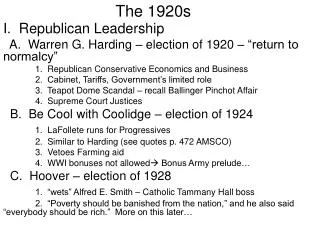
The Politics of Business • 1921-1933: Republican presidents governed the country • Blend of Gilded Age mediocrity and Roosevelt style state building
Harding and the Politics of Personal Gain • Warren G. Harding (1921-1923) • "Ohio Gang“: Harding’s drinking and womanizing cohorts • Albert Fall • Teapot Dome • Charles R. Forbes • Veterans’ Bureau • Harding dies in 1923
Coolidge and the Politics of Laissez-Faire • Calvin Coolidge (1923-1929) • Revenue Act (1926) • Curtailed FTC ability to regulate industry
The Politics of Business Abroad • Hoover wanted Commerce Dept. to control U.S. international economic relations • Washington Conference • Charles Evans Hughes • Five-Power Treaty • Hoover shut out • Dawes Plan • Charles G. Dawes • Kellogg-Briand pact (1928) • Continued intervention in Latin America
Farmers, Small-Town Protestants, and Moral Traditionalists • Not all Americans enjoyed prosperity of the 1920s • Farmers suffered due to overproduction • Moral-traditionalist white Protestants in small towns • Fear and suspicion of foreigners
Agricultural Depression • Slump for farmers after the wartime boom • Tractor enabled over-production • Produce market flooded • Prices fell dramatically • Many farmers lost, sold, or abandoned their farms
Cultural Dislocation • Majority of farmers saw themselves as ‘backbone of the nation’ • White, Protestant, Northern-European, hard-working, honest, God-fearing • 1920 Census: urban areas vs. rural areas • Fears of rural whites manifested in their support of • Prohibition • The Ku Klux Klan • Immigration restrictions • Religious fundamentalism
Prohibition • Eighteenth Amendment: prohibited manufacture and sale of alcohol • January 1920 • Difficulty of enforcing the law • Speakeasies and bootleggers • Prohibition effect: encouraged law-breaking more than abstinence • Al Capone • Liquor trafficking and violence • Chicago • Urban supporters rethink Prohibition
The Ku Klux Klan • William Simmons • D.W. Griffith’s Birth of a Nation • Hiram Evans • Hatred of members extended beyond Blacks to include Jews, Catholics, foreigners • 1924: 4 million Americans were members of the KKK, many outside the South • Women’s Auxiliary group: Women of the KKK • In many ways, Klan was also typical fraternal organization • Klan hate speech often sexually themed, reaction against changed attitudes toward sexuality
Immigration Restriction • Many white Protestants responded to Klan style nativist arguments • Johnson-Reed Act (1924) • Limits and quotas on immigration • Western hemisphere exempt • Border Patrol • Limitation quotas spread to other areas • Ivy League colleges
The First Red Scare • Attorney General A. Mitchell Palmer and his “Palmer” raids • Sacco and Vanzetti Case • Crusade against anarchy
The Ethnic and Racial Communities • Government policy discouraged “new immigrants” • Continued migration within the United States • African Americans moved from the South to the North • Mexicans crossed the Rio Grande into the Southwest • Creation of vibrant subcultures • Surge in religious
European Americans • “Americanization campaigns” • Many Americans responded by strengthening their ethnic and religious identities and cultures through organizations and associations • Use of the vote: Democrats • Split in the Democratic Party between • Urban-ethnic forces: Smith • Rural-Southern forces: McAdoo • Election of 1928 • Alfred Smith • First Catholic nominated to presidency
Fundamentalism vs. Liberal Protestantism • Protestant fundamentalism • Bible as God’s word • Bible as the source of all “fundamental” truths • Took opposition to liberal Protestantism and the discoveries of science • Fundmentalists anti-urban • Liberal Protestants believe that religion had to adapt to modernism, including skepticism and scientific discoveries
The Scopes Trial • Fundamentalists pass law prohibiting teaching of Theory of Evolution in Tennessee (1925) • ALCU and other worried it could be start of new wave of restrictions of Free Speech • John T. Scopes • William Jennings Bryan vs. Clarence Darrow • Bryan’s rejection of Darwin partly reaction of Populist defender against Social Darwinism • Publishers, afraid of Fundamentalist backlash, remove Darwin from textbooks until the 1960s
African Americans • African-Americans continue to migrate north • Harlem: the “Negro Capital” • A Black ghetto • Brotherhood of Sleeping Car Porters • A. Philip Randolph • Jazz • Willie Smith • Count Basie • Duke Ellington • Louis Armstrong Duke Ellington
The Harlem Renaissance • Harlem Renaissance: create works in rooted in African culture not imitations of white culture • "New Negro“ • White owned Harlem Jazz Clubs refused to admit African-Americans • Charlotte Mason • Langston Hughes and Zora Neale Hurston
Mexican Americans • Johnson-Reed Act, 1924 • Mexican-Americans became primary source of immigrant labor 500,000 Mexicans came to U.S. in 1920s • Most settled in Southwestern, U.S. • Texas, California • Dominated agriculture and construction jobs • Exploited and discriminated against • Californios • Los Angeles to Mexican-Americans what Harlem was to African Americans
The “Lost Generation” and Disillusioned Intellectuals • Alienated White artists • Sinclair Lewis • Main Street (1920) • Babbit (1922) • T.S. Eliot-- The Waste Land (1922) • F. Scott Fitzgerald-- The Great Gatsby (1925) • Eugene O'Neill’s plays • Ernest Hemingway-- A Farewell to Arms (1929) F. Scott and Zelda Fitzgerald
Democracy on the Defensive • Alienated intellectuals begin to distrust democracy • H.L. Mencken: democracy “the worship of jackals by jackasses” • John Dewey: Faith in democracy H. L. Mencken
Conclusion • Consumerism and mass production • Society seemed somewhat more egalitarian • However, many groups did not benefit from economic prosperity of the 1920s: • Working-class, rural Americans • Democratic party • Tensions between traditionalists and new populations • Alienated intellectuals • Republicans take credit for prosperity