Safe Lifting and Moving Techniques for Patient Care and Injury Prevention
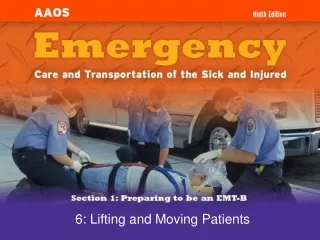
Proper body mechanics are essential for lifting and moving patients safely. This guide outlines key practices to protect yourself and your patients during emergent and non-emergent moves. Considerations include understanding the object you are moving, your physical limitations, and effective communication. Follow safety rules, such as positioning your feet correctly, using your legs for lifting, and avoiding twisting. Learn about emergency moves, including when the scene is hazardous, and non-urgent options like using stretchers and other equipment to ensure patient safety.

Safe Lifting and Moving Techniques for Patient Care and Injury Prevention
E N D
Presentation Transcript
Protecting Yourself Body mechanics • Protecting Your Patient Emergent moves Non-emergent moves
Body Mechanics Consider the following before moving: • The object • Your limitations • Communication
Rules to follow to prevent injury • Position your feet properly • Use legs not the back • Never turn or twist • Do not compensate when lifting with one hand
Methods to prevent injury • Power Lift (rising) • Power Grip • Reaching • Pushing or pulling
PROTECTING YOUR PATIENT Emergency Moves • The scene is hazardous • Care of life-threatening conditions requires repositioning • You must reach other patients
Move the patient along the long axis of the body when possible • Emergency Moves are reserved for emergencies as they do not provide protection for the neck and spine
Non-urgent moves • Cot • Stair chair • Spine Boards • Canvas • Scoop • Basket
Moving • Suspected spinal injury Manual Stabilization maintained until immobilized on LSB C-Collar
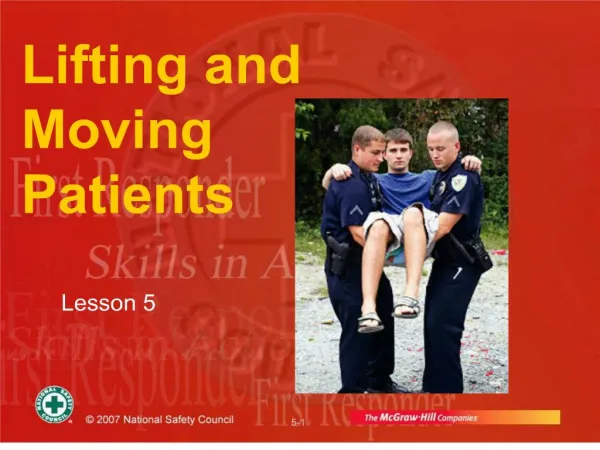
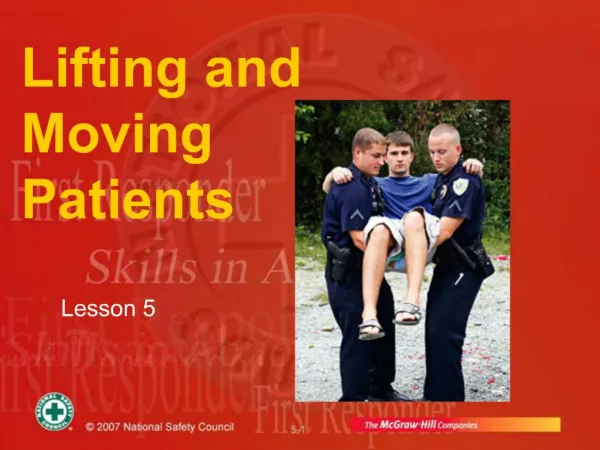
Patient with no suspected spine injury • Extremity lift • Direct ground lift • Draw-sheet method • Direct carry
Patient positioning • Recovery position • Position of comfort • Fowler’s or semi-Fowler’s position • Trenedelenburg