Immune System
This comprehensive overview of the immune system highlights the two primary defense strategies: passive and active immunity. Passive immunity involves the formation of antibodies transferred to the fetus via the placenta, through breast milk, or through artificial plasma administration. Active immunity develops when the body creates its own antibodies through vaccinations or after exposure to pathogens. The immune system consists of various components, including nonspecific and specific defenses, which work together to protect against bacteria, viruses, fungi, and other pathogens.

Immune System
E N D
Presentation Transcript
Immune System Body’s Defenses
Immune Responses • Passive • Formation of antibodies • To the fetus thru the placenta, thru breast milk, thru administration of plasma (artificial) • Active • Formation of your own antibodies • Vaccinations • by contracting an infectious disease by exposure of an antigen
2 categories of Defenses • Non-specific • Specific
Types of Defenses • Nonspecific defense • mechanisms are general and protect against many types of pathogens • Barriers to entry • Inflammatory rxns • Protective proteins
Types of Defenses: non-specific • Pathogens: • bacteria, fungi, protozoa, and viruses that cause infection
Layered Defenses • Physical barriers prevent pathogens such as bacteria and viruses from entering the organism.
Chemical Barriers to Entry • Enzymes • Acids: stomach acid
Chemical Barriers • Complement System http://www.youtube.com/watch?v=vbWYz9XDtLw
Neutrophils 1stWBC to scence • Phagocytes capable of diapedesis • Hallmark of acute infection • First to arrive on scene • 40-70%
Eosinophils • Mediate for allergies • Limited phagocytic activity • Strong Chemotaxis • Attract to injury and infection • Destroys Antigen/Ab complex • 2-4%
Basophils • Mast cells • Releases histamine: vasodialator • Heparine: anticoagulant • Releases serotonin/Kinin • .5-1% (smallest population)
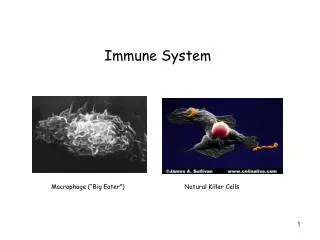
Monocytes • Scavengers • Transform into macrophages, eating bacteria, viruses and tissue debris • 3rd line of defense • 3-8%
Lymphocytes • Acquired immune response • SPECIFIC defense system • 20-25% • Forms 2 types: • T cells: attack all foreign cells • B cells: produce Ab to get rid of bacteria and viruses
Blood cells are produced in the bone marrow from a pluripotent stem cell that can become either a WBC, RBC or Platelet
http://www.dnatube.com/video/2441/Uptake-of-Bacteria-by-Phagocyteshttp://www.dnatube.com/video/2441/Uptake-of-Bacteria-by-Phagocytes
Specific Defenses Immunity is a specific defense mechanism. It is resistance to a particular pathogen or its toxin or metabolic by-product. Immunity is based upon the ability to distinguish self molecules from non-self. Molecules that can elicit an immune response are antigens.
Antigens • The lymphatic system responds to non-self or foreign antigens, but not to self antigens. • Shape of antigens allow immune system to be specific • Antigens: molecules that can elicit an immune response and each having their own receptor • may be proteins, polysaccharides, glycoproteins, or glycolipids.
Antigen-Presenting Cells • Macrophages alert lymphocytes by displaying antigens from engulfed cells. • Foreign antigens are attached to the macrophage surface by a self protein, part of the major histocompatibility complex (MHC).
Cellular Immune Response • Helper T cells destroy infected cells and clean up pathogens • T cells attach to foreign, antigen-bearing cells, cell-to-cell contact. • Cytokines or lymphokines enhance cellular response to antigens.
Helper T cells produce chemical signals to activate cytotoxic T cells, which are WBC carrying pathogen-specific receptors on their surface • Kill cancer cells and attack foreign tissue
Lymphocytes Origin • Red bone marrow releases undifferentiated lymphocytes into the circulation. • Some become T lymphocytes or T cells in the thymus. Figure 16.16
The Immune Response http://highered.mcgraw-hill.com/sites/0072495855/student_view0/chapter24/animation__the_immune_response.html
HumoralImmunityRemoving Pathogens at large • B cells secrete antibodies into the blood: antibody-mediated immunity. • Helper T cells activate B cells in response to macrophage presentation of antigens. • Stimulated B cells produce plasma cells or memory cells. • Plasma cells produce antibodies.
AB are released by plasma cells and circulate in blood and lymph • Ab attach to pathogens, similar to specific binding of cytotoxic T cells • AB/Antigen complex are then destroyed by general defense like macrophages or proteins that puncture pathogen’s membranes
http://bcs.whfreeman.com/thelifewire/content/chp18/1804s.swf
Types of T Cells • Helper T cells • stimulate B cells to produce antibodies • CD4 cells are prime targets of HIV • Memory T cells • produced upon initial antigen exposure and protect against delay in future exposure • Cytotoxic T cells • release perforin to destroy cells that present foreign antigens
B Cell Activation • Activated helper T cell releases cytokines. • Cytokines stimulate B cell proliferation. Figure 16.19
B Cell Activation • Some B cells become plasma cells that secrete antibodies that bind antigens. • Antibodies (immunoglobulins) are globular proteins composed of four chains. • Ends of the molecule contain antigen-binding sites.
Long Term Protection • Memory Cells