Researching Tsunami Impacts on Coastal Infrastructure at Oregon State's Large Wave Flume
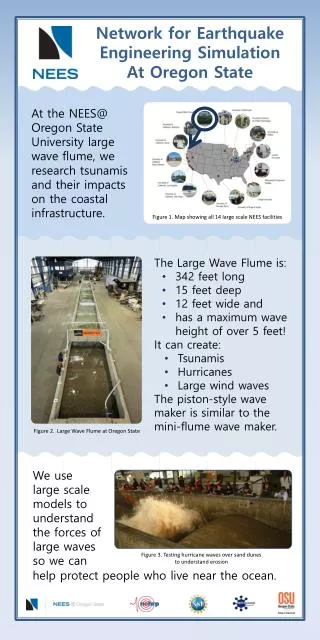
At the NEES facility at Oregon State University, our Large Wave Flume is a cutting-edge research tool for simulating tsunamis and their effects on coastal infrastructure. Measuring 342 feet long, 15 feet deep, and 12 feet wide, with a maximum wave height exceeding 5 feet, it allows us to create conditions mimicking tsunamis, hurricanes, and large wind waves. By utilizing large-scale models, we study the forces of massive waves and conduct tests to better understand erosion, aiming to enhance safety for coastal residents.

Researching Tsunami Impacts on Coastal Infrastructure at Oregon State's Large Wave Flume
E N D
Presentation Transcript
Network for Earthquake Engineering Simulation At Oregon State At the NEES@ Oregon State University large wave flume, we research tsunamis and their impacts on the coastal infrastructure. Figure 1. Map showing all 14 large scale NEES facilities • The Large Wave Flume is: • 342 feet long • 15 feet deep • 12 feet wide and • has a maximum wave height of over 5 feet! • It can create: • Tsunamis • Hurricanes • Large wind waves • The piston-style wave maker is similar to the mini-flume wave maker. Figure 2. Large Wave Flume at Oregon State We use large scale models to understand the forces of large waves so we can Figure 3. Testing hurricane waves over sand dunes to understand erosion help protect people who live near the ocean.