Functions and Anatomy of the Respiratory System: An Overview
The respiratory system is crucial for gas exchange, regulating blood pH, producing voice, enabling olfaction, and providing immunity against microorganisms. Key anatomical features include the nasal cavity, divided by the nasal septum, supported by structures like the hard palate and paranasal sinuses, which also contribute to voice resonance. The pharynx serves both respiratory and digestive functions, while the larynx, with its cartilages, protects against food aspiration and produces sound. The trachea, bronchi, and lungs complete this system, facilitating efficient breathing and gas exchange.

Functions and Anatomy of the Respiratory System: An Overview
E N D
Presentation Transcript
Functions of the Respiratory System • gas exchange • regulation of blood pH • voice production • olfaction • immunity, protection against microorganisms
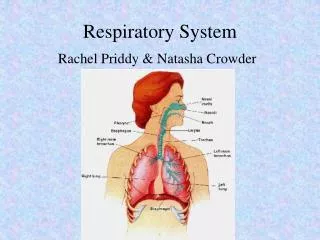
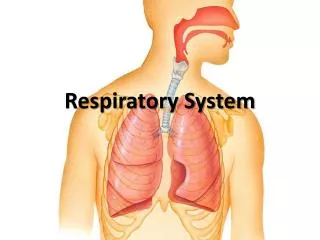
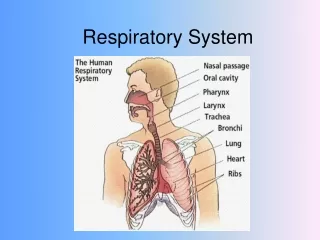
Respiratory Anatomy • nasal cavity • nasal septum – divides cavity in half • hard palate – forms floor of cavity • paranasal sinuses – reduce weight of skull • voice tone, resonance • located in maxillary, ethmoid, sphenoid and frontal bones • produce mucus • stratified squamous; pseudostratifiedciliated columnar
Anatomy • pharynx • digestive and respiratory • nasopharynx • uvula • pharyngeal tonsil • pseudostratified ciliated columnar • oropharynx • palantine and lingual tonsils • stratified squamous • laryngopharynx • stratified squamous; ciliated columnar
Anatomy • Larynx • 9 cartilages connected by muscle ligaments • epiglottis – prevents food from entering larynx • thyroid cartilage – Adam’s apple • paired cartilages – attachment for vocal folds (false and true) • cricoid cartilage
Anatomy • trachea – c-shaped cartilage • pseudostratified ciliated columnar • smokers: stratified squamous • bronchi bronchioles alveolar sacs (300 million) • pseudostratified ciliated columnar
Anatomy • lungs • 3 lobes (right) and 2 lobes (left) • pleural cavities • lined with pleura (serous membranes)