
SlideServe
Menu
Préférences
© SlideServe · v2026

The arabian Peninsula

keene avatar
22 diapositives · 510 Views · Jul 30, 2014

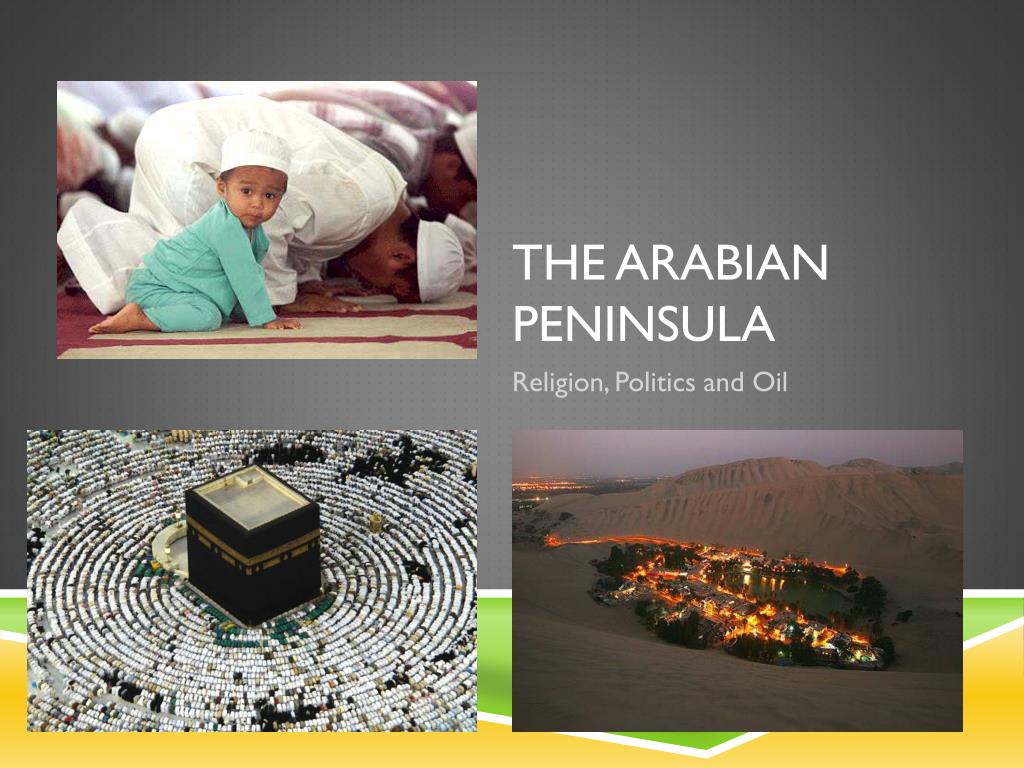
The arabian Peninsula. Religion, Politics and Oil. Islam changes desert culture. Towns served as trade centers for caravans (oases) Silk Road ports Bedouins move across peninsula for oasis to oasis Culture based on family ties Fought one another for control of lands
The arabian Peninsula - slide 1
01 / 22The arabian Peninsula
1 / 17

Télécharger la présentation

The arabian Peninsula
Une image / un lien ci-dessous est fourni (tel quel) pour télécharger la présentation

Politique de téléchargement : le contenu du site vous est fourni TEL QUEL pour votre information et votre usage personnel ; il ne peut être vendu, concédé sous licence ni partagé sur d’autres sites sans l’accord de son auteur.Le contenu vous est fourni TEL QUEL, pour votre information et votre usage personnel uniquement. Téléchargez la présentation en cliquant sur ce lien. Lors du téléchargement, si vous ne parvenez pas à télécharger une présentation, l’éditeur a peut-être supprimé le fichier de son serveur.Pendant le téléchargement, si vous ne parvenez pas à obtenir une présentation, le fichier a peut-être été supprimé par l’éditeur.

F I N

Plus de contenu associé

Transcription de la présentation
  1. The arabian Peninsula Religion, Politics and Oil

  2. Islam changes desert culture • Towns served as trade centers for caravans (oases) • Silk Road ports • Bedouins move across peninsula for oasis to oasis • Culture based on family ties • Fought one another for control of lands • Worshipped many gods (desert demons) • Prophet Mohammad (570-632AD) comes along with Islam • Raised as a trader from Mecca • Questioned idolatry of Meccans • Visited by Angel Gabriel in the Hira Cave • Begins spreading Islam

  3. Foundations of Islam • 5 Pillars • Faith (Shahadah) – “There is no god but Allah and Mohammad is his prophet” • Prayer (Salat) – 5x a day facing Mecca; Mosque • Fasting (Sawm) – no food or drink from sunup to sundown during Ramadan • Charity (Zakat) – giving money to the poor • Pilgrimage (Hajj) – all Muslims must make at least one trip to Mecca • Holy Book is the Koran • Shari’a – Islamic laws • Jihad • Lesser – throughout the world • Greater – within oneself

  4. Foundations of Government • Rulers rely on religious law (THEOCRACY) • Consult with religious leaders (imams) • Iran example of current theocratic country • BG and France’s growing empires threaten weakened Islamic states • Much of Middle East colonized after WW I • Wanted control of the Suez Canal and OIL

  5. Spread of Islam

  6. Jewish Holy Places: Jerusalem The First and Second Temple The Western (Wailing) Wall

  7. Christian Holy Places: Jerusalem Mount of Olives (Garden of Gethsemane) Church of the Holy Sepulchre (Golgotha / Calvary Hill)

  8. Islamic Holy Places: Jerusalem Dome of the Rock Al-Aqsa Mosque

  9. Creation of Israel

  10. In 1920, there was 1 Jew toevery 10 Arabs inPalestine. • By 1947, the ratio was 2 Arabs forevery Jew

  11. Holocaust

  12. Reasons why the Jews should get Israel? Had originally been their territory (history) Need a safe haven (protection) Never fully developed (development)

  13. Why should Israel not be created? Why should Israel be created?

  14. So now what? 1948-1949 Arab forces from Egypt, Transjordan (Jordan), Iraq, Syria, and Lebanon Israel supported by the UN and US, Britain, France Consequences Israel wins independence tension with its Arab neighbors ever since four more wars since then creation of the PLO (1964) Yassir Arafat use of intimidation and terrorism Israel as a nuclear state, Arabs seeking nukes (Iran) Defines the region Jews vs Arabs

  15. The eastern Mediterranean • Palestinian Liberation Organization • Formed in 1960s to regain land for Palestinians • Led by Yassir Arafat • Considered a terrorist organization • Refugees and Civil Wars • 3.7 million Palestinian refugees • Civil wars in Lebanon and Cyprus have caused death, suffering and econ problems • Modern Infrastructure • Lacking for irrigation, communication and power

  16. The Northeast • Ethnic Groups • Turks, Kurds, Persians, Assyrians • Blending of ethnic traditions and Islamic practices • Sunni • 83% of all Muslims are Sunni • Turkey, Iraq and Afghanistan • Believe that next Islamic caliph should be elected • Shi’a (Shiites) • Minority within Islam • Iran as well as some Iraqis and Afghanis • Believe that next Islamic caliph should be descended from Mohammad

  17. The Northeast • Taliban • Strict Muslim group in Afghanistan • Follow Shari’a to a fault • Forced out of control by US and coalition forces • Are currently hiding in mountains and fighting to regain control of Afgh • Kurds • Stateless nation • Claim a homeland in parts of Turkey, Iran and Iraq