The Birth of Islam and Its Expansion: From Mecca to the Abbasid Empire
This overview explores the origins of Islam in the Arabian Peninsula, detailing the life of Muhammad and the societal changes he inspired. Starting as a merchant in Mecca, Muhammad received divine revelations that led to the establishment of a new monotheistic religion. As Islam spread, it attracted diverse converts while also prompting political conflicts, like the Sunni-Shi’ite divide. The Umayyad and Abbasid empires significantly influenced Islamic culture and governance, fostering trade and the acceptance of various communities, although they faced challenges that led to eventual decline.

The Birth of Islam and Its Expansion: From Mecca to the Abbasid Empire
E N D
Presentation Transcript
Islam Ch 6
I. Introduction • Arabian Peninsula • Desert Region • Home of Islam • Nomadic backwater people • Traveled from Oasis to Oasis • People were tribe/ clan focused • Resulted in feuds • Were polytheistic but had no religious moral code
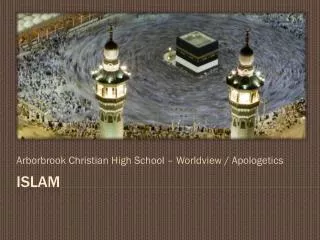
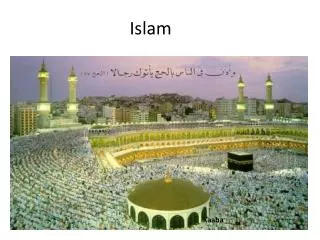
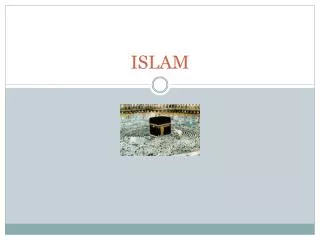
I. Introduction • Main town centers-Mecca& Medina • Mecca housed Ka’baand was a center for trade • Ran by Umayyad clan of Quraysh tribe • People • Women had greater freedom (lineage through women) • Males were polygamist and women could have multiple partners • Status earned through warfare • Tribes led by Shayks
I. Introduction • Religion was not strict • Gods were neglected • Quraysh tribe was monotheistic and believed in one god, Allah. • Muhammad’s tribe
II. Muhammad • Born to the Quraysh tribe • Both parents died • Raised by uncle (Abu Talib) and grandfather • Family was fairly wealthy • Was exposed to Christianity/ Judaism
II. Muhammad Eventually moved to Mecca Became a merchant and worked under Khadijah Became disillusioned with life as a merchant
II. Muhammad • Problems with way of life • Inequality among classes • Class Rivalries • Inter-clan tension • Extremely wealthy Umayyads • Problems with polytheistic religions
II. Muhammad • Muhammad had his first revelation from Gabriel in 610 AD • Believed his visions were the fulfillment/ clarification of other prophets • Did not write visions down. • Wives wrote them in the Qur'an and recorded the hadiths (traditions of the prophet)
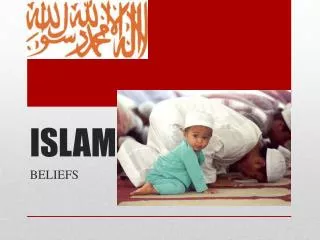
II. Muhammad • Came up with 5 pillars • Confession • No god but Allah and Muhammad is his prophet- La illahaillalah; Muhamador-rasul-allah. • Pray five times a day facing Mecca • Fast during Ramadan • Zakat- Tithe for the poor • Hajj- pilgrimage to Ka’ba to worship Allah
II. Muhammad • Originally had only a few followers • Seen as a threat to Mecca and Umayyad wealth and power • Snuck away to Medina • Mediated clan disputes (wise political leader) • Umayyad attacked but were defeated • 10000 converts destroy the idols in Ka’ba • Mecca converts • Muhammad dies in 632 AD • Caused major problems (Sunni and Shi’ite split)
III. Early Islamic Converts • Arab Converts • Universal monotheistic religion • No Priest • “Ended feuds and vendetta killings” • Religious Ethics • Zakat- charity for the poor and no overtaxing poor • Regulate life for Judgment Day
III. Early Islamic Converts • Non-Arab Converts • Strict Monotheism • Developed legal codes • “Egalitarianism” • Strong sense of community • Accepted older teachings- Islam just improves it
IV. Umayad Empire • Started with disagreement over a Caliph • Ali: Muhammad’s son-in-law (too young) • Abu Bakr (632-634): Friend of Muhammad • Defeated rival prophets- Ridda Wars • Unified Arab Peninsula and invaded Byzantium and Persia • Used war to unify people • Raiding to gain wealth (taxes)
IV. UmayadEmpire • Sunni vs. Shi’ite • Sunni- Backed Umayyads (Abu Bakr), Caliph is chosen by dominant clan • Shi’ite- Backed Ali, Caliph is descendant of Muhammad • Exploded when Uthman(3rd Caliph) was murdered • Ali was proclaimed caliph
IV. UmayadEmpire • Ali was a famous warrior and was winning at the Battle of Siffin • Lost support by talking out the rest of the battle • Was otherthrown • Assassinated in 661 AD • Mu’awiya was put in as new Caliph in 660 AD
IV. UmayadEmpire • Umayad Imperium • Conquest during 7th century • From India to Spain • Blocked by Charles Martel in 732 AD • Moved political center to Damascus • Arab/ Muslim aristocracy • Strong bureaucracy
IV. Umayads Empire • Converts • Non-Arab Muslim converts were called mawali • Still had to pay property taxes • Non-believers paid Jizya (head tax) • Christians and Jews were called dhimmi (people of the book)
IV. UmayadEmpire • Decline • Became very focused on luxury • Stopped fighting wars • Merv- warriors were suppose to be separated • Also never got treasure from conquest • Revolted and joined the Abbasid party (Muhammad’s uncle al-Abbas) • Formed alliances with other dissenters • Mawali (non-Arab converts) also joined the cause
IV. UmayadEmpire • 750 AD Abbasid forces defeated Umayyad forces in the Battle on the River Zab • Resulted in a massacre of the Umayyad clan at a peace banquet. • Hunted the rest of the family down
V. Abbasid Empire • Named after Abu al-Abbasid • Expanded bureaucracy • Wazir and Royal Executioner • Helped control empire • Pushed for conversion and Mawali acceptance • Mawali were exempt from head tax • Given same treatment as Arab Muslims • Stopped dividing booty
V. Abbasid Empire • Commercial expansion • Heavily involved in trade • Indian numerals became Arabic numerals • Guilds were formed • Luxury goods created for wealthy • Slave labor- mining/ farming • Could earn freedom • Ships called dhows • “1st global civilization”
V. Abbasid Empire • Cultural • Mosque • Schools • Bath houses • Hospitals • Arabic • Unified language, language of Qur'an • Art • Could not use images of people or animals • Geometric designs and flowers • 1001 Arabian Nights • Preserved classical works and architecture