

SlideServe
Menu
Préférences
© SlideServe · v2026

John Donovan 3/2/12

kellan avatar
11 diapositives · 291 Views · Aug 14, 2014

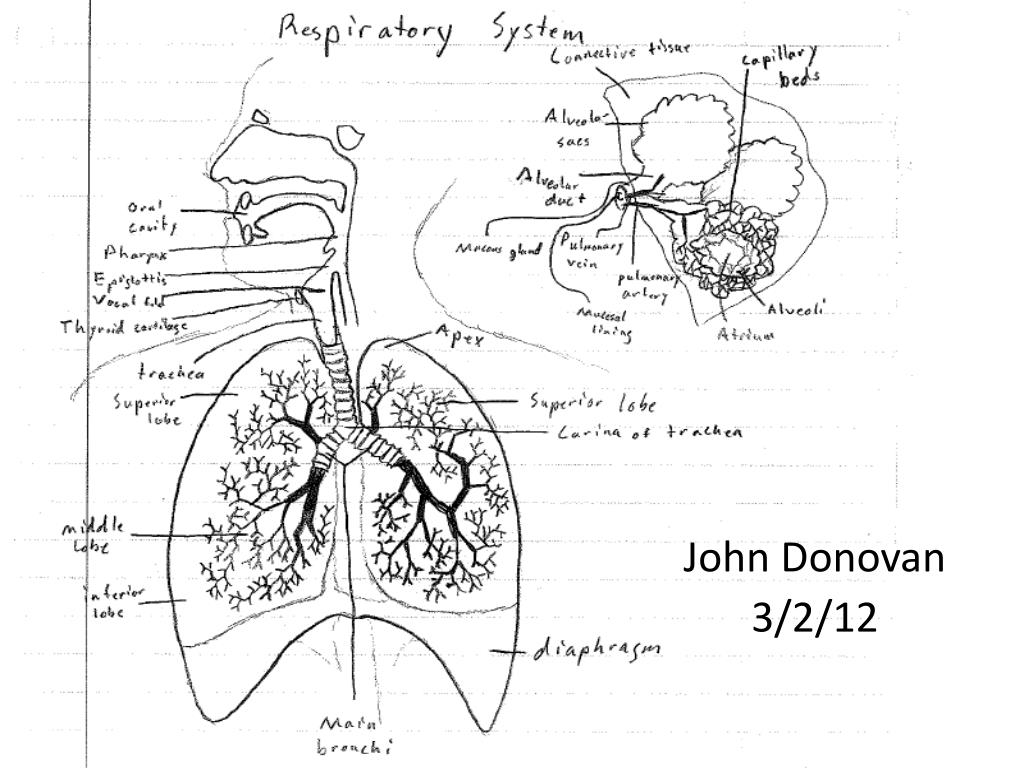
John Donovan 3/2/12. Respiratory System. The function of this system is to provide your body with oxygen in order to keep you alive and perform cellular respiration. Alveoli.
John Donovan 3/2/12 - slide 1
01 / 11John Donovan 3/2/12
1 / 17

Télécharger la présentation

John Donovan 3/2/12
Une image / un lien ci-dessous est fourni (tel quel) pour télécharger la présentation

Politique de téléchargement : le contenu du site vous est fourni TEL QUEL pour votre information et votre usage personnel ; il ne peut être vendu, concédé sous licence ni partagé sur d’autres sites sans l’accord de son auteur.Le contenu vous est fourni TEL QUEL, pour votre information et votre usage personnel uniquement. Téléchargez la présentation en cliquant sur ce lien. Lors du téléchargement, si vous ne parvenez pas à télécharger une présentation, l’éditeur a peut-être supprimé le fichier de son serveur.Pendant le téléchargement, si vous ne parvenez pas à obtenir une présentation, le fichier a peut-être été supprimé par l’éditeur.

F I N

Plus de contenu associé

Transcription de la présentation
  1. John Donovan 3/2/12

  2. Respiratory System • The function of this system is to provide your body with oxygen in order to keep you alive and perform cellular respiration.

  3. Alveoli • The alveoli is the tiny pockets in your lungs that store air for brief periods to allow time for oxygen to be absorbed into the blood-stream. • They are the site of gas exchange, the oxygen is absorbed into the blood stream.

  4. Carbon Dioxide Transport • As shown in the picture at the right, the lungs take out the carbon dioxide in the blood stream and transport oxygen into the blood stream. • The oxygen gets transported to tissue cells and is then used by the cells for cellular respiration and then carbon dioxide gets put back into the blood stream.

  5. Oxygen Transport • As shown at the left this time, Oxygen goes into your lungs and is then put into the blood stream. • Then is transported to cells in the body for respiration, and then goes into the blood stream as carbon dioxide. • Lastly exits the lungs as carbon dioxide.

  6. Oxygen to Hemoglobin • Hemoglobin is the oxygen transport protein used in the blood of vertebrates. • Hemoglobin binds with oxygen in our lungs and transports the oxygen through the blood stream to all the parts of our body.

  7. Inhalation • To inhale the air pressure in your lungs must be lower than that of the external atmosphere. • So to inhale your external intercostal muscles contract and the internal intercostal muscles relax, to expand the volume of the lungs also your diaphragm contracts to extend the cavity further downwards. • So then the air pressure in your lungs are lower than the external atmosphere making air enter your lungs and you inhale.

  8. Exhalation • To exhale the air pressure inside your lungs must be higher than that of the external atmosphere. • So to exhale the external intercostal muscles relax and the internal intercostal muscles contract. • Thus, the air in your lungs has a high pressure than the external atmosphere making the air in your lungs to exit.

  9. Asthma • Asthma is a disorder that causes the airways in your lungs to swell and narrow, leading to wheezing, shortness of breath, chest tightness, and coughing.

  10. Pneumonia • Pneumonia is where there is an infection of the lung. • You may cough, run a fever, and have a hard time breathing.

  11. References • http://www.google.com/imgres?um=1&hl=en&sa=N&biw=1366&bih=541&tbm=isch&tbnid=ui-XAM14Wyq6fM:&imgrefurl=http://www.emc.maricopa.edu/faculty/farabee/biobk/biobookrespsys.html&docid=zaVdOvuuaS8DHM&imgurl=http://www.emc.maricopa.edu/faculty/farabee/biobk/humrespsys3.gif&w=513&h=430&ei=up5ST72_CsP1gAfjvOWPCQ&zoom=1&iact=hc&vpx=287&vpy=218&dur=2106&hovh=205&hovw=245&tx=141&ty=179&sig=113760521477347480570&page=1&tbnh=160&tbnw=191&start=0&ndsp=12&ved=1t:429,r:7,s:0 • http://warriors.warren.k12.il.us/dburke/respiratorysystem.htm • www.google.com • http://www.google.com/imgres?q=asthma&um=1&hl=en&sa=N&biw=1366&bih=541&tbm=isch&tbnid=gMCBdpa248t1yM:&imgrefurl=http://www.nhlbi.nih.gov/health/health-topics/topics/asthma/&docid=mOuyFaDmzdtGwM&imgurl=http://www.nhlbi.nih.gov/health/health-topics/images/asthma.jpg&w=475&h=315&ei=kMKJT-jQL4Wc9gTsyJ3ICQ&zoom=1&iact=hc&vpx=180&vpy=196&dur=936&hovh=183&hovw=276&tx=112&ty=113&sig=106529015298774878259&page=1&tbnh=132&tbnw=199&start=0&ndsp=12&ved=1t:429,r:0,s:0,i:135 • http://www.google.com/imgres?q=pneumonia&um=1&hl=en&sa=N&biw=1366&bih=541&tbm=isch&tbnid=oPXEO1XvQEtwaM:&imgrefurl=http://www.medtogo.com/bronchitis-pneumonia.html&docid=RjOmA_DlEn0DqM&imgurl=http://www.medtogo.com/assets/images/pneumonia.jpg&w=330&h=330&ei=zcWJT6OKN4yg8QSy_Om3CQ&zoom=1&iact=hc&vpx=185&vpy=198&dur=2262&hovh=224&hovw=224&tx=123&ty=185&sig=106529015298774878259&page=1&tbnh=148&tbnw=158&start=0&ndsp=13&ved=1t:429,r:6,s:0,i:148 • http://www.google.com/imgres?imgurl=http://www.elmhurst.edu/~chm/vchembook/images2/261gasexchange.jpg&imgrefurl=http://www.elmhurst.edu/~chm/vchembook/261carbondioxide.html&h=485&w=576&sz=76&tbnid=XAvneCaPD3yTgM:&tbnh=90&tbnw=107&prev=/search%3Fq%3Dcarbon%2Bdioxide%2Btransport%26tbm%3Disch%26tbo%3Du&zoom=1&q=carbon+dioxide+transport&docid=LnP78zXs6GYJCM&hl=en&sa=X&ei=H9aJT6mANISm8AT6lcDhCQ&sqi=2&ved=0CDsQ9QEwAg&dur=4290 • http://www.austincc.edu/~emeyerth/hemoglob.htm • http://wiki.answers.com/Q/What_happens_during_inhalation_and_exhalation • http://www.google.com/imgres?q=inhalation&um=1&hl=en&sa=N&biw=1441&bih=571&tbm=isch&tbnid=Ukz4W8rqgKDhXM:&imgrefurl=http://www.ifaroma.org/index.php%3Fpage%3DAromatherapy_Explained%26ID%3D62&docid=9QkO51ZaB_6rSM&imgurl=http://www.ifaroma.org/images/_62/lungs/lungs.jpg%253F0.8601699251724423&w=386&h=400&ei=-jmLT6SjGMHaggfNyMXXCQ&zoom=1&iact=rc&dur=62&sig=106529015298774878259&page=1&tbnh=162&tbnw=156&start=0&ndsp=12&ved=1t:429,r:2,s:0,i:139&tx=89&ty=33 • http://www.google.com/imgres?q=Exhalation&um=1&hl=en&biw=1441&bih=571&tbm=isch&tbnid=2g8raHMvE0-QBM:&imgrefurl=http://www.ldysinger.com/ThM_580_Bioethics/04_Hist_3_20c/05_respir_cpr.htm&docid=7rDtVzEsiaW6bM&imgurl=http://www.ldysinger.com/ThM_580_Bioethics/04_Hist_3_20c/x-cpr-exhalation.jpg&w=351&h=263&ei=TzqLT9vwMsqagwf6s_C-CA&zoom=1&iact=hc&vpx=194&vpy=150&dur=2122&hovh=194&hovw=259&tx=139&ty=133&sig=106529015298774878259&page=1&tbnh=158&tbnw=210&start=0&ndsp=12&ved=1t:429,r:0,s:0,i:81